 Image 1 of 5
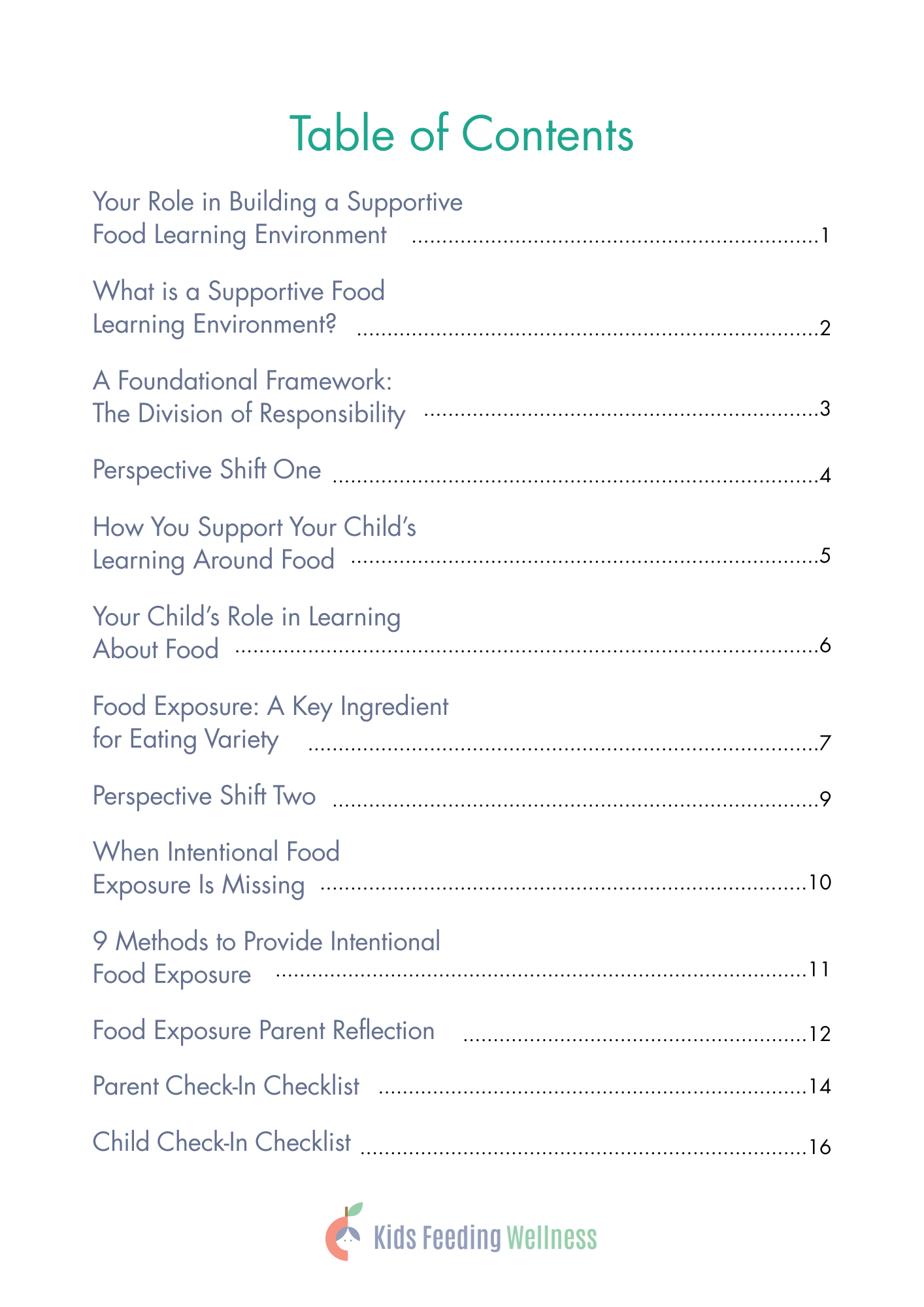 Image 2 of 5
 Image 3 of 5
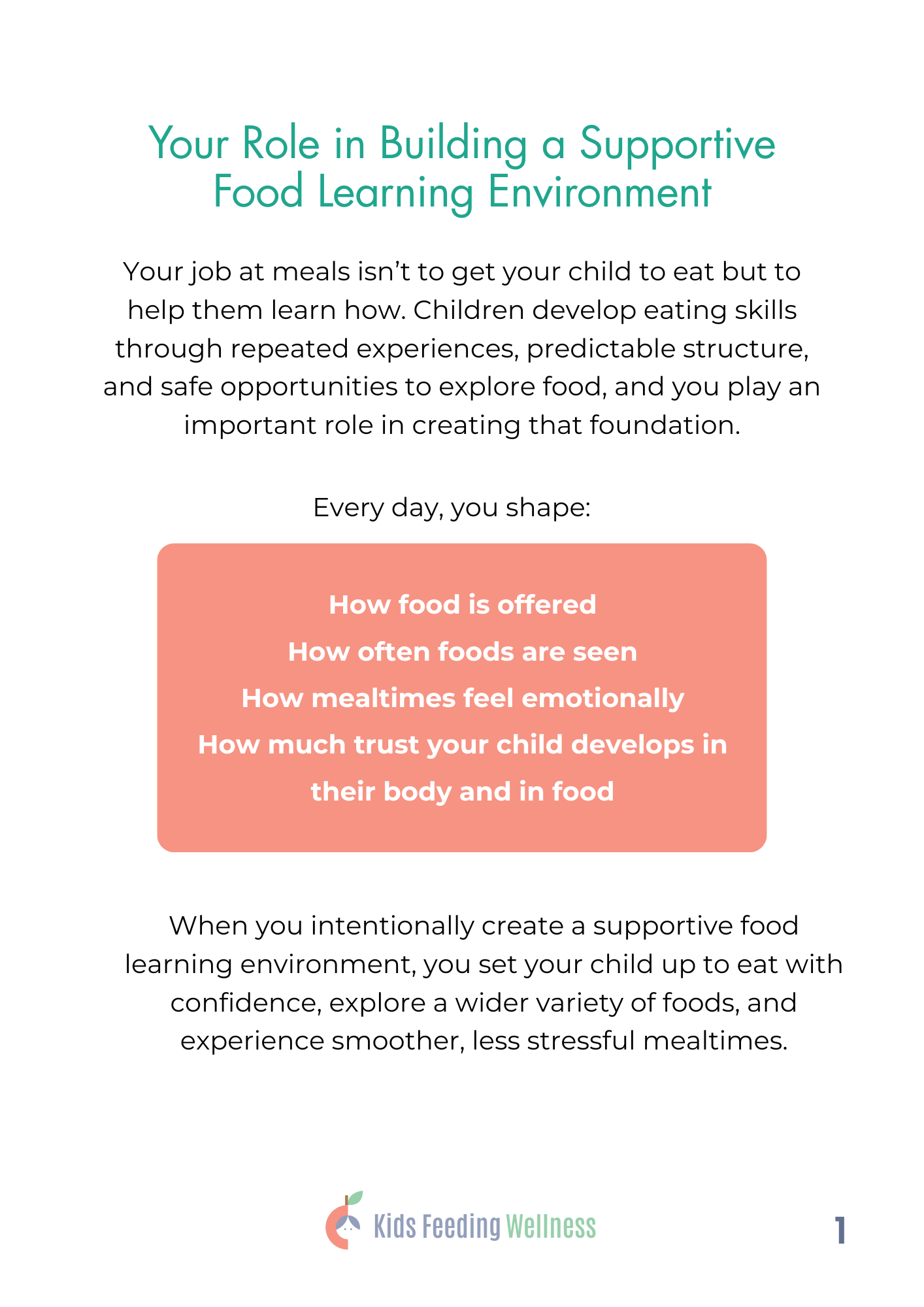 Image 4 of 5
 Image 5 of 5
23 pages - Ages 2+
This guide introduces the core foundations of a supportive food learning environment, helping parents create positive, low-pressure mealtime experiences that support children in trying new foods and expanding dietary variety. It explains the roles caregivers and children play in the feeding relationship, outlines essential mindset shifts for picky eating, and explores how consistent food exposure supports long-term eating confidence.
Throughout the guide, you’ll find reflection questions and parent and child check-in checklists designed to help you identify what’s working at mealtimes, recognize areas for growth, and better understand how your child is engaging in their own food learning journey.
If you’re looking for practical, developmentally supportive ways to help your child feel more comfortable with new foods, this guide will help you approach feeding with clarity and confidence. While you can’t force a child to eat, you can create the conditions that support learning to eat at your child’s own pace safely, sustainably, and with trust.
23 pages - Ages 2+
This guide introduces the core foundations of a supportive food learning environment, helping parents create positive, low-pressure mealtime experiences that support children in trying new foods and expanding dietary variety. It explains the roles caregivers and children play in the feeding relationship, outlines essential mindset shifts for picky eating, and explores how consistent food exposure supports long-term eating confidence.
Throughout the guide, you’ll find reflection questions and parent and child check-in checklists designed to help you identify what’s working at mealtimes, recognize areas for growth, and better understand how your child is engaging in their own food learning journey.
If you’re looking for practical, developmentally supportive ways to help your child feel more comfortable with new foods, this guide will help you approach feeding with clarity and confidence. While you can’t force a child to eat, you can create the conditions that support learning to eat at your child’s own pace safely, sustainably, and with trust.