Why Overcoming the Fear of Choking Matters When Starting Solids

Starting solid foods is a big milestone, and it often comes with big feelings. For many parents, the transition to solids between 6 and 10 months brings excitement alongside a very real fear... choking!
This stage is also one of the most important periods for feeding development. Between 6 and 10 months of age, a baby’s brain, oral muscles, and sensory system are especially ready to learn how to chew and manage different textures. When babies are given the right opportunities during this window, they are better able to build safe, confident, and flexible eating skills that last well beyond infancy.
At the same time, fear of choking can unintentionally shape how and what babies are offered, sometimes making feeding feel harder over time instead of easier.
The #1 Fear Parents Have When Starting Solids
Fear of choking is the most common concern parents share when beginning solids. In fact, a report from the International Food Information Council (2018) found that choking is parents’ number one fear during this stage.
As a feeding specialist, I see this often. And while the fear is completely understandable, it can lead families to rely mostly on foods that feel safer, such as purées, pouches, meltables, or very soft crackers.
These foods absolutely have a place early on. However, staying in this phase for too long can limit a baby’s exposure to textures that help develop chewing, tongue movement, and jaw strength. Over time, this can contribute to increased gagging, oral sensitivity, and resistance to new foods.
Why Timing Matters for Chewing Development
The months between 6 and 10 months are considered a critical window for chewing development. During this time, babies are neurologically and physically primed to learn how to move food across the tongue, manage texture, and coordinate chewing and swallowing.
Research shows that when texture exposure is delayed beyond this period, feeding progression can become more challenging later on.
Here’s what the research tells us:
Chewing skills develop most rapidly between 6 and 10 months, highlighting how important this period is for early texture learning (Gisel, 1991).
Delayed exposure to varied textures is associated with increased risk for oral sensitivity, persistent gagging, and food aversions (Harris, 2009; Smith et al., 2005)
Infants who are not introduced to textured foods before 10 months are significantly more likely to experience feeding difficulties later in childhood, including food refusal and texture selectivity (Coulthard, Harris, & Emmett, 2009).
Why Timing Matters: The Critical Window for Chewing Development
The research is clear: the months between 6 and 10 months of age represent a highly sensitive and responsive period for the development of chewing skills. During this time, babies are neurologically and physically primed to learn how to move food across the tongue, manage texture, and coordinate chewing and swallowing. When texture exposure is delayed beyond this window, feeding progression can become more challenging later on.
Research consistently shows:
Chewing skills develop most rapidly between 6 and 10 months, highlighting how important this period is for early texture learning (Gisel, 1991).
Delayed exposure to varied textures is associated with increased risk for oral sensitivity, persistent gagging, and food aversions (Harris, 2009; Smith et al., 2005).
Infants who are not introduced to textured foods before 10 months are significantly more likely to experience feeding difficulties later in childhood, including food refusal and texture selectivity (Coulthard, Harris, & Emmett, 2009).
3 Reassuring Reasons Parents Don’t Need to Fear This Stage
1. Babies have built-in safety mechanisms. Babies are born with protective features that help keep them safe as they learn to eat. The gag reflex and a higher-positioned larynx work together to reduce choking risk. While gagging can look scary, it is a normal and protective response and a sign that your baby is learning, not failing.
2. Choking is rare when foods are prepared and offered appropriately. Research comparing baby-led weaning and traditional spoon-feeding approaches found no increase in choking risk when safety guidelines were followed (Fangupo et al., 2016; Brown, 2018). Another review confirmed that true choking episodes are uncommon, though they require prompt action when they occur (Rodríguez et al., 2012).
3. Chewing is a skill that can be supported. Chewing is not automatic. It develops through repeated exposure to safe textures, proper positioning, hands-on food exploration, and gradual progression beyond smooth foods. With the right support and guidance, parents can help their baby build strong chewing skills without rushing or pushing beyond their comfort level.
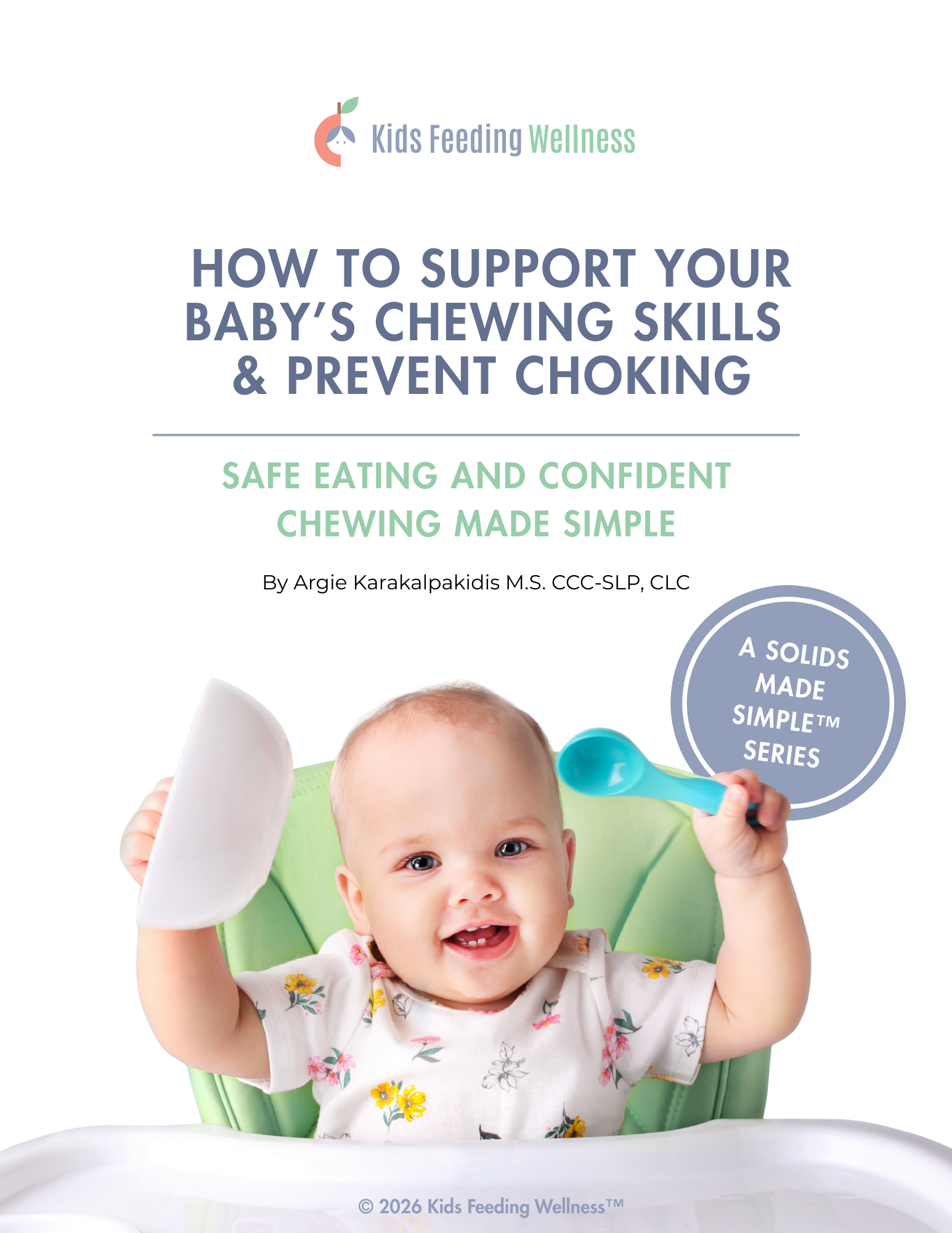
A Solids Made Simple™ Guide
60 pages - ages 6-12 months
Starting solids can feel exciting yet overwhelming, especially when fear of choking takes over. This guide was created to help parents understand how babies actually learn to chew, so they can move through the transition to solids with confidence instead of fear.
How to Support Your Baby’s Chewing Skills & Prevent Choking is the first guide in the Solids Made Simple™series. It breaks down chewing development in a clear, parent-friendly way, helping families understand what to offer, when to progress textures, and why certain feeding experiences matter during the critical 6–10 month window.
Inside this guide, you’ll learn:
How babies develop chewing skills and coordinate chewing and swallowing
The difference between gagging and choking—and why gagging is an important part part of learning
How infant anatomy and reflexes help protect babies as they learn to eat
How to safely progress textures beyond purees
Feeding therapist tips to support strong, confident chewing skills
This guide is grounded in developmental science and shaped by years of clinical experience supporting families through the transition to solids. It is ideal for parents who feel stuck on purees or pouches, worried about gagging or choking, or unsure how to move forward safely. Clinicians and caregivers will also benefit from the clear explanation of chewing development and practical strategies.
With the right understanding and support, feeding can feel calm, connected, and enjoyable for both you and your baby.
Why Support Makes All the Difference
Most parents are doing the very best they can. The challenge isn’t effort, it’s often conflicting advice, fear-based messaging, and lack of clear guidance around how to safely progress textures.
That’s why I created How to Support Your Baby’s Chewing Skills & Prevent Choking, the first guide in the Solids Made Simple™ series. This guide is designed to reduce overwhelm and help parents understand how chewing develops, how to safely offer textures, and how to support their baby during the months that matter most.
Inside the guide, you’ll learn:
The difference between gagging and choking
How to prepare and offer foods safely
How chewing skills develop
Practical strategies I use with families in my own feeding practice
Starting solids doesn’t have to be perfect. It’s a learning process for both you and your baby. The goal is confidence, clarity, and a strong foundation for lifelong feeding success.
👉 Download How to Support Your Baby’s Chewing Skills & Prevent Choking and feel supported as you navigate the transition to solids with confidence!