8 pages - Ages 2+
One of the best ways to support children’s eating habits is by creating a predictable and (somewhat) structured routine. Visual supports are a powerful tool that can be used when teaching children new routines or skills, hence why they are used so often in daycares, preschools, and beyond.
For many children, including those with picky eating tendencies, habits like grazing (aka snacking throughout the day) can often lead to a reduced appetite when you have scheduled meals like dinner with the family. When a child comes to the table not hungry, this can lead to misbehavior, frequently getting up and down from the table, greater resistance when offered a new food, mealtime battles, and does not create an environment that will support your child’s feeding success.
My implementing a schedule that sets boundaries around snacking and assures your child has 5-6 set meals throughout the day, you can be sure your child gets plenty of opportunities to meet their energy needs, support their appetite so they come to the table eagerly, and create a feeding environment that feels safe and predictable.
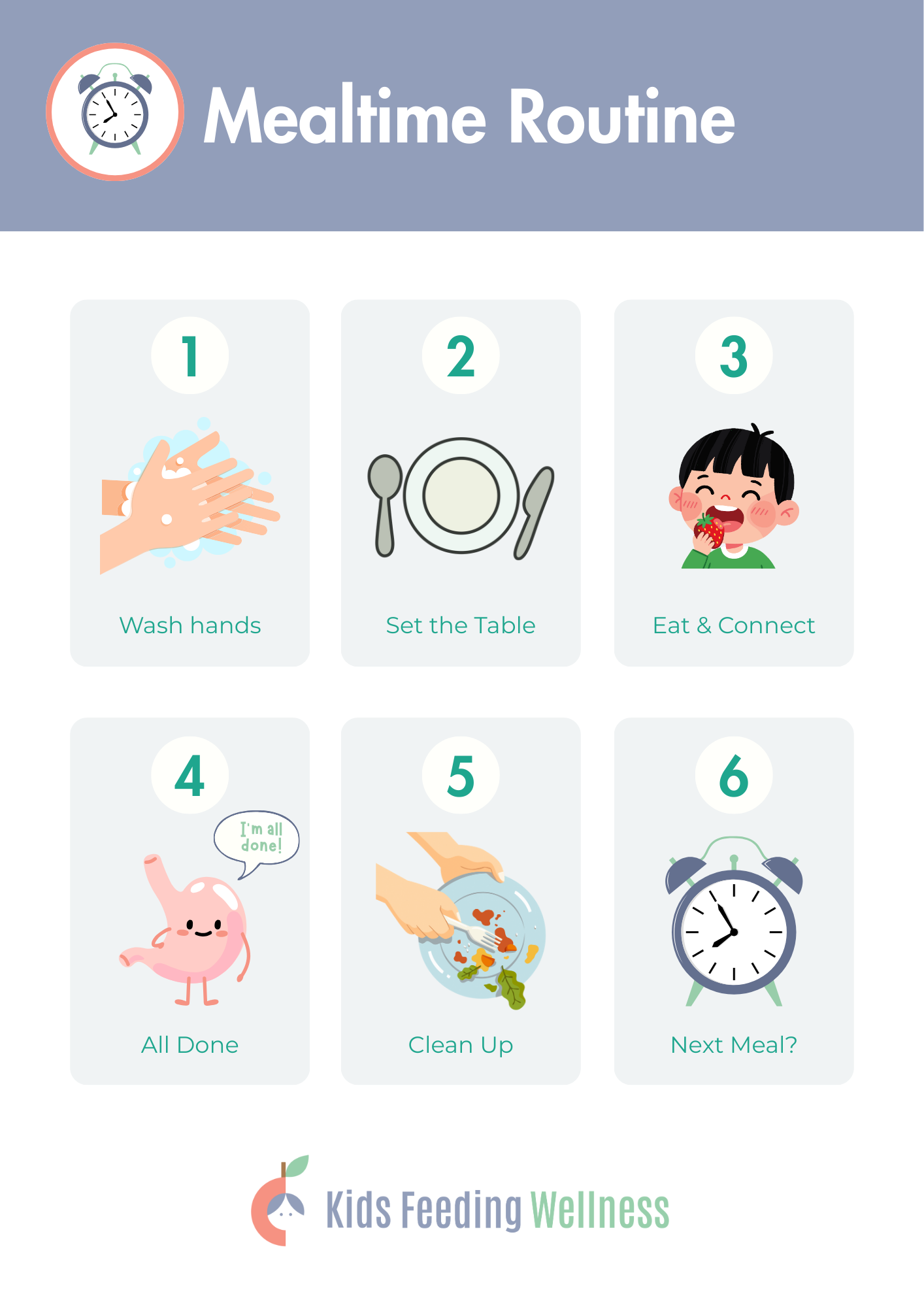
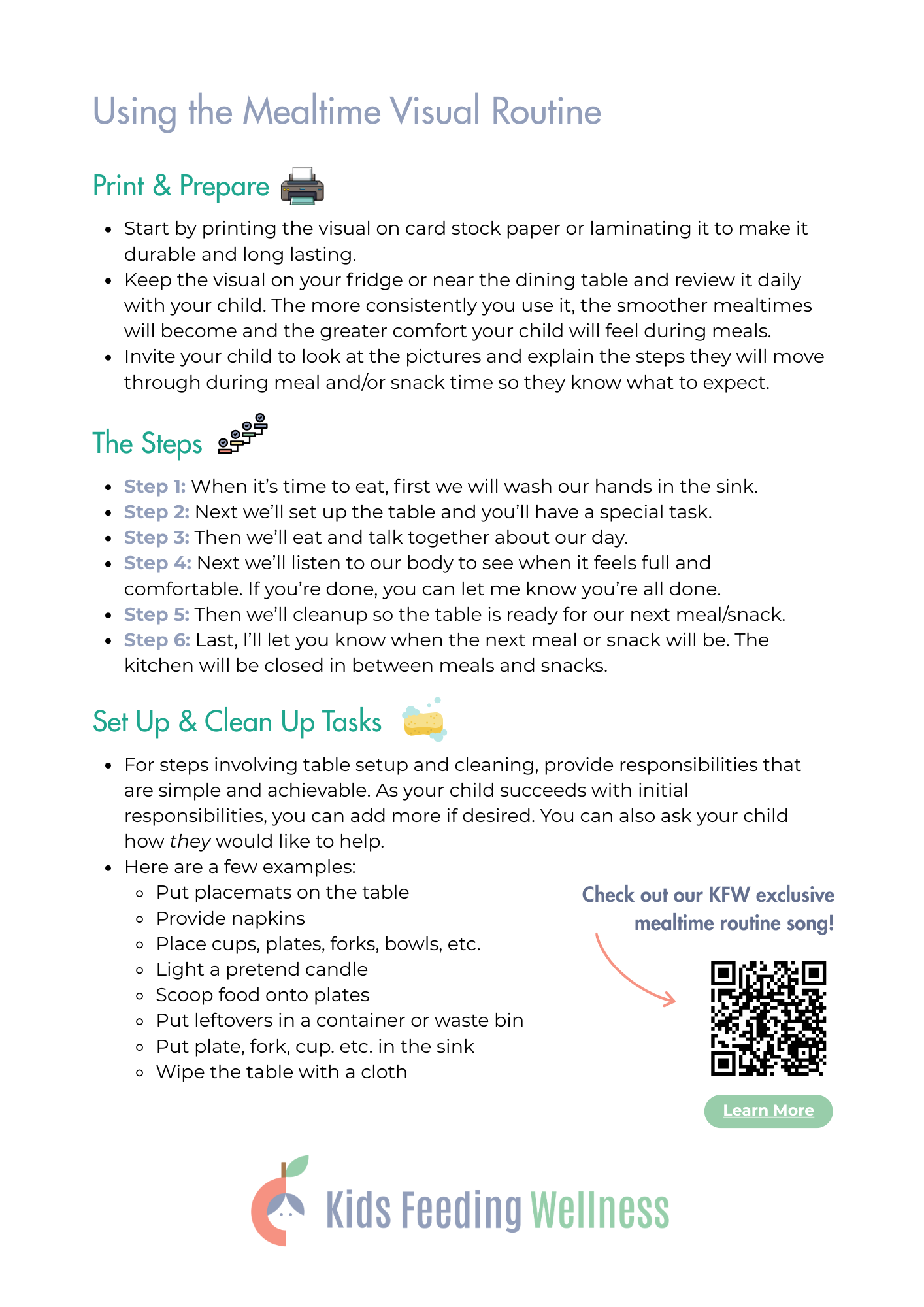
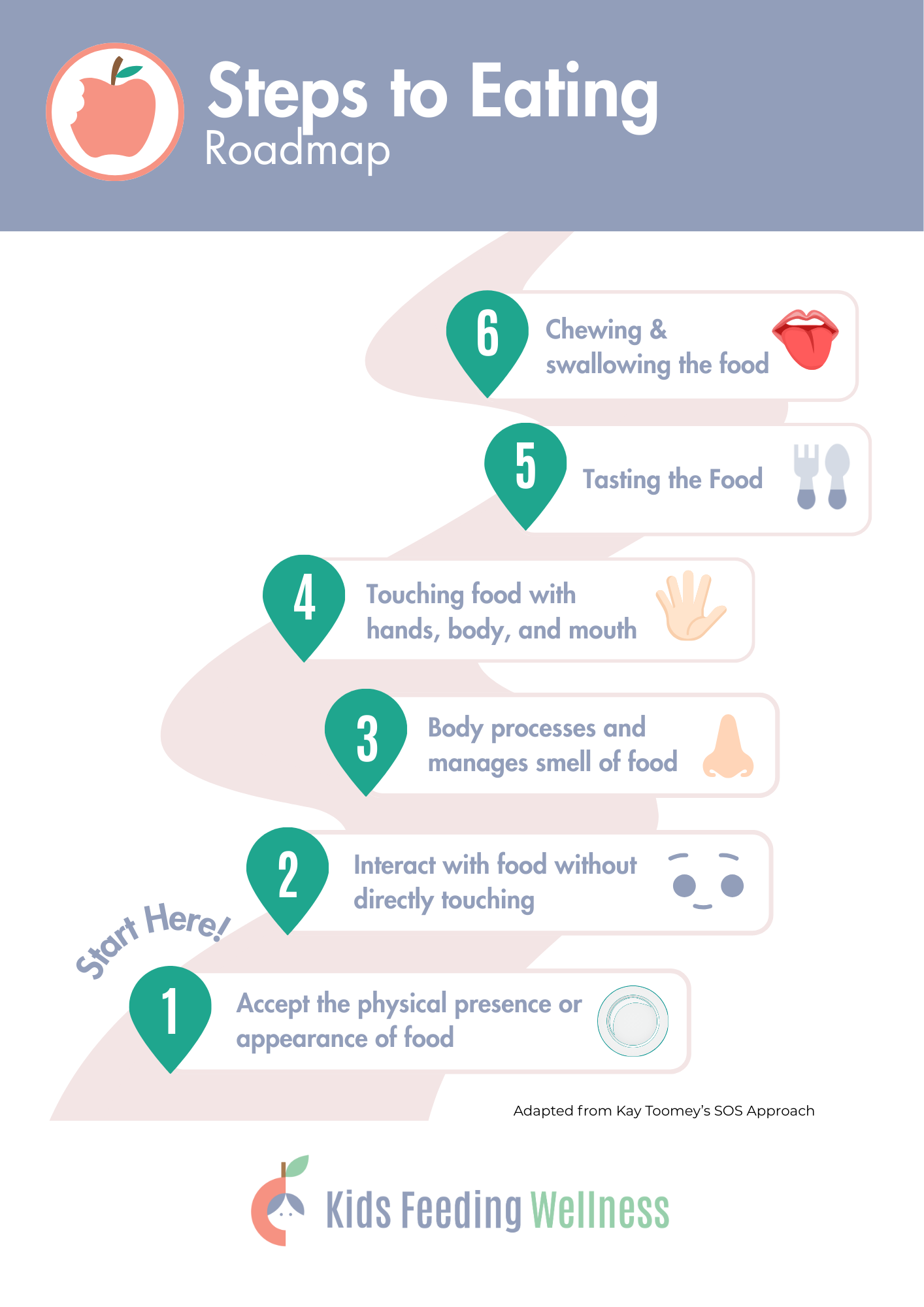
This resource includes four printable visual schedules and a “Closed Kitchen” sign so your child knows exactly when meals and snacks will happen. These visuals take the guesswork out of eating and give children the sense of control and security they need to arrive at the table calm, hungry, and ready to eat.
Visual supports work because they turn expectations into something your child can see and trust. Over time, this consistency helps regulate hunger cues, reduce grazing, and make trying new foods less overwhelming.
To learn more about the power of mealtime schedules and routines you can check out our blog: How Mealtime Schedules and Routines Help Picky Eaters Enjoy Peaceful Meals& How to Get Your Child to Sit and Eat: Simple Mealtime Routines That Work
8 pages - Ages 2+
One of the best ways to support children’s eating habits is by creating a predictable and (somewhat) structured routine. Visual supports are a powerful tool that can be used when teaching children new routines or skills, hence why they are used so often in daycares, preschools, and beyond.
For many children, including those with picky eating tendencies, habits like grazing (aka snacking throughout the day) can often lead to a reduced appetite when you have scheduled meals like dinner with the family. When a child comes to the table not hungry, this can lead to misbehavior, frequently getting up and down from the table, greater resistance when offered a new food, mealtime battles, and does not create an environment that will support your child’s feeding success.
My implementing a schedule that sets boundaries around snacking and assures your child has 5-6 set meals throughout the day, you can be sure your child gets plenty of opportunities to meet their energy needs, support their appetite so they come to the table eagerly, and create a feeding environment that feels safe and predictable.
This resource includes four printable visual schedules and a “Closed Kitchen” sign so your child knows exactly when meals and snacks will happen. These visuals take the guesswork out of eating and give children the sense of control and security they need to arrive at the table calm, hungry, and ready to eat.
Visual supports work because they turn expectations into something your child can see and trust. Over time, this consistency helps regulate hunger cues, reduce grazing, and make trying new foods less overwhelming.
To learn more about the power of mealtime schedules and routines you can check out our blog: How Mealtime Schedules and Routines Help Picky Eaters Enjoy Peaceful Meals& How to Get Your Child to Sit and Eat: Simple Mealtime Routines That Work

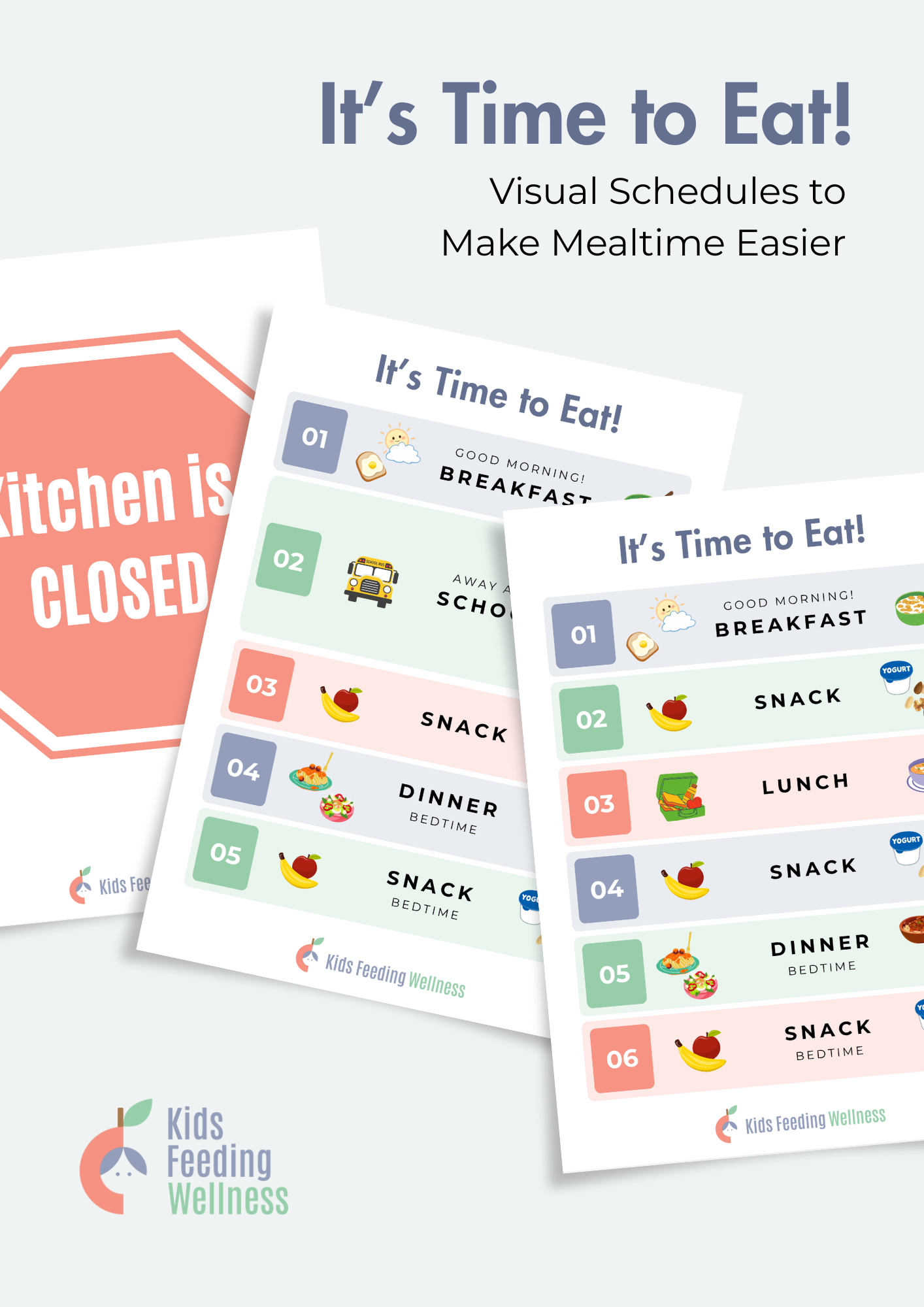 Image 1 of 6
 Image 2 of 6
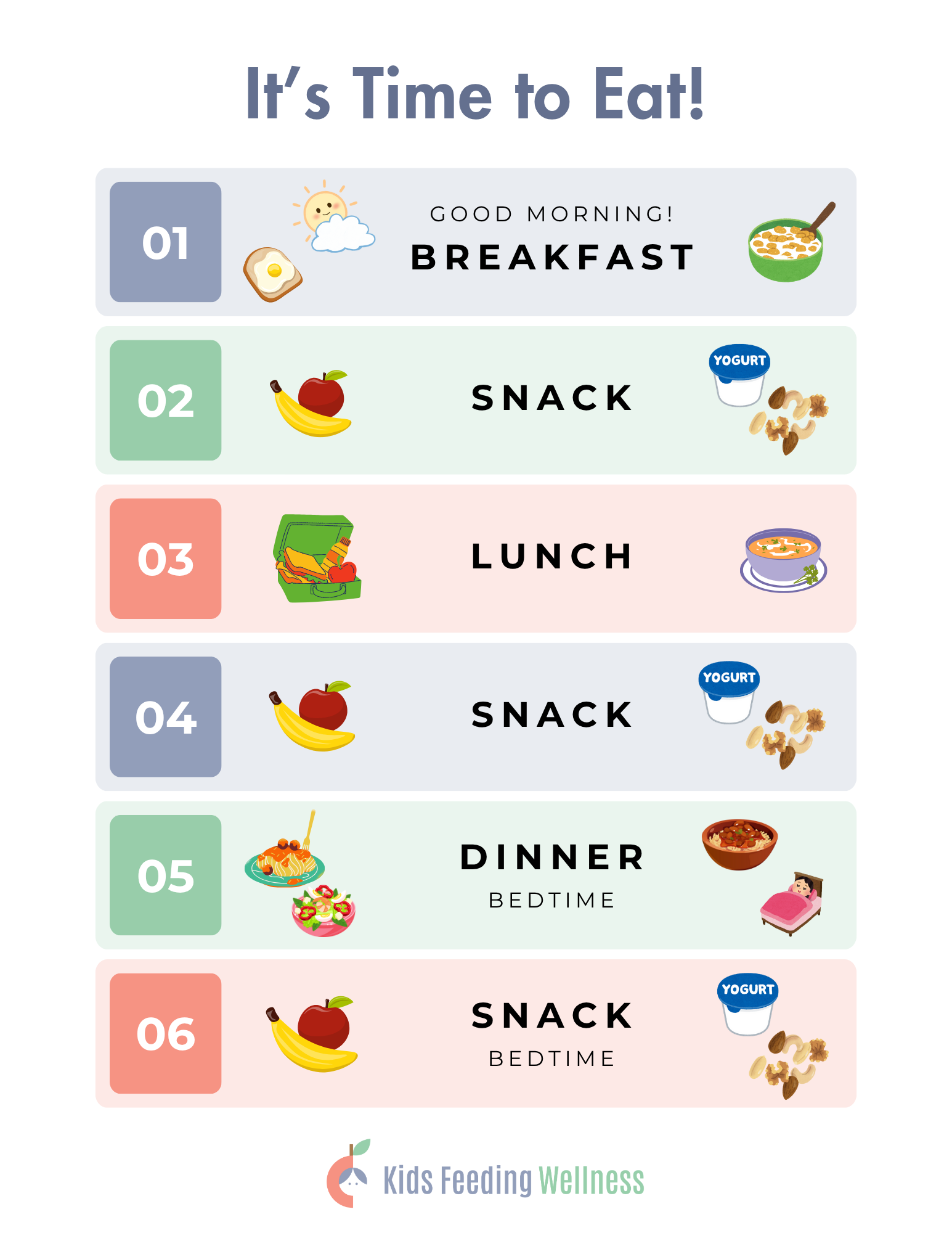 Image 3 of 6
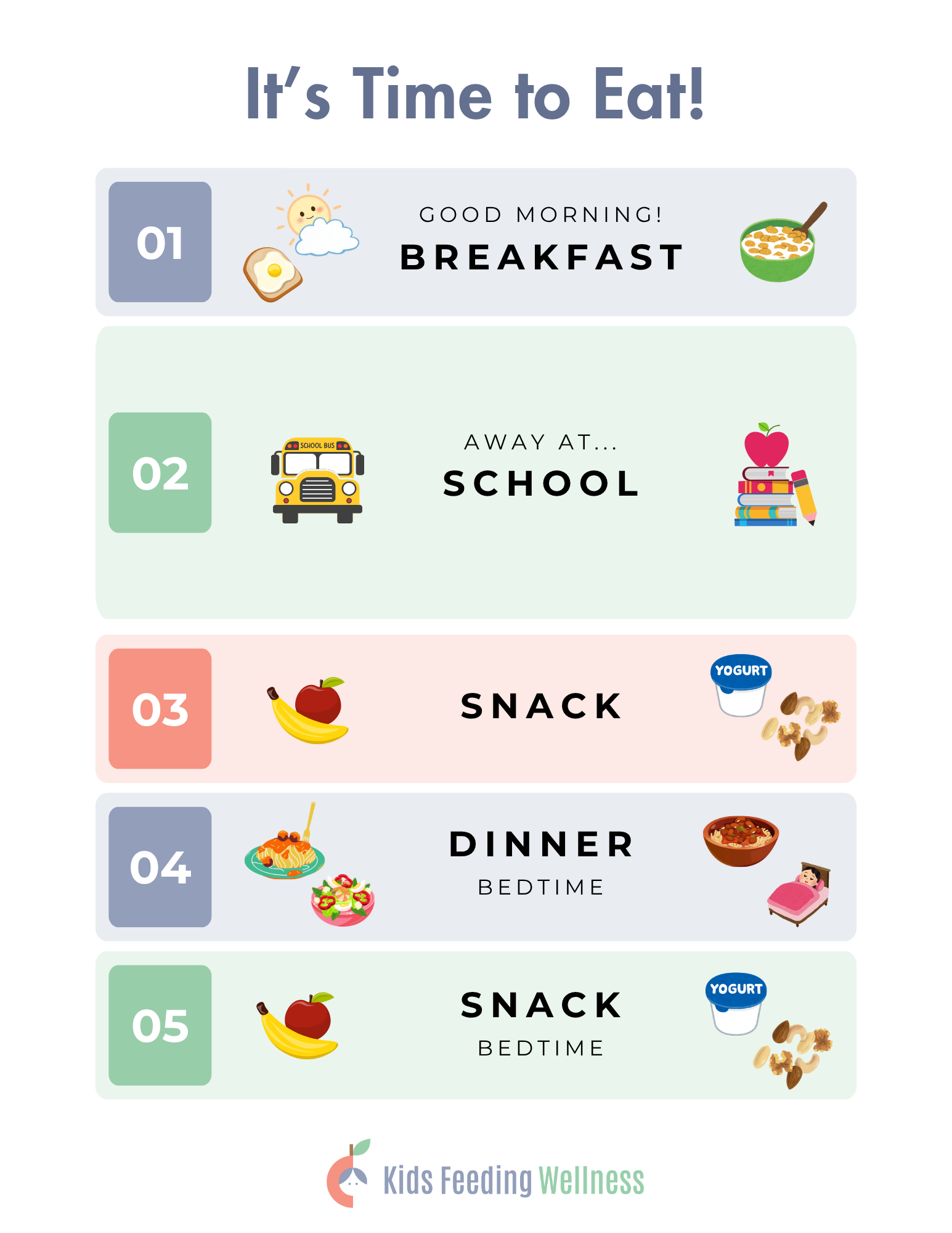 Image 4 of 6
 Image 5 of 6
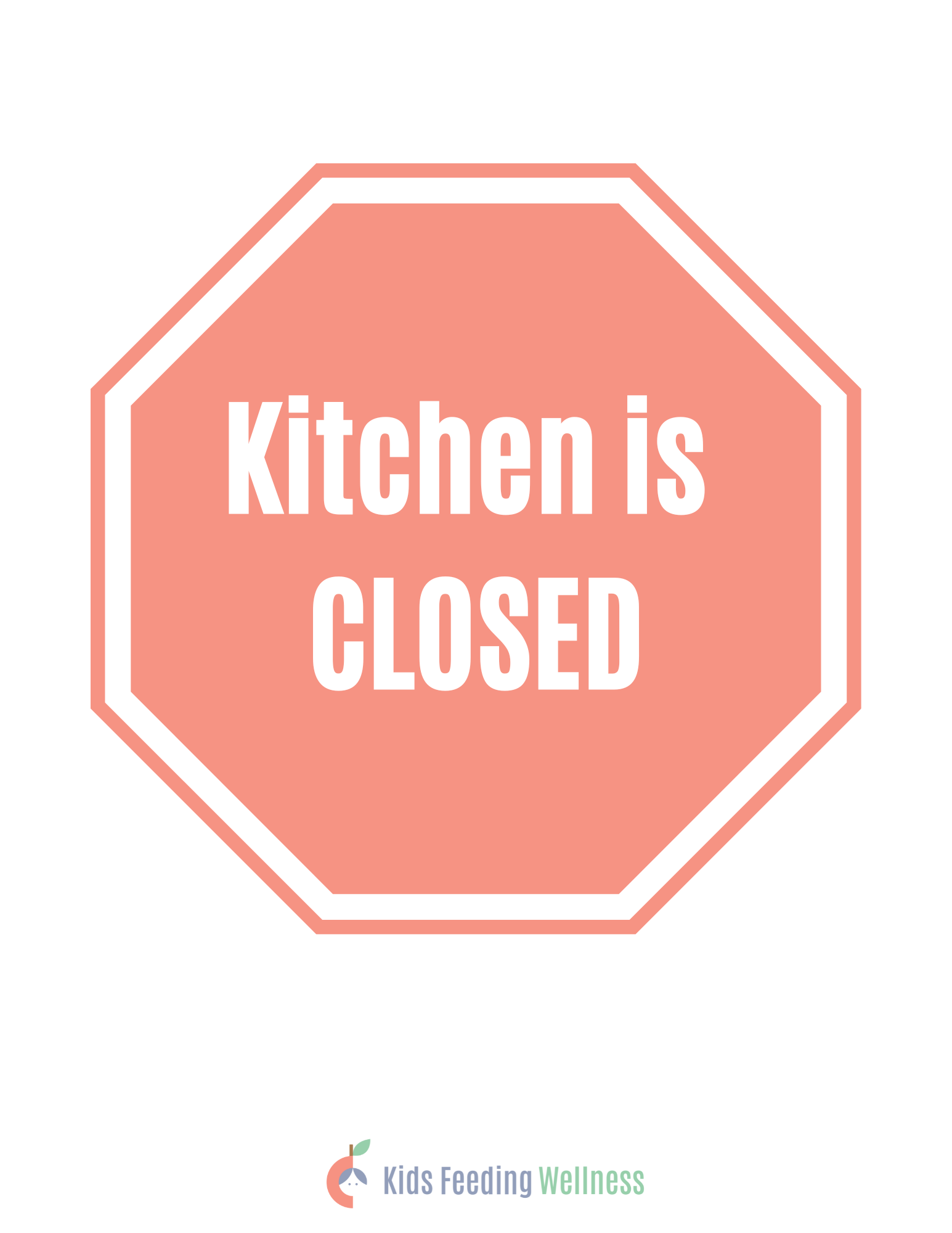 Image 6 of 6