 Image 1 of 2
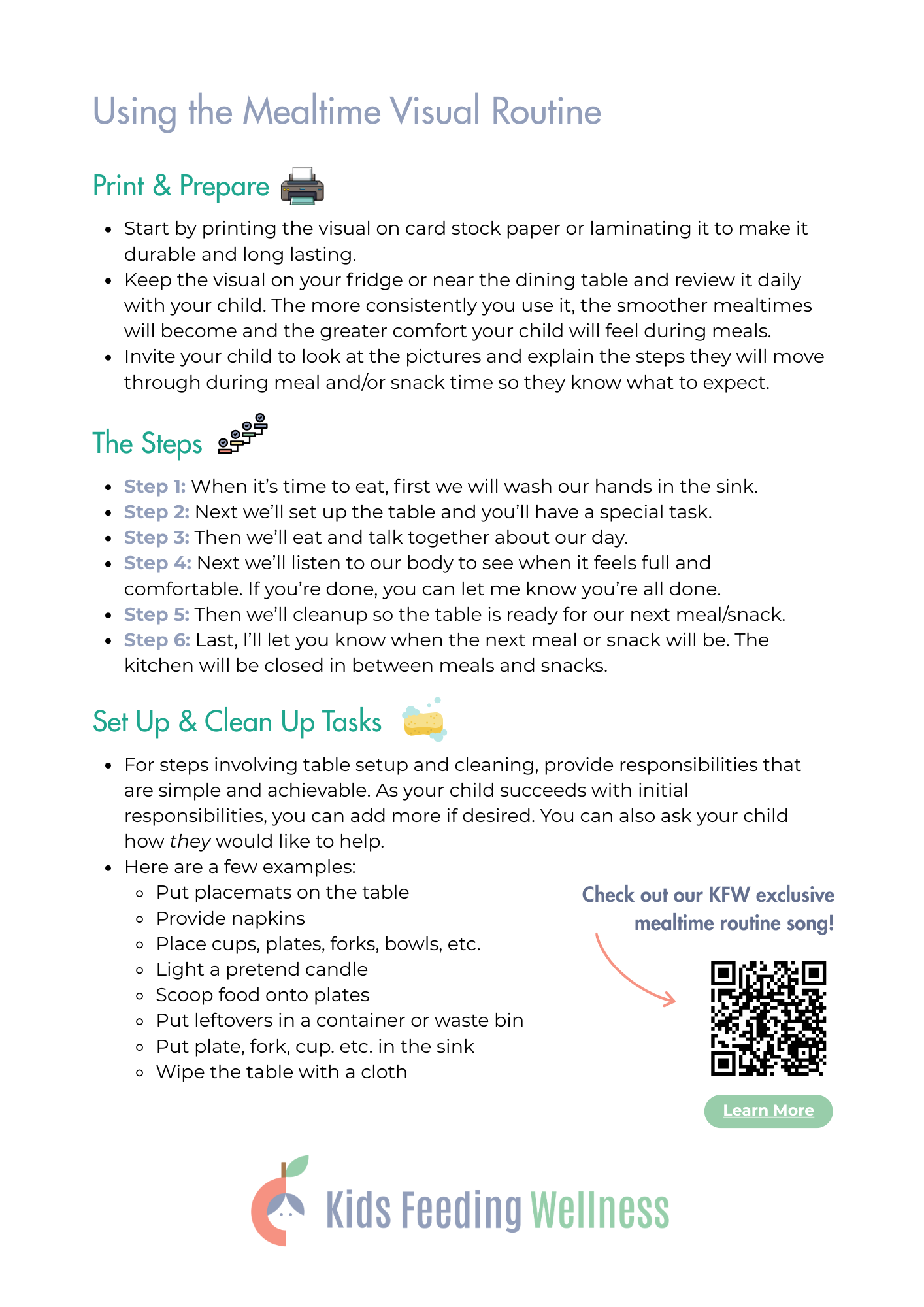 Image 2 of 2
2 pages - Ages 2+
Visual supports such as this one are helpful when teaching a new routine or skill.
Routines follow steps in a particular order with the intent of achieving a goal.
In the context of mealtime it is to:
a. help your child smoothly transition to and from mealtime
b. listen to their hunger cues and eat as much as their body tells them to
c. signal to their brain the start and end of meals
Visual supports for routines can also help teach children skills like independence, memory recall, and language.
They are especially helpful when aiming to maintain boundaries around snacking in between meals as it marks the beginning and ending of mealtime activity.
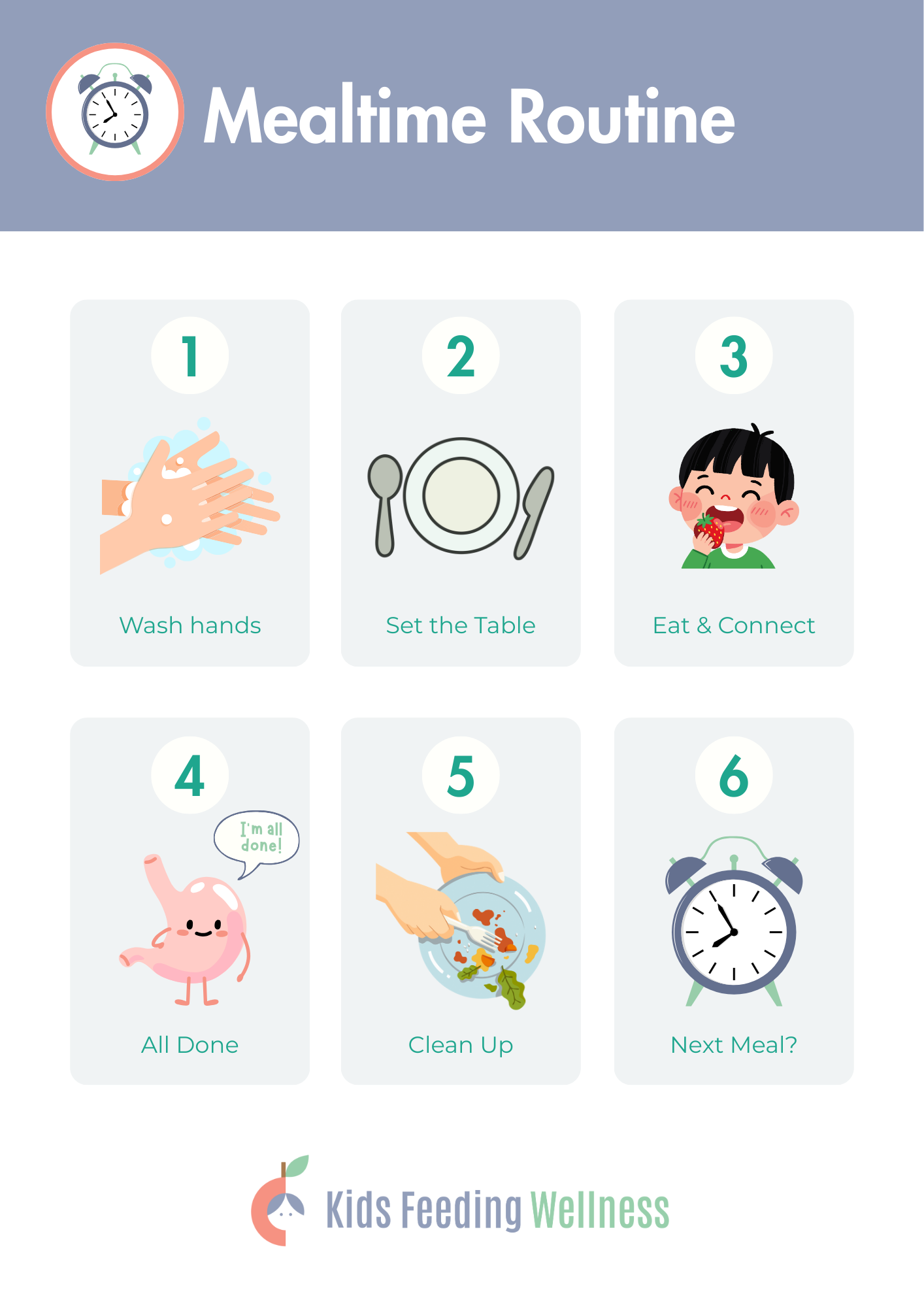
The steps included in the visual are there for a reason. Steps 1 and 2 prepare your child’s body to signal they are about to eat. Step 3 focuses on eating and connection. Remember mealtime is more than just eating. It’s a chance to slow down and be with your child. Step 4 strengthens children’s ability to listen to their fullness cues and stop eating when their body signals satiety (this is known as intuitive eating). Step 5 signals to their brain that mealtime is done. Finally, Step 6 tells your child when they can expect their next meal and will help prevent snacking in-between meals.
This is what creates boundaries and expectations, two keys to feeding success.
This visual includes key pointers on what to focus on when implementing a mealtime routine in order to support smoother transitions and practicality in yours and your child's day-to-day.
BONUS: We’ve included a link to a KFW exclusive mealtime routine song you can play at the start of meals to further support your child in transitioning to mealtime! We hope you and your child enjoy it as much as we do!
2 pages - Ages 2+
Visual supports such as this one are helpful when teaching a new routine or skill.
Routines follow steps in a particular order with the intent of achieving a goal.
In the context of mealtime it is to:
a. help your child smoothly transition to and from mealtime
b. listen to their hunger cues and eat as much as their body tells them to
c. signal to their brain the start and end of meals
Visual supports for routines can also help teach children skills like independence, memory recall, and language.
They are especially helpful when aiming to maintain boundaries around snacking in between meals as it marks the beginning and ending of mealtime activity.
The steps included in the visual are there for a reason. Steps 1 and 2 prepare your child’s body to signal they are about to eat. Step 3 focuses on eating and connection. Remember mealtime is more than just eating. It’s a chance to slow down and be with your child. Step 4 strengthens children’s ability to listen to their fullness cues and stop eating when their body signals satiety (this is known as intuitive eating). Step 5 signals to their brain that mealtime is done. Finally, Step 6 tells your child when they can expect their next meal and will help prevent snacking in-between meals.
This is what creates boundaries and expectations, two keys to feeding success.
This visual includes key pointers on what to focus on when implementing a mealtime routine in order to support smoother transitions and practicality in yours and your child's day-to-day.
BONUS: We’ve included a link to a KFW exclusive mealtime routine song you can play at the start of meals to further support your child in transitioning to mealtime! We hope you and your child enjoy it as much as we do!