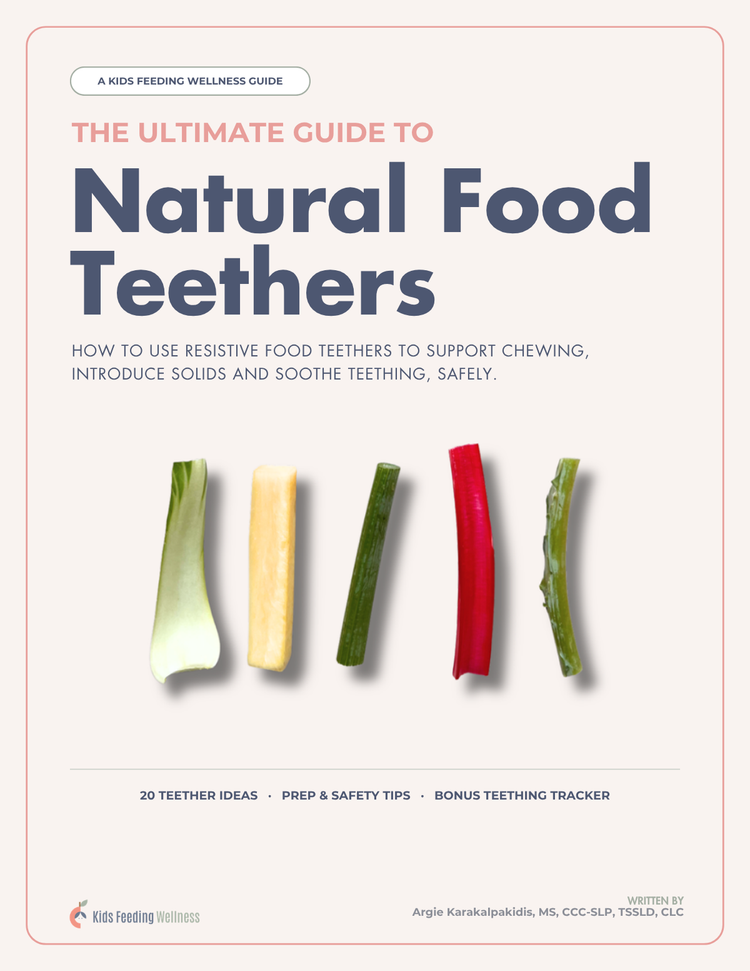
The Ultimate Guide to Natural Food Teethers
Soothe sore gums and build real chewing skills, using simple foods already in your kitchen. Twenty safe teether ideas, each with photos and step-by-step prep.
Instant PDF download · Read on any device or print at home
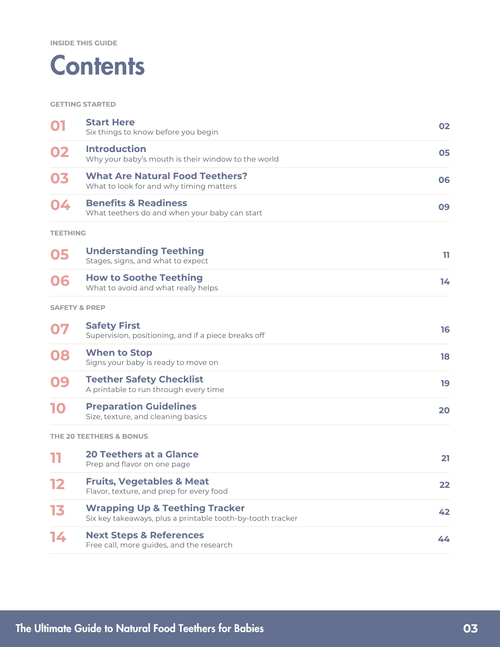
Get the Guide →- ✓20 teethers with photos, flavor and texture notes, and prep steps
- ✓Safety built in: sizing, supervision, what to do if a piece breaks off, and when to stop
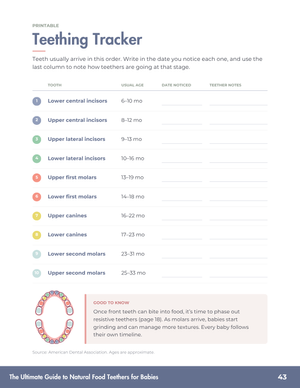
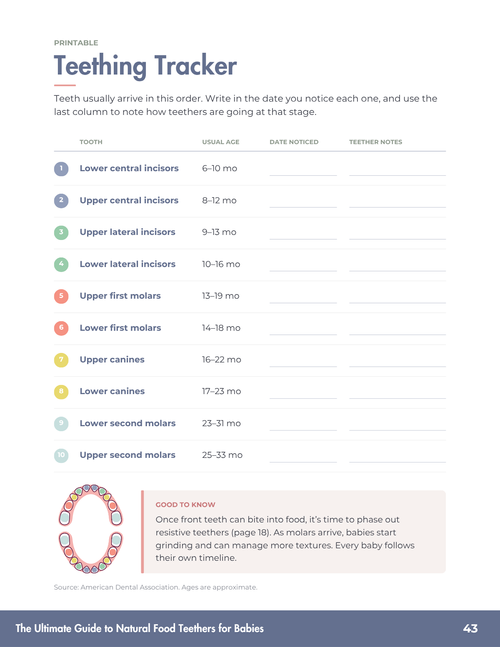
- ✓Printables: a teether safety checklist and a tooth-by-tooth teething tracker

Written by Argie Karakalpakidis, MS, CCC-SLP, TSSLD, CLC
Pediatric feeding specialist · Founder of Kids Feeding Wellness
The teething dilemma
Most teething options only do half the job
Teething and starting solids usually overlap. Silicone teethers soothe gums but teach nothing about food. Purées bring flavor but give the jaw no work. Natural food teethers do both.
Silicone teethers
✓Gum relief & jaw workout
✕No real flavor
✕No real food texture
Smooth purées
✓Real flavor
✕No oral muscle work
✕Not food in its natural form
Natural food teethers
✓Gum relief
✓Real flavor & texture
✓Oral motor practice for chewing
Why parents love them
Comfort today, confident eating tomorrow
A chilled carrot, a mango pit, a kale stem. Simple foods that give your baby something to gnaw on, and a head start on everything that comes next.
Soothes sore gumsCool, firm pressure where it hurts.
Flavor without pressureSweet, sour, bitter and savory, early.
Early texture practiceEases oral sensitivity before solids.
Stronger chewing musclesResistive foods give the jaw a workout.
Self-feeding skillsGrasping and mouthing build coordination.
A more adventurous eaterFamiliar foods feel less scary later.
Why timing matters
Your baby's brain is wide open to flavor and texture, right now
Between about 4 and 10 months, babies are especially willing to explore new tastes and textures. Natural food teethers let you use that window before your baby is even eating.
Babies exposed to bitter vegetables early are more likely to accept them by 9 months.
Forestell & Mennella, 2007Chewing skills improve most rapidly during this window.
Gisel, 1991Early flavor variety is linked to accepting a wider range of foods later, especially for formula-fed babies.
Gerrish & Mennella, 2001Take a look inside
Everything you need, on one easy page per food
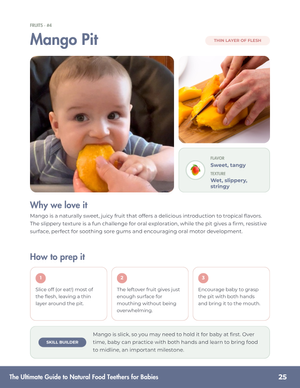
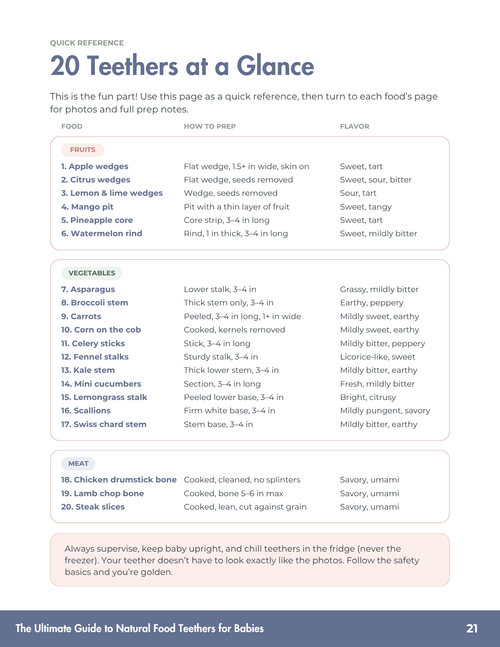
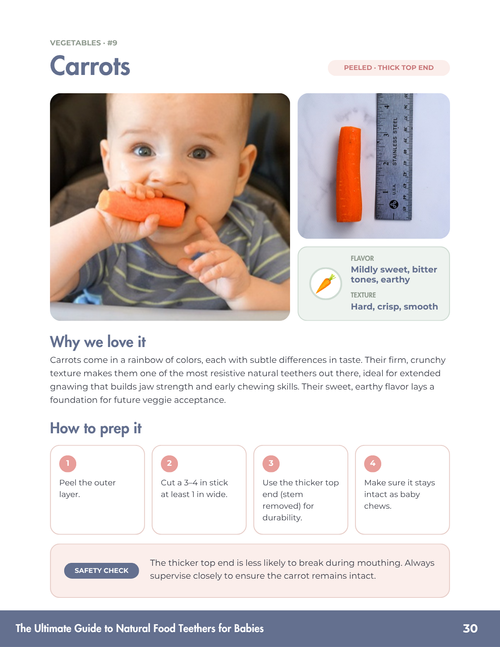
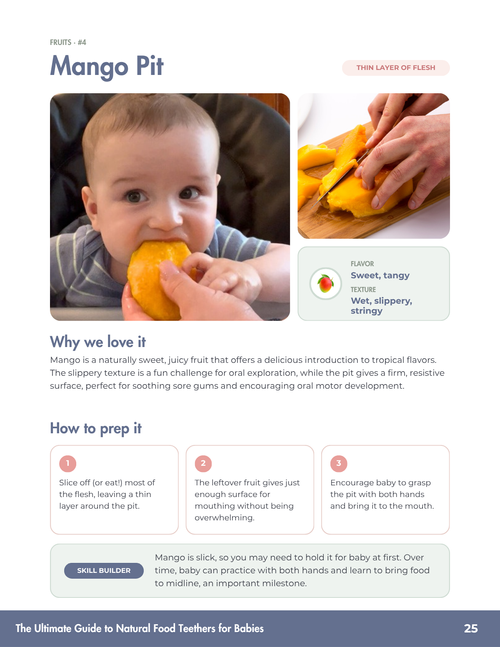
Each teether gets its own page: real photos, why it works, flavor and texture notes, and numbered prep steps you can follow at the counter.
The 20 teethers
From mango pits to kale stems
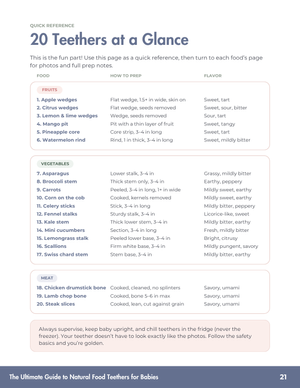
Fruits, vegetables and meats, so your baby meets sweet, bitter, sour and savory flavors early on.
Fruits 6
- Apple wedges
- Citrus wedges
- Lemon & lime
- Mango pit
- Pineapple core
- Watermelon rind
Vegetables 11
- Asparagus
- Broccoli stem
- Carrots
- Corn on the cob
- Celery sticks
- Fennel stalks
- Kale stem
- Mini cucumbers
- Lemongrass stalk
- Scallions
- Swiss chard stem
Meat 3
- Chicken drumstick bone
- Lamb chop bone
- Steak slices
Worried about choking?
You're not alone. That's why safety comes first.
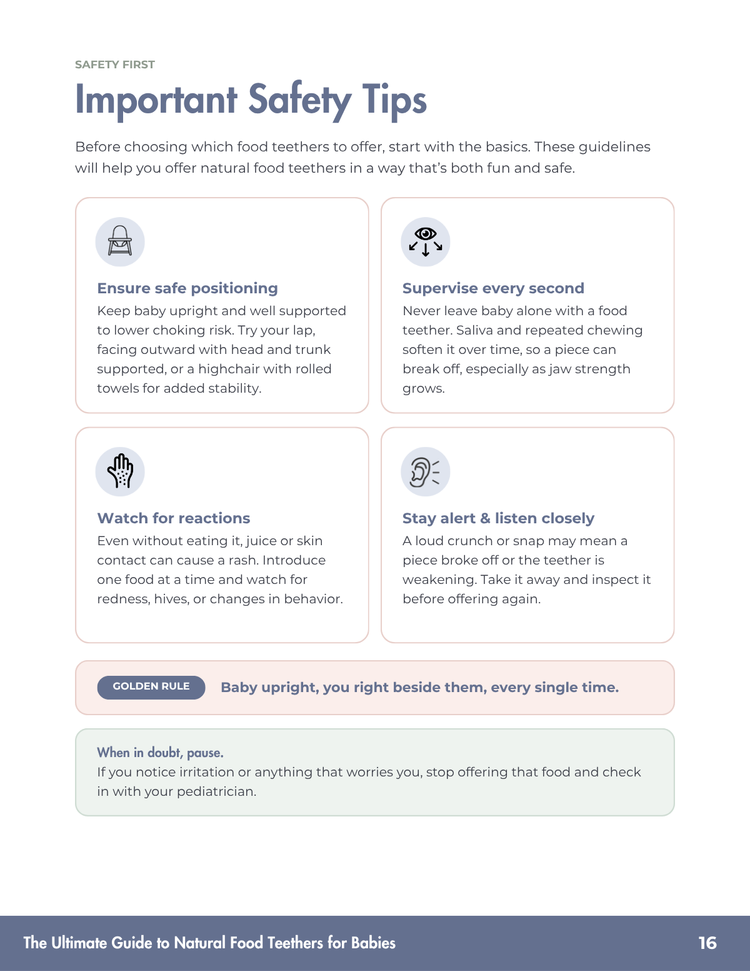
It's the question I hear most. The guide walks you through exactly how to offer food teethers safely, before you ever pick one.
Size it right3–4 inches long and 1–1.5 inches wide: easy to grip, too big to swallow.
Know what to do if a piece breaks offStay calm, don't reach in, and learn how to teach your baby to spit.
Know when to stopMost babies move on around 8 months, or once front teeth can bite off pieces.
Golden rule: baby upright, you right beside them, every single time.
What you get
The Ultimate Guide to Natural Food Teethers
- 46-page digital guide (PDF), yours to keep
- 20 teether ideas with photos, flavor and texture notes, and prep steps
- Readiness signs, safety rules and preparation guidelines
- Teething stages, signs, and what really helps (and what to avoid)
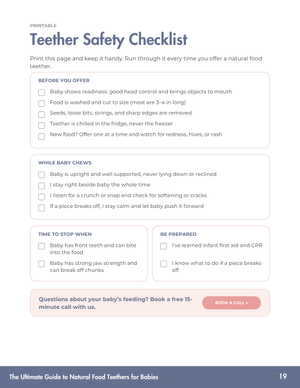
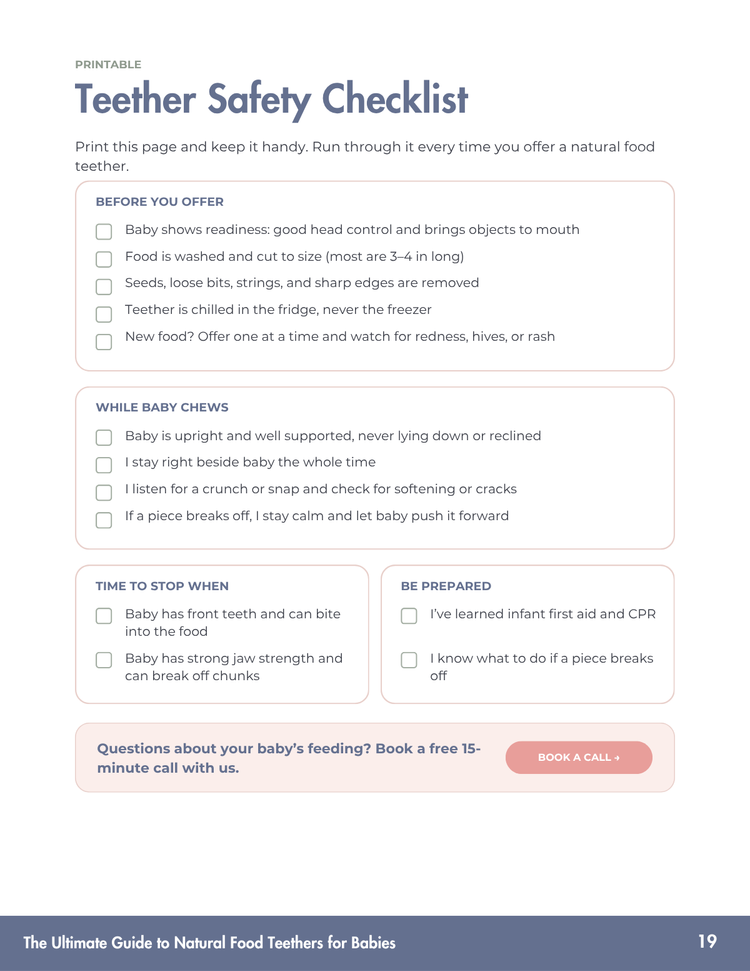
- Printable teether safety checklist PRINTABLE
- Tooth-by-tooth teething tracker BONUS
Instant download · Works on phone, tablet or computer
This guide is for you if…
- Your baby is around 4 months and putting everything in their mouth
- Teething is making your baby (and you) miserable
- You want to give your baby a head start before solids
- You'd like to try food teethers but want to do it safely
- You want an alternative to plastic and silicone teethers
Hi, I'm Argie
MS, CCC-SLP, TSSLD, CLC · Founder, Kids Feeding Wellness
I'm a speech-language pathologist and certified lactation counselor specializing in infant feeding, practicing since 2018. I support families from those first teething troubles to confident, capable eating.
"You don't have to choose between comfort and development. With natural food teethers, your baby gets both."



Questions
Frequently asked questions
Are natural food teethers safe?
Yes, when they're prepared and offered the right way. The guide covers sizing, positioning, supervision, what to do if a piece breaks off, and when to stop, plus a printable checklist to run through every time.
When can my baby start?
Most babies can start around 4 months, once they can bring objects to their mouth, stay upright with support and good head control, and show interest in mouthing. Your baby doesn't need to sit on their own or have started solids. If your baby has delays or medical needs, check with your pediatrician or feeding therapist first.
My baby already started solids. Is it too late?
Not at all. Most babies use resistive food teethers until around 8 months, or until their front teeth can bite off pieces. They're a great way to add new flavors and texture practice alongside solids.
Do I need any special equipment?
No. Every teether in the guide is a food you can find at the grocery store, like carrots, celery, mango or a lamb chop bone. You'll just need a knife, a cutting board and your fridge.
Is this a printed book?
No. It's a 46-page digital PDF you can download instantly, read on any device, and print at home. The safety checklist and teething tracker are designed to be printed.
Keep going
Pair it with the Solids Made Simple™ series
Teethers are the warm-up. The series picks up where teething leaves off, from the very first bite to confident chewing.
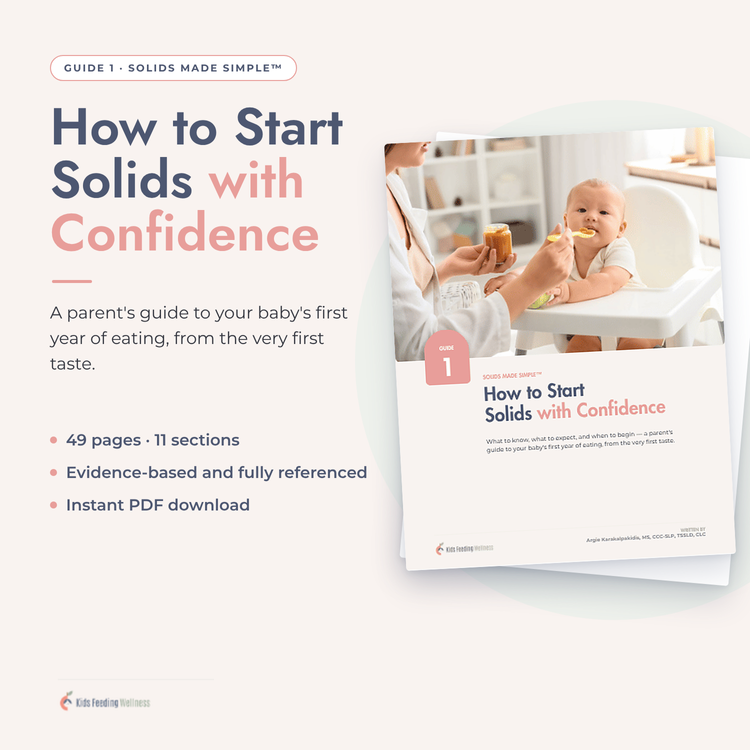 Guide 1 · Getting startedHow to Start Solids with ConfidenceReadiness signs, purées or finger foods, milk and solids, first foods and allergens.Get Guide 1 →
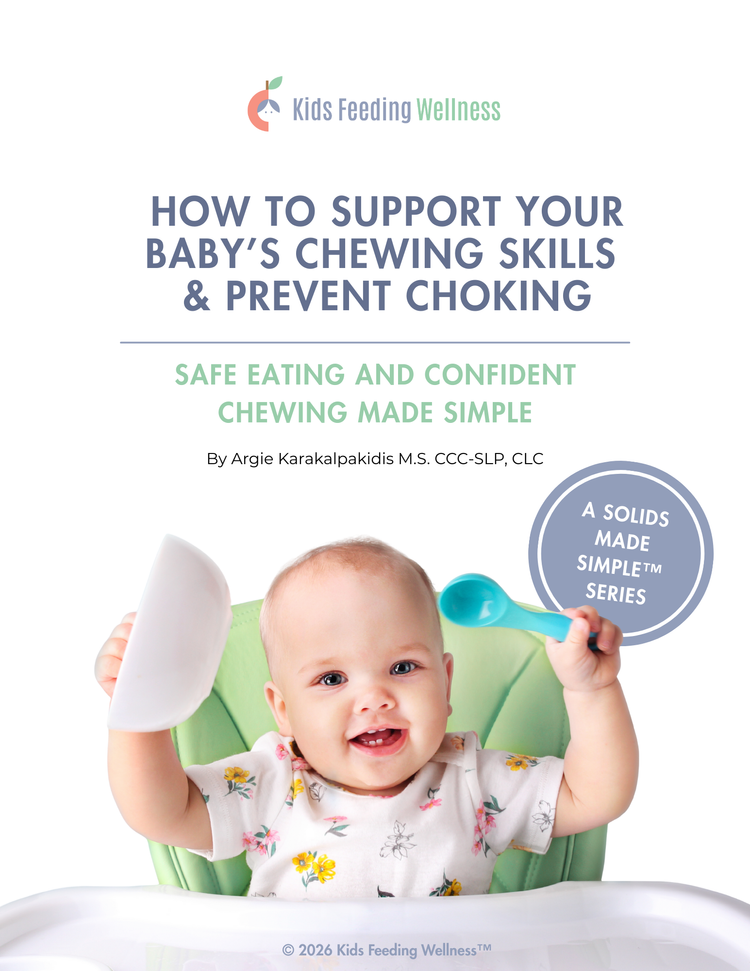 Guide 2 · Chewing & chokingHow to Support Your Baby's Chewing Skills & Prevent ChokingHow chewing develops, gagging vs choking, and how to prepare higher-risk foods safely.Get Guide 2 →
Give your baby something good to chew on
Soothe sore gums and build the skills for confident eating, starting this week.
Get the Guide for $12.99 →