Solids Made Simple™ · 4 months+ companion
Swap plastic and silicone teethers for real food. Natural food teethers are firm, resistive pieces of food that hold up to long periods of gnawing, so your baby can soothe sore gums while building strong chewing skills, always with close supervision. This 46-page guide shows you exactly how to offer them safely.
Inside, you’ll learn:
What natural food teethers are and why they matter for feeding development
How they ease teething while introducing the flavors and textures of real food
How they build oral motor skills and lay the groundwork for adventurous eating
Readiness signs, safety rules and step-by-step prep tips
20 natural food teether ideas, each with photos, flavor and texture notes, and prep steps
This guide is for you if:
Your baby is around 4 months and putting everything in their mouth
Teething is making your baby (and you) miserable
You want to give your baby a head start before solids
You’d like to try food teethers but want to do it safely
You want an alternative to plastic and silicone teethers
What you get:
A 46-page digital guide (PDF), ready to download instantly
20 teether ideas with photos, flavor and texture notes, and prep steps
A printable teether safety checklist
Bonus: a tooth-by-tooth teething tracker
Written by Argie Karakalpakidis, MS, CCC-SLP, TSSLD, CLC, pediatric feeding specialist and founder of Kids Feeding Wellness.
FAQ
Are natural food teethers safe? Yes, when they’re prepared and offered the right way. The guide covers sizing, positioning, supervision, what to do if a piece breaks off, and when to stop, plus a printable checklist to run through every time.
When can my baby start? Most babies can start around 4 months, once they can bring objects to their mouth, stay upright with support and good head control, and show interest in mouthing. If your baby has delays or medical needs, check with your pediatrician or feeding therapist first.
My baby already started solids. Is it too late? Not at all. Most babies use resistive food teethers until around 8 months, or until their front teeth can bite off pieces. They’re a great way to add new flavors and texture practice alongside solids.
Does this replace medical advice? No. This guide is for general information. Always talk with your pediatrician or a feeding specialist about your baby’s specific needs.
Want a closer look? See all 20 teethers and what’s inside →

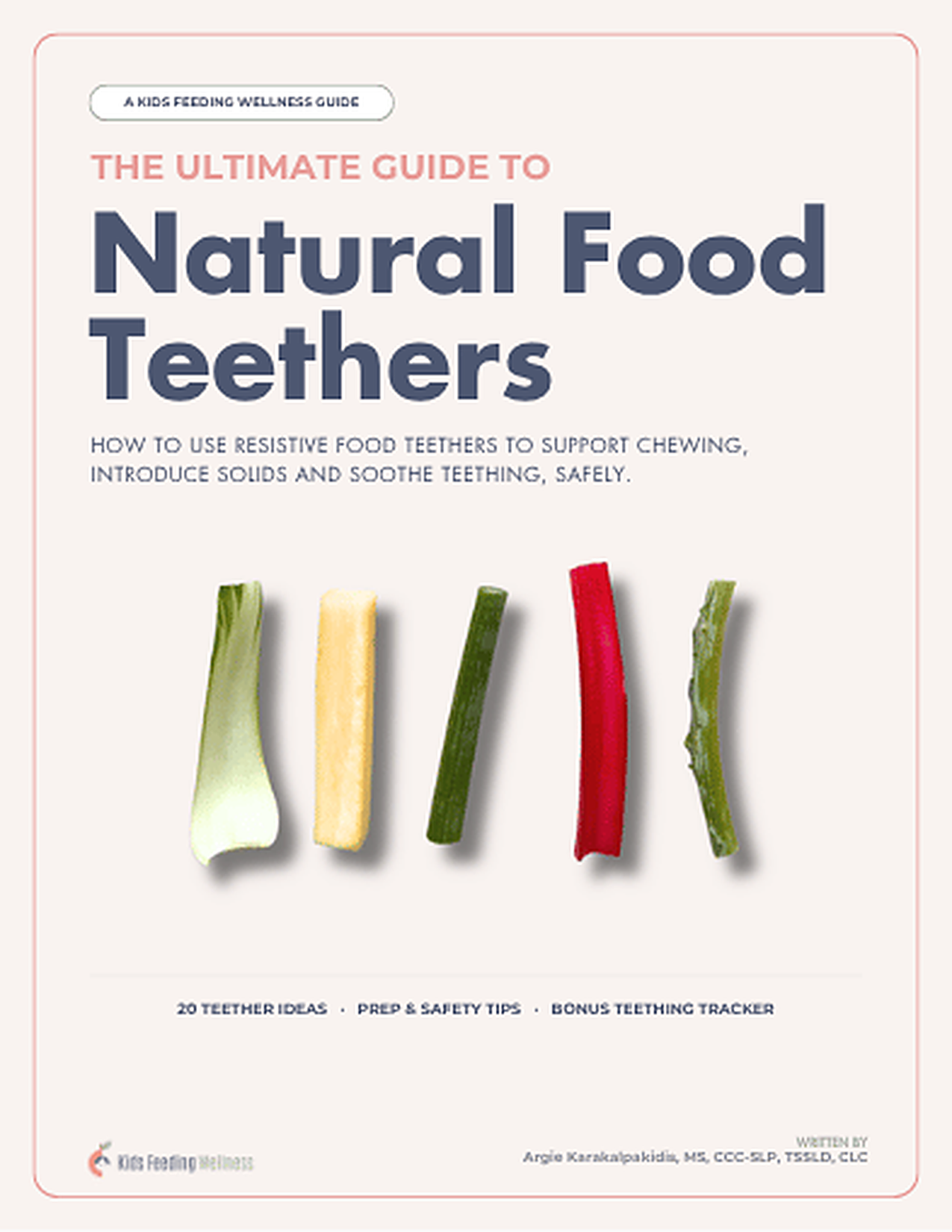 Image 1 of 9
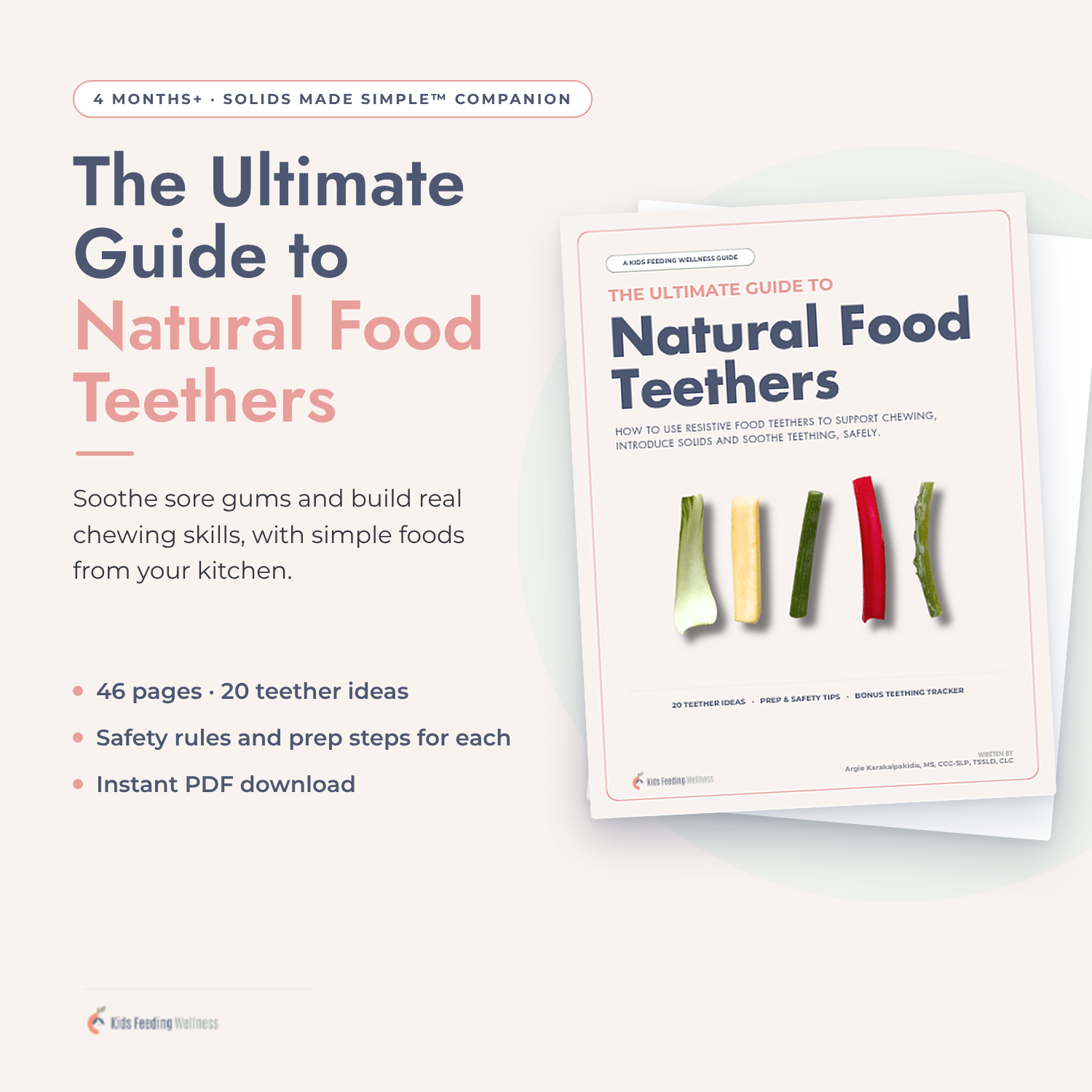 Image 2 of 9
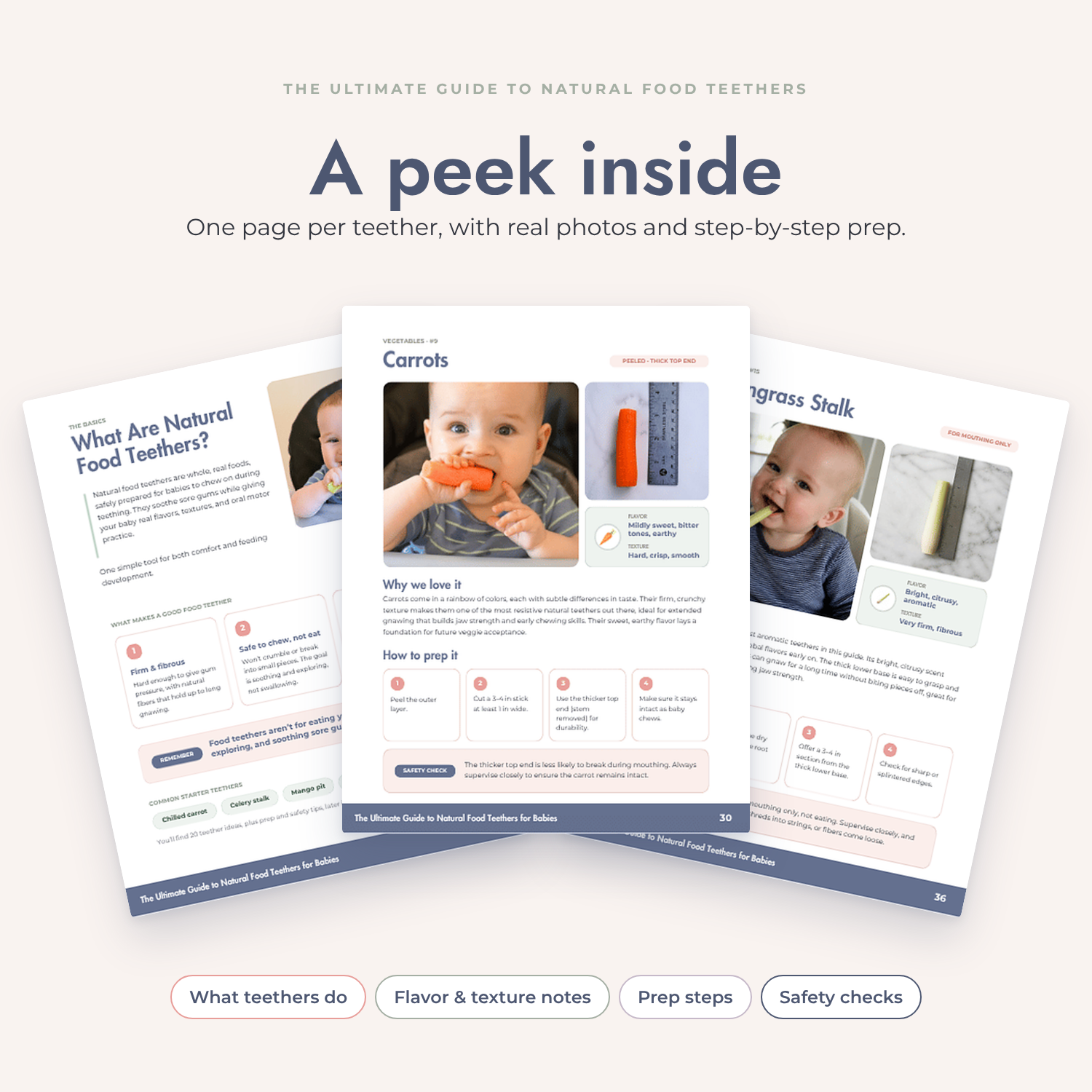 Image 3 of 9
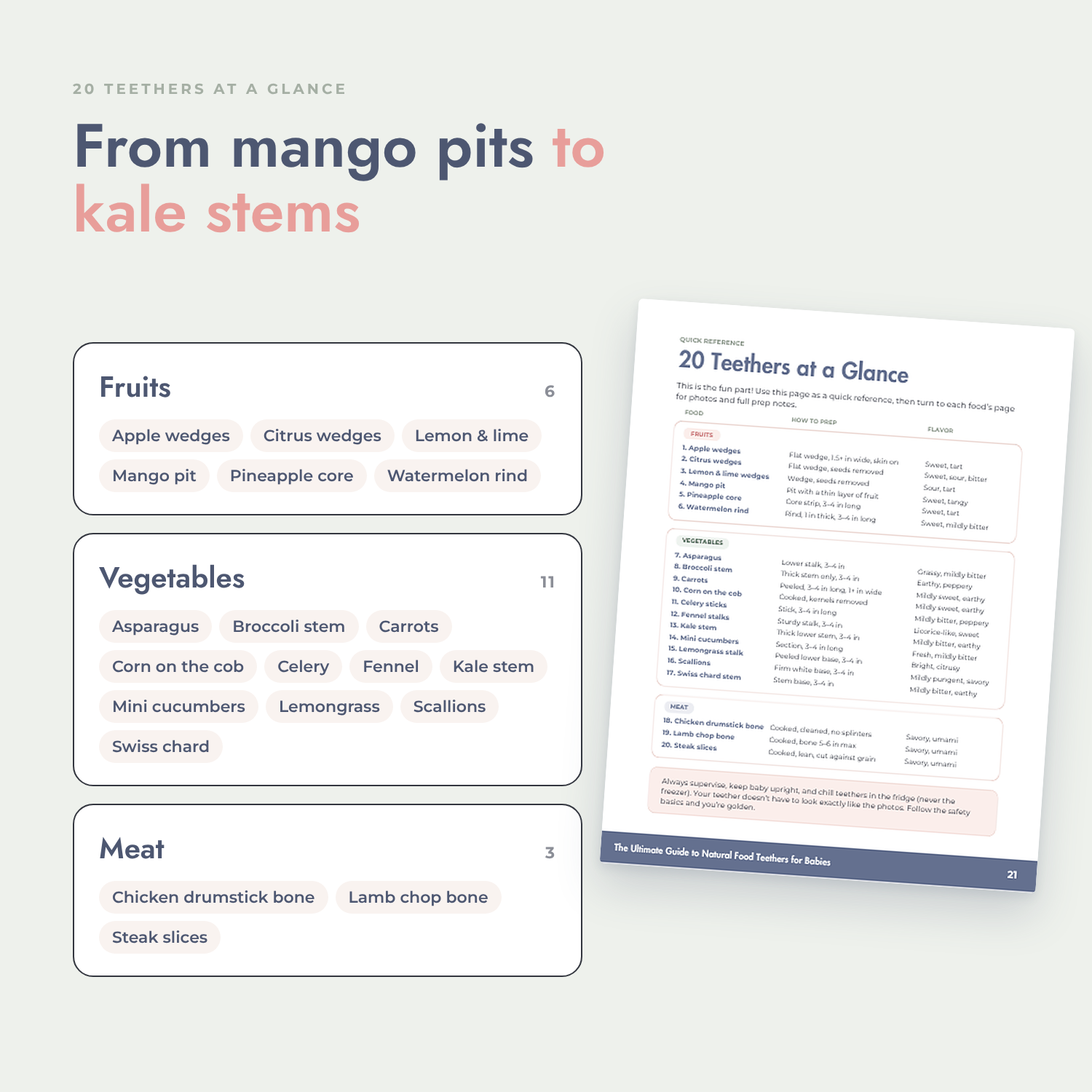 Image 4 of 9
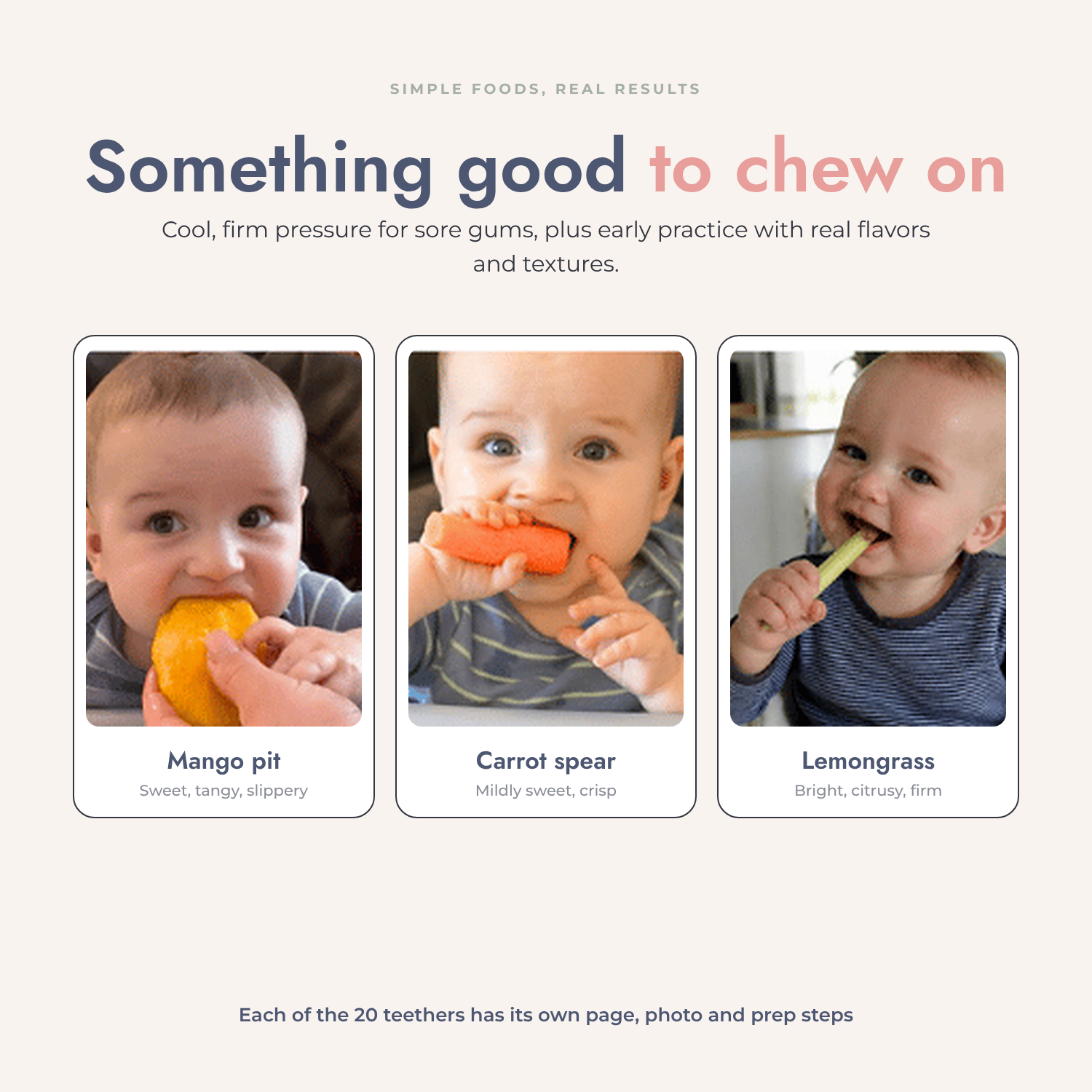 Image 5 of 9
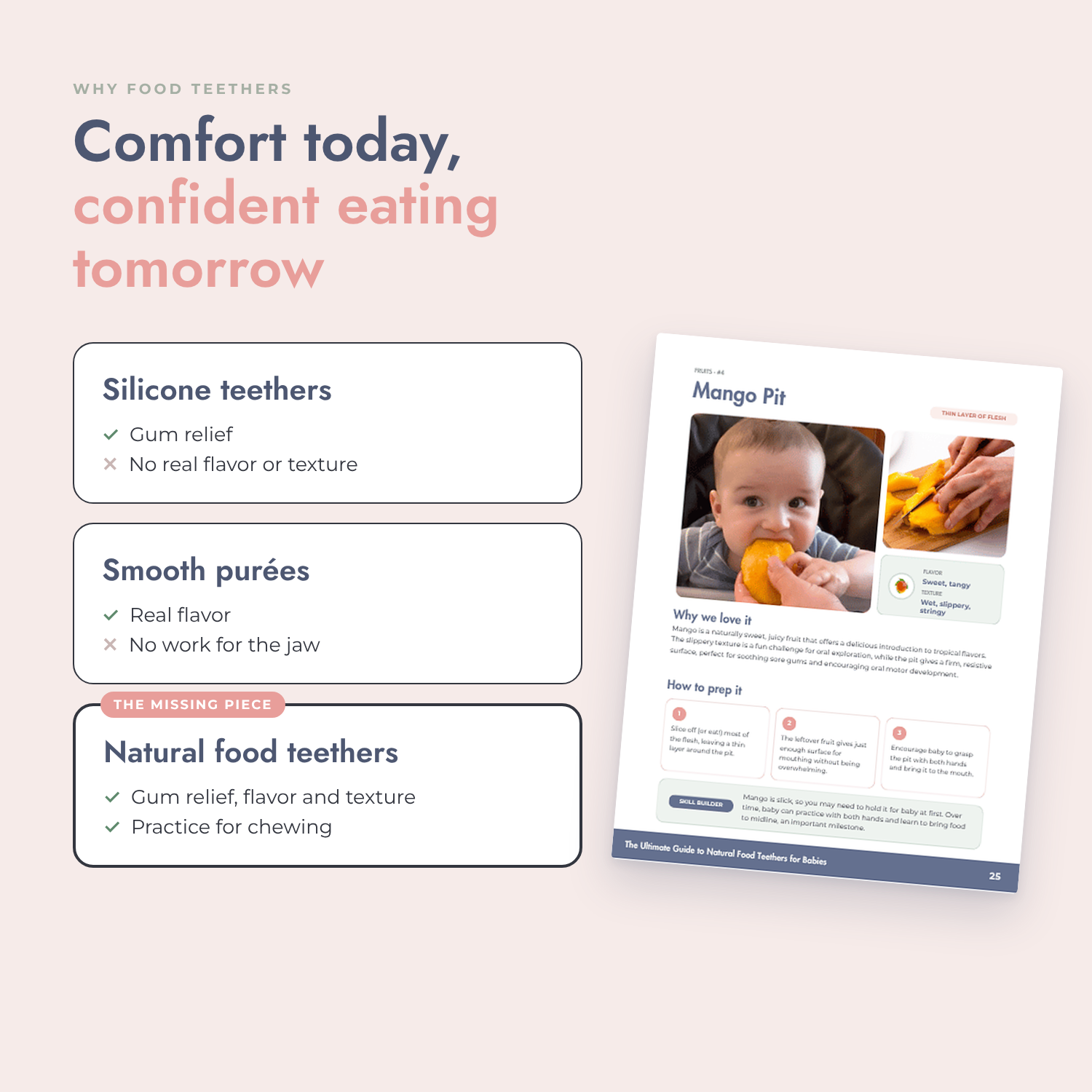 Image 6 of 9
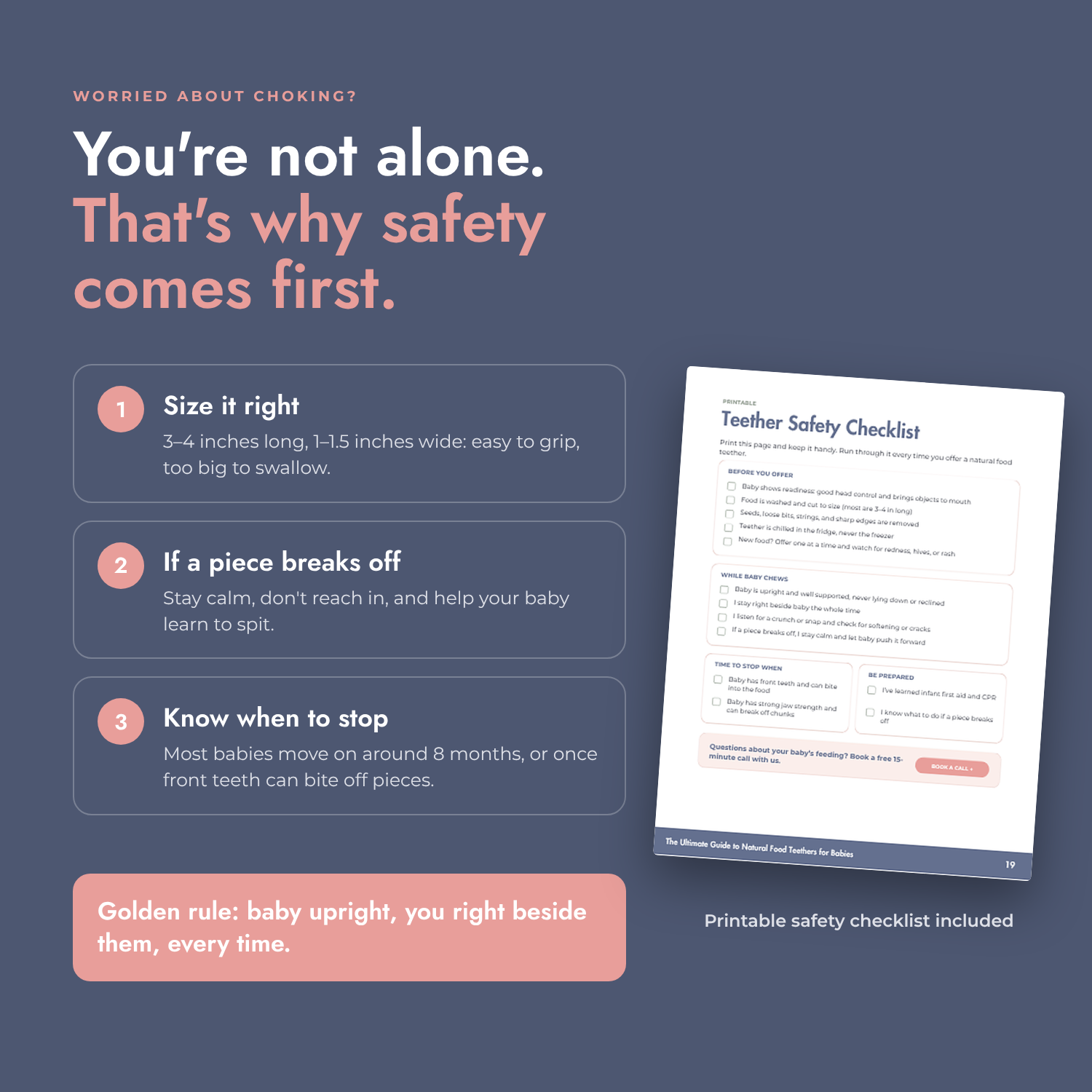 Image 7 of 9
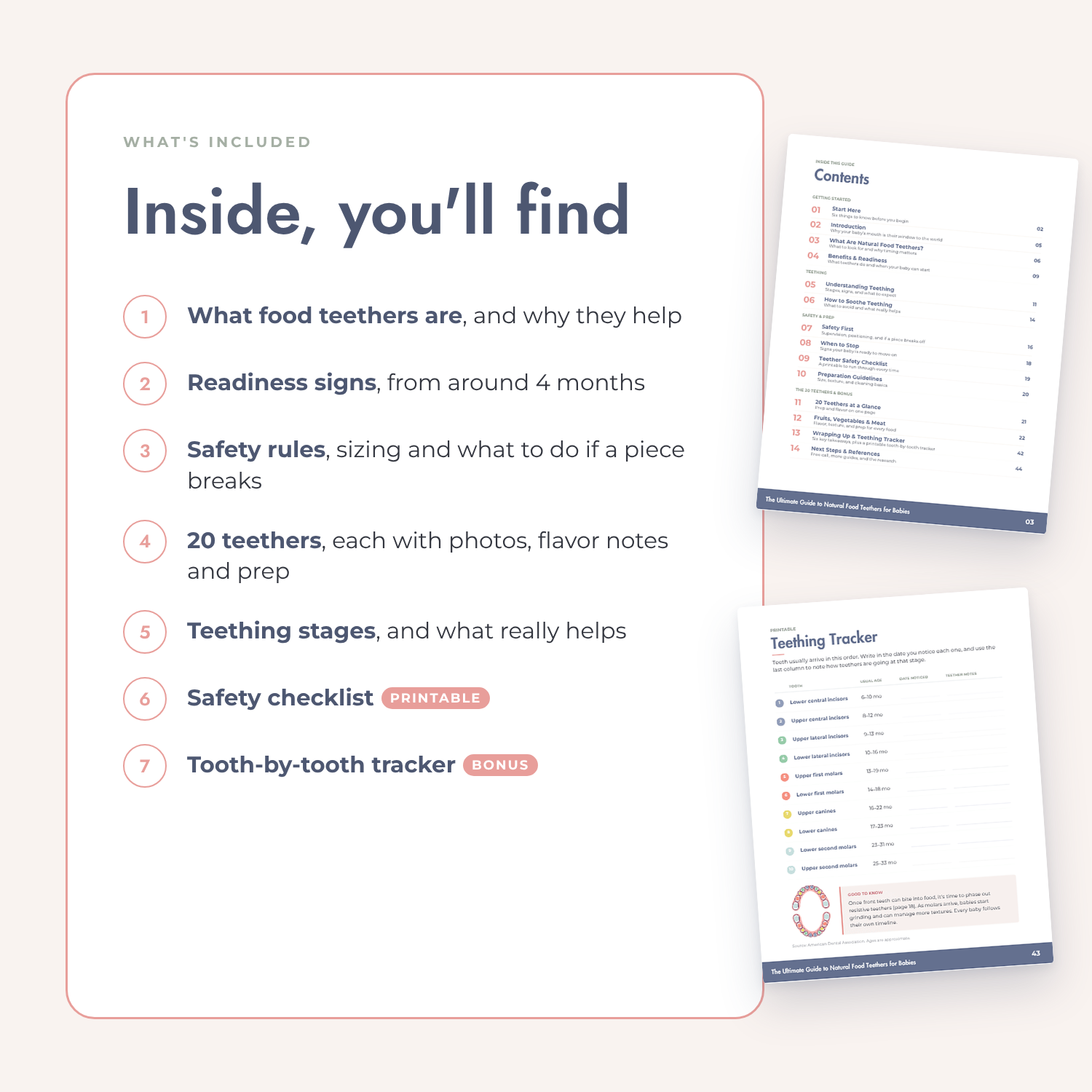 Image 8 of 9
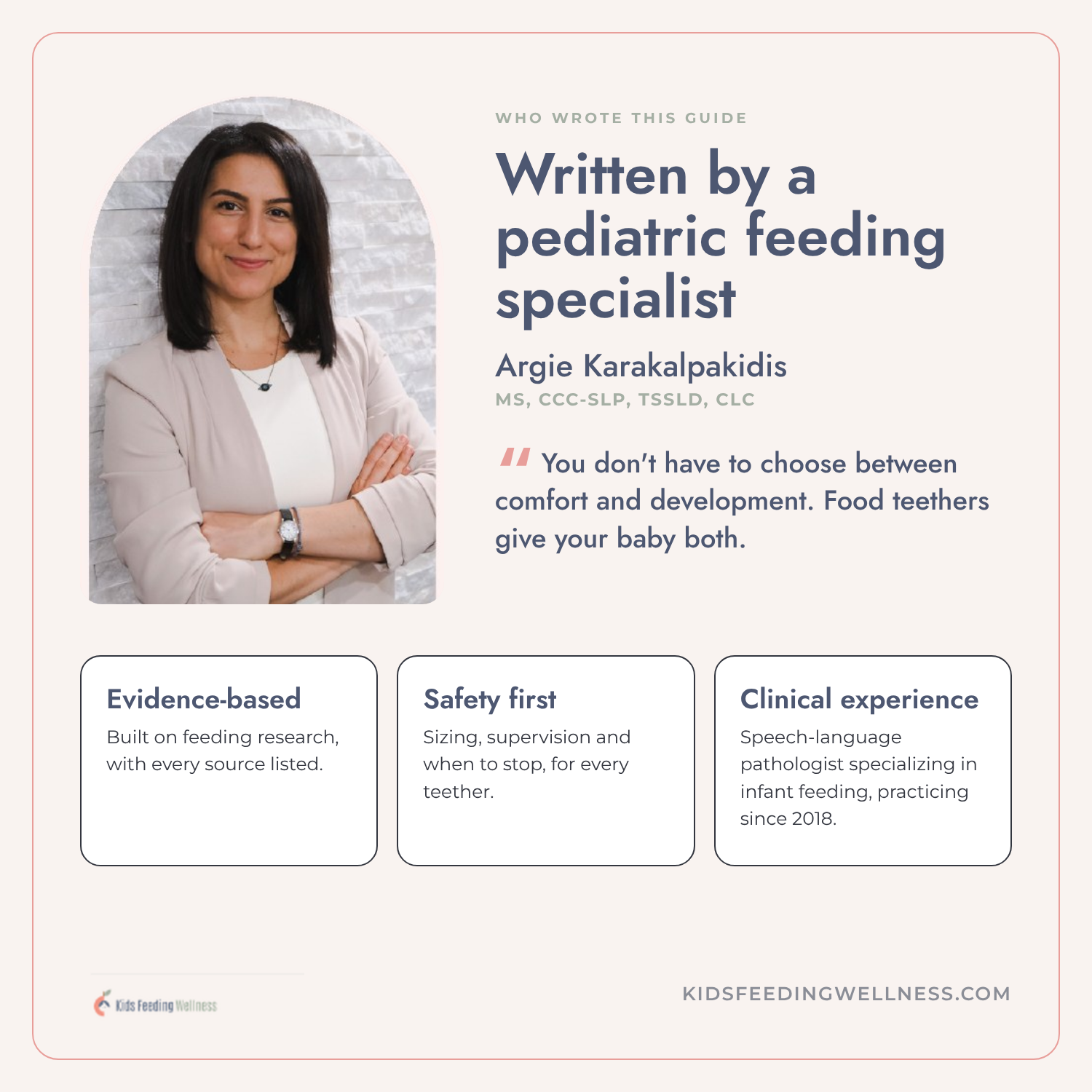 Image 9 of 9