
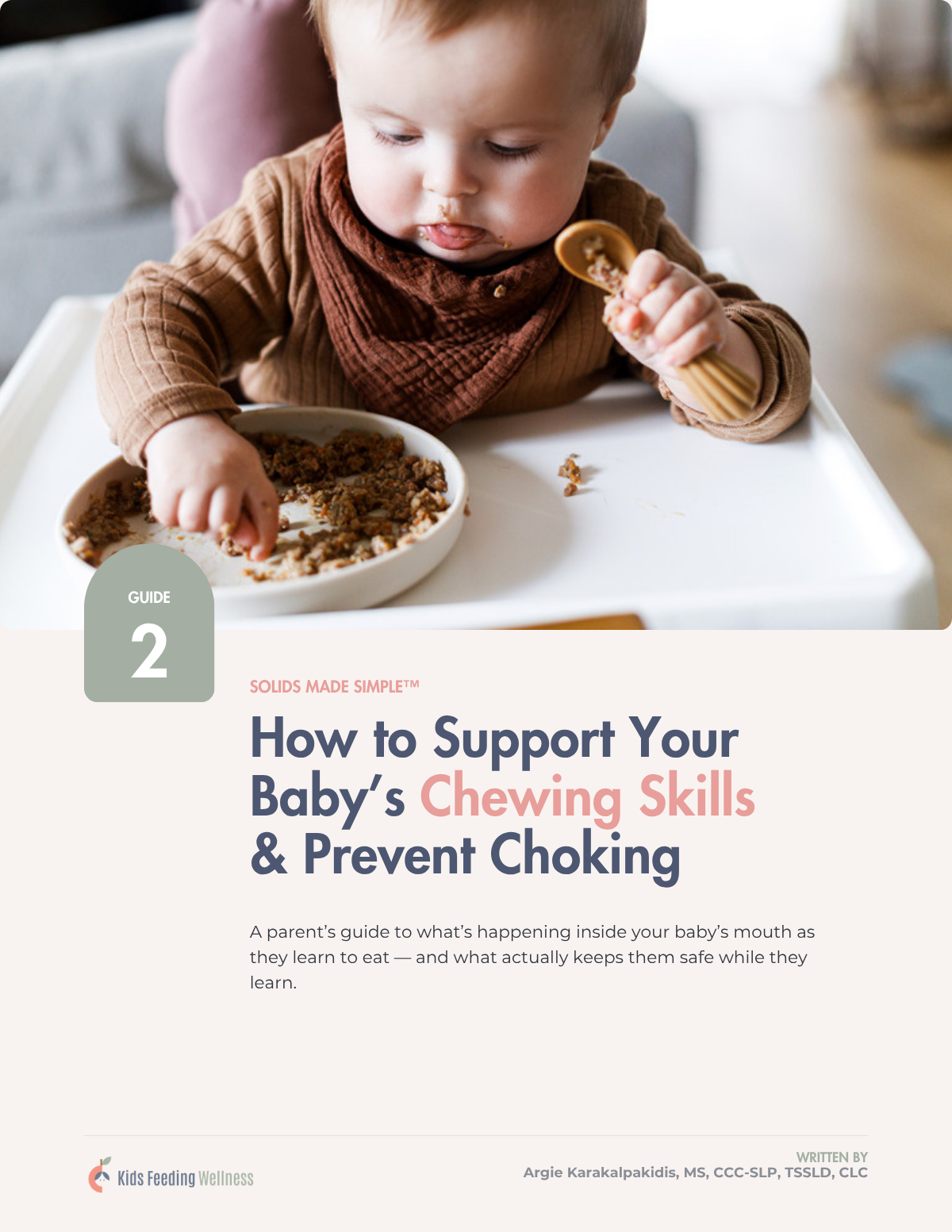
How to Support Your Baby's Chewing Skills & Prevent Choking
Know what's happening inside your baby's mouth as they learn to eat, and exactly what keeps them safe while they learn. Clear, evidence-based guidance from a pediatric feeding specialist, so mealtimes feel calm instead of scary.
Instant PDF download · Read on any device or print at home
Get the Guide →- ✓Gagging vs choking: how to tell them apart, and what to do for each
- ✓Safe foods: 12 foods to never offer, and how to safely modify the rest
- ✓Chewing skills: how chewing develops, and 10 ways to support it at every meal

Written by Argie Karakalpakidis, MS, CCC-SLP, TSSLD, CLC
Pediatric feeding specialist · Founder of Kids Feeding Wellness
- 46pages
- 12foods to never offer
- 10ways to support chewing
- 1printable Start Here sheet
- 37research sources cited
Sound familiar?
The questions that keep parents up at night, answered
Fear of choking is the most common worry families bring to me as solids begin. This guide answers it head-on, with the research behind every answer.
"Is this gagging, or is it choking?"
What each one looks and sounds like, and why gagging is a sign things are working.
"What do I do if my baby chokes?"
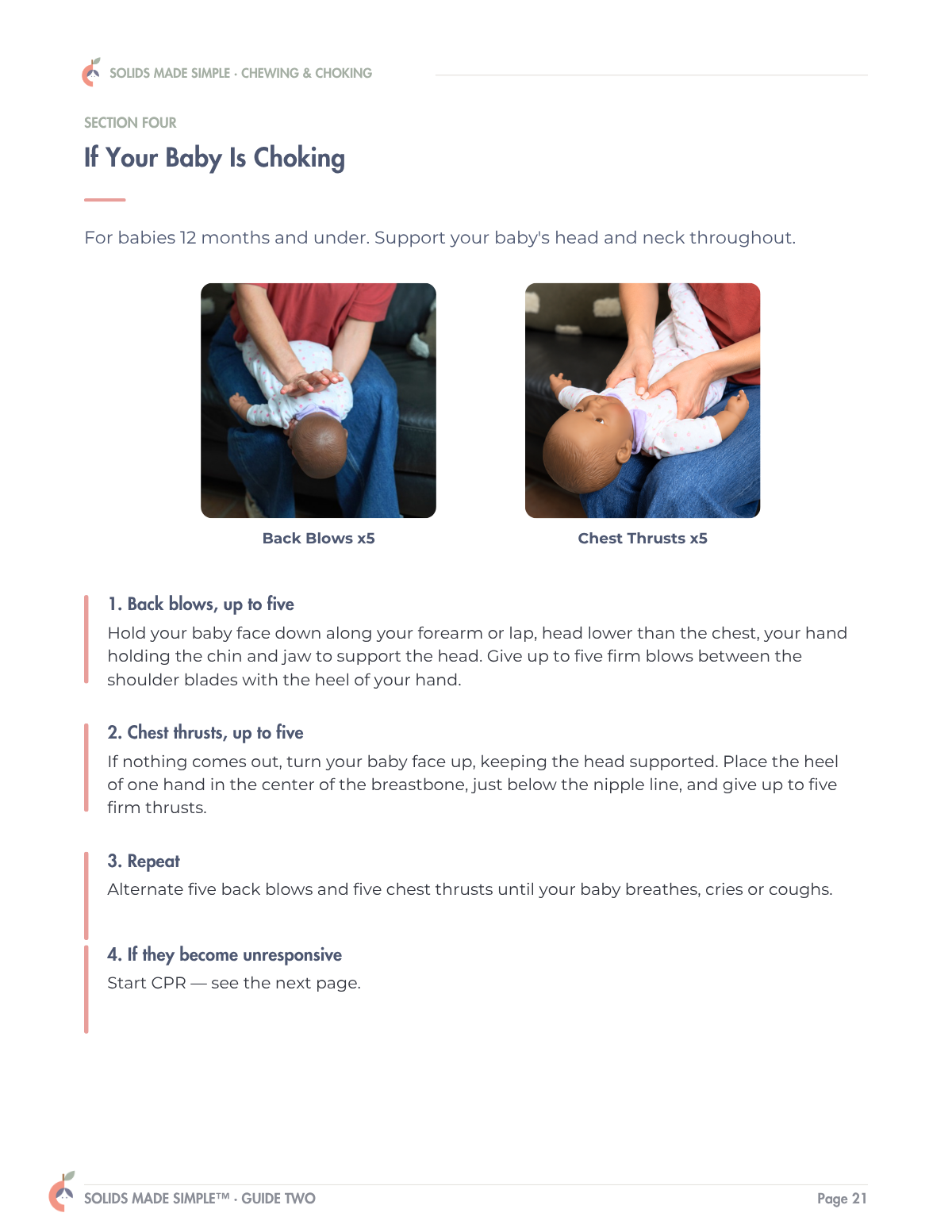
Back blows, chest thrusts and infant CPR, step by step, with photos.
"Which foods are actually dangerous?"
The 12 foods to avoid, and how to cut, mash or soften the rest so they're safe.
"Why does my baby spit everything out?"
Why it's normal, and the signs of progress to look for instead of how much they swallow.
"When do we move past purées?"
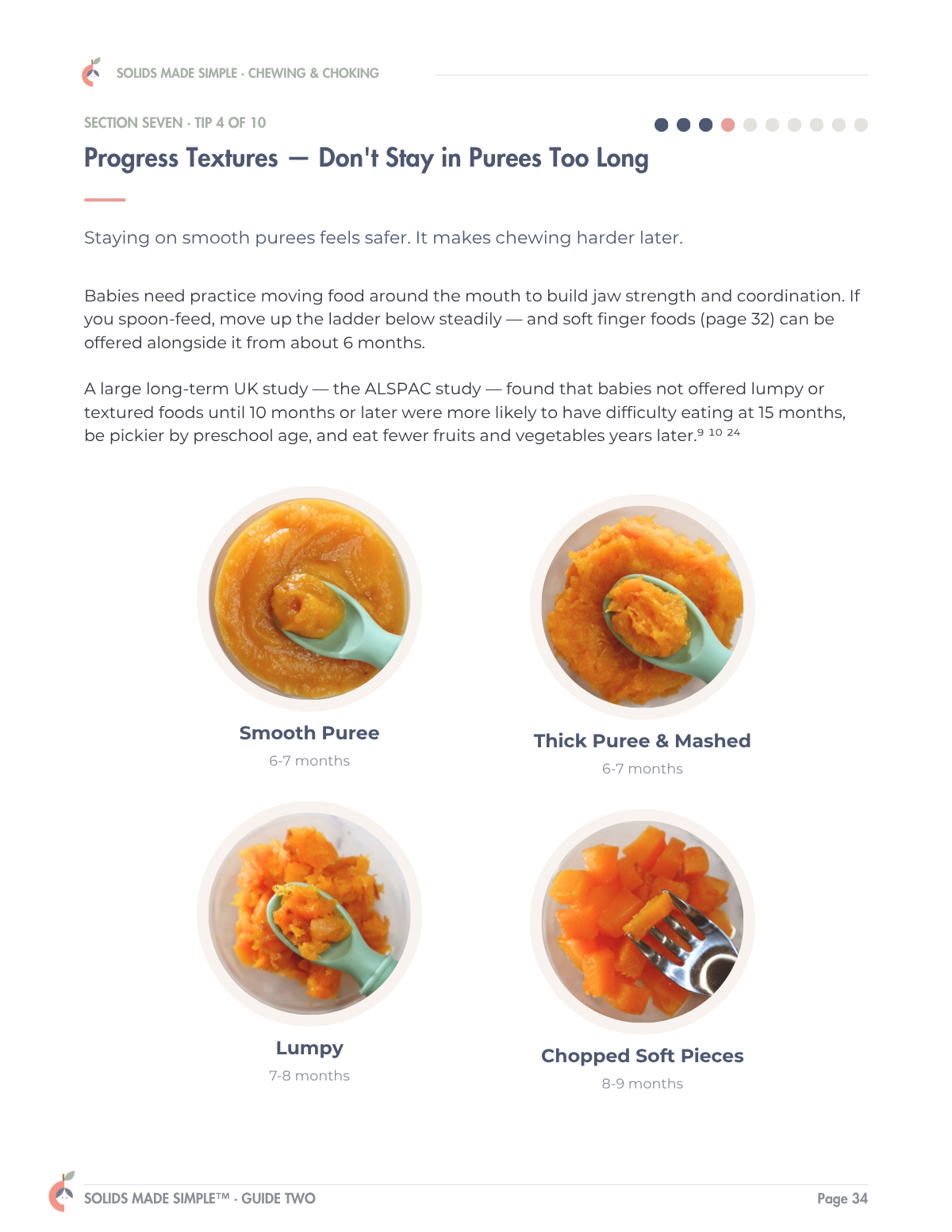
The texture ladder month by month, and why staying smooth too long makes chewing harder.
"Is my baby chewing the way they should?"
From munching to rotary chewing, and roughly when to expect each stage.
Less fear at the table. More of the practice your baby needs.
How chewing develops
Chewing is a skill. Your baby learns it one stage at a time.
Your baby's body is built to eat safely, with reflexes that protect the airway while they practice. Knowing what each stage looks like helps you offer the right textures at the right time.
- 1Munching
Rhythmic up-and-down jaw movements, from about 4 to 6 months.
- 2Moving food sideways
The tongue starts shifting food toward the gums, from about 6 to 9 months.
- 3Early rotary chew
The jaw moves diagonally and firmer textures get easier, around 12 to 15 months.
- 4Mature rotary chew
Jaw, tongue and lips grind food the way adults do, by around age 2.
Spitting food out, open-mouth chewing and some gagging are all normal while your baby learns. The guide shows you what real progress looks like.
Worried about choking?
Know the difference, and know exactly what to do.
Gagging can look alarming, but it's your baby's protective reflex doing its job. Choking is silent, rare and an emergency. The guide shows you how to tell them apart and walks you through the emergency steps, so you're prepared before you ever need them.
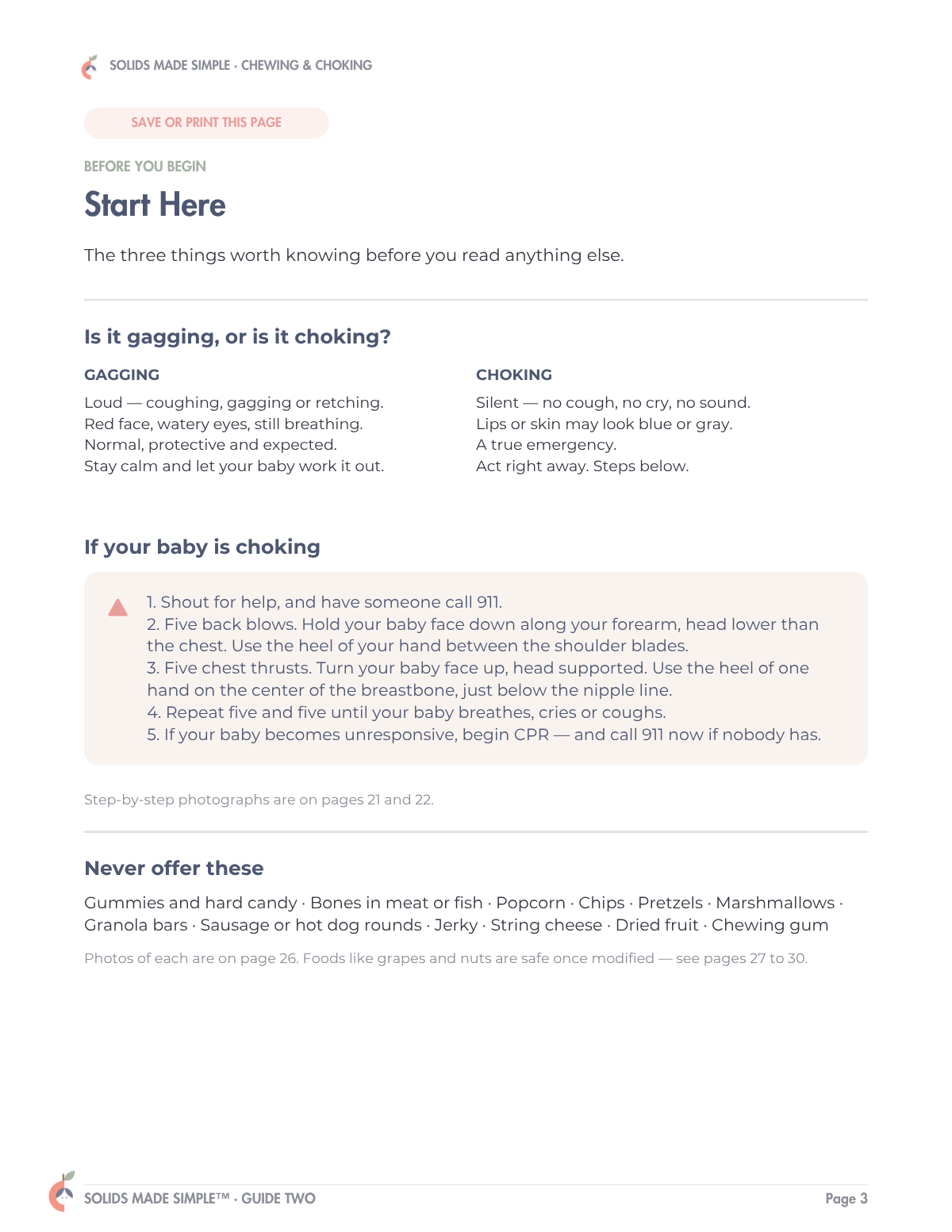
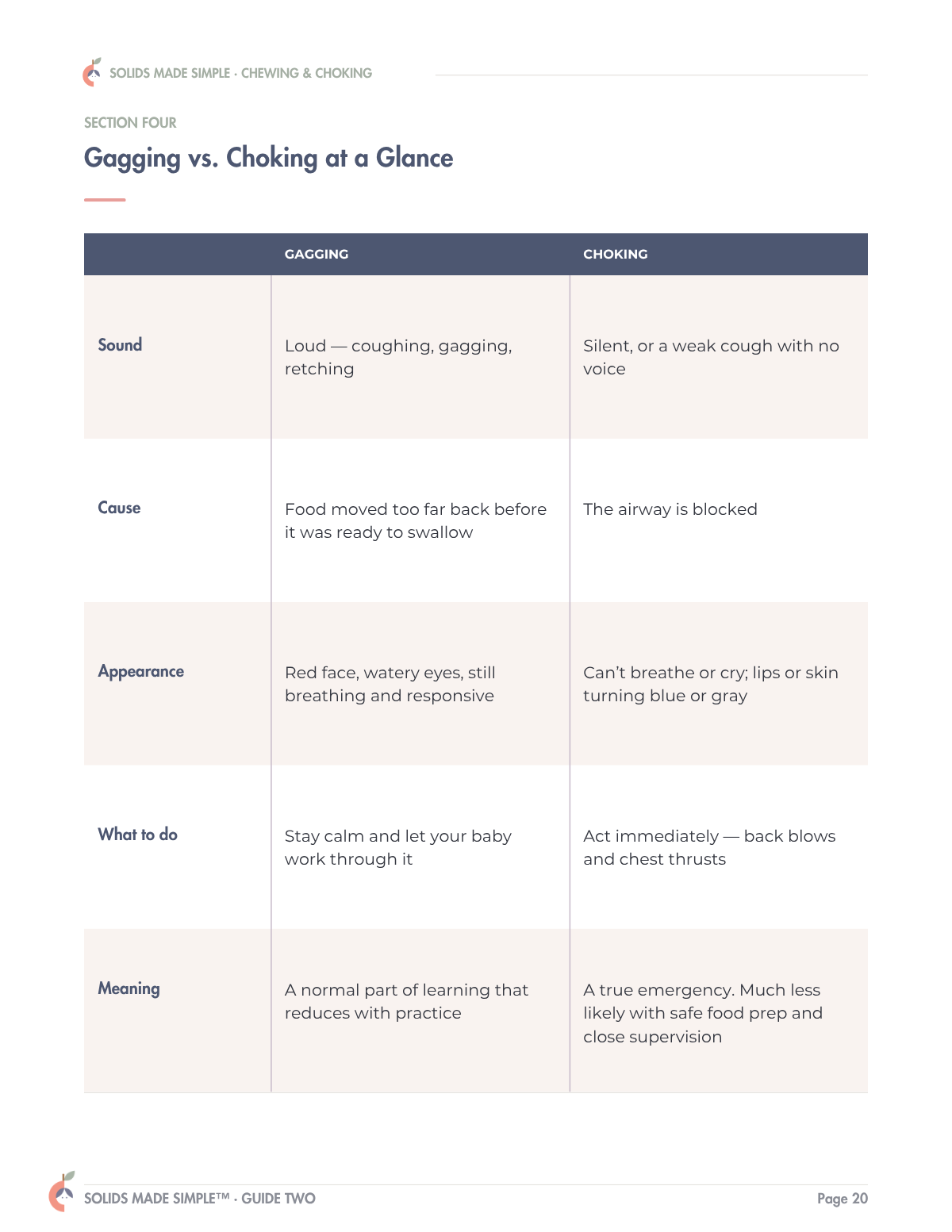
Gagging
LOUD · NORMAL · PROTECTIVE
- Coughing, retching, a red face, watery eyes
- Still breathing and responsive
- Food moved back before it was ready, and the reflex pushes it forward
- What to do: stay calm and let your baby work through it
Choking
SILENT · RARE · EMERGENCY
- No cough, no cry, no sound
- Lips or skin may turn blue or gray
- The airway is blocked
- What to do: act immediately with back blows and chest thrusts
Safe foods
It's the shape, size and texture that make a food risky, not the food itself.
Most choking incidents are preventable. Once you know what to look for, you can offer your baby a wide variety of real foods with confidence.
Avoid entirely
Twelve foods that are hard to modify safely before about age 4, like popcorn, hard candy, hot dog rounds and jerky, each shown with a photo.
Modify safely
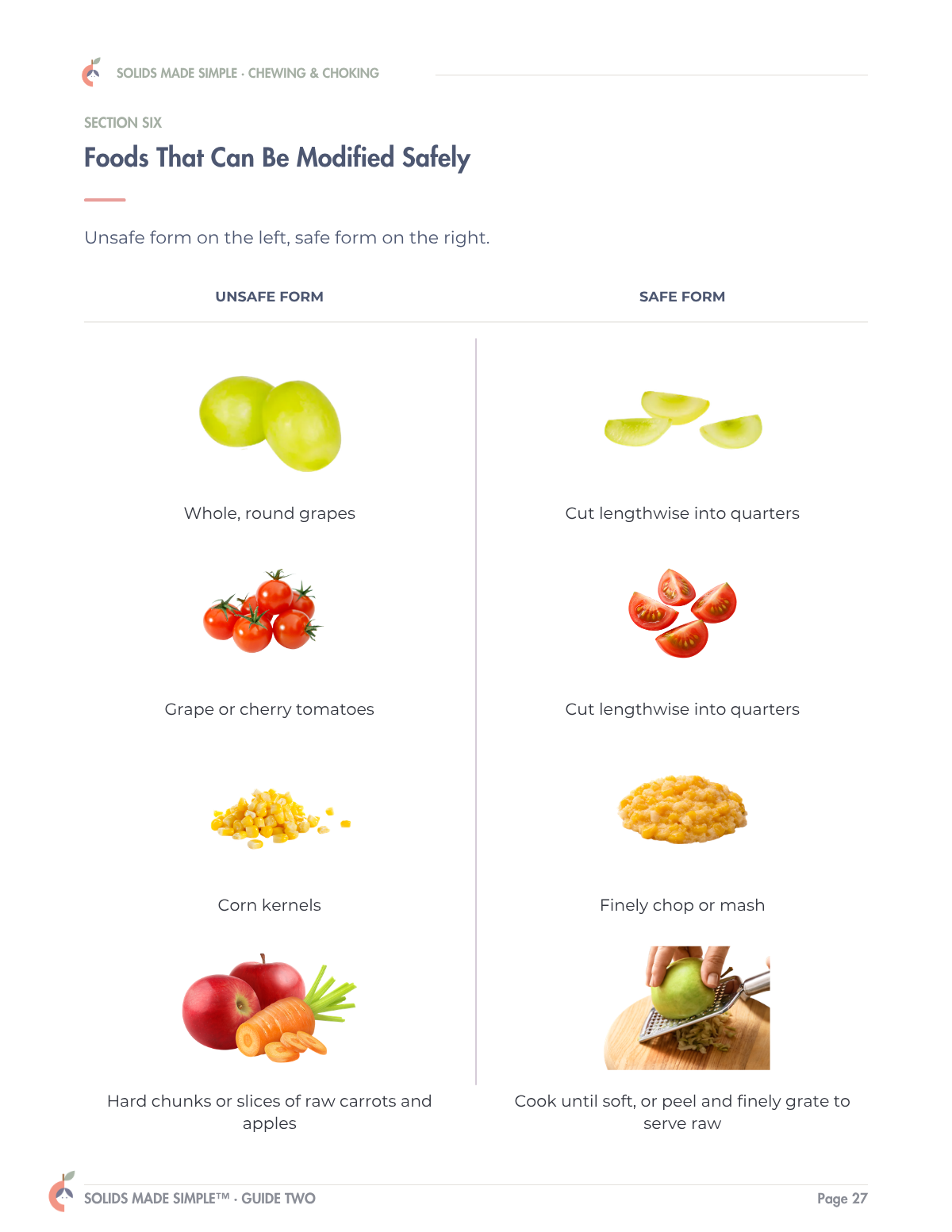
Grapes, nuts, blueberries, beans, cheese and more, with side-by-side photos of the unsafe form and the safe one.
The squish test
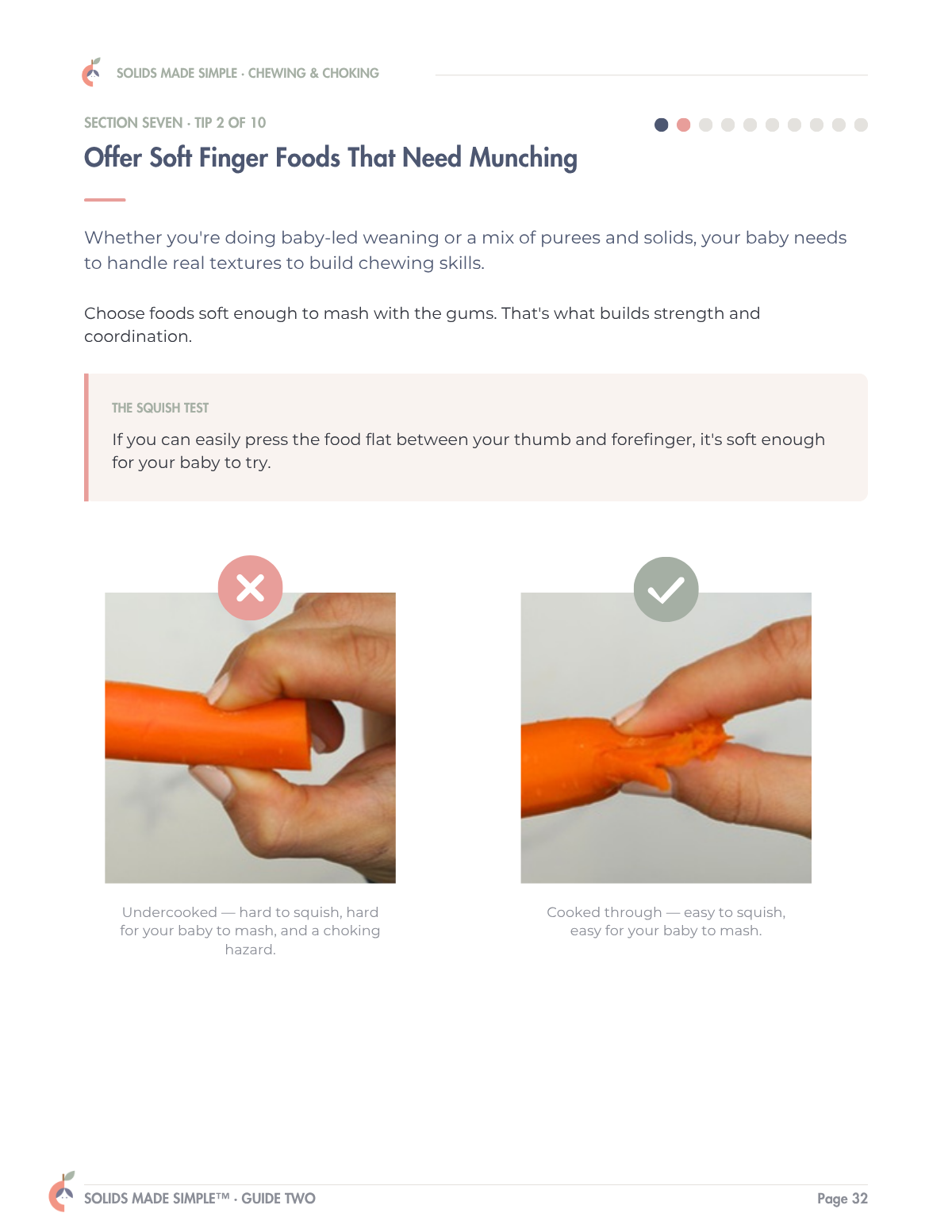
If you can easily press a food flat between your thumb and forefinger, it's soft enough for your baby to try. Simple, and you can do it at every meal.
Plus: the ten things that raise choking risk, and the three questions to ask before every meal.
Take a look inside
Clear pages you'll actually come back to
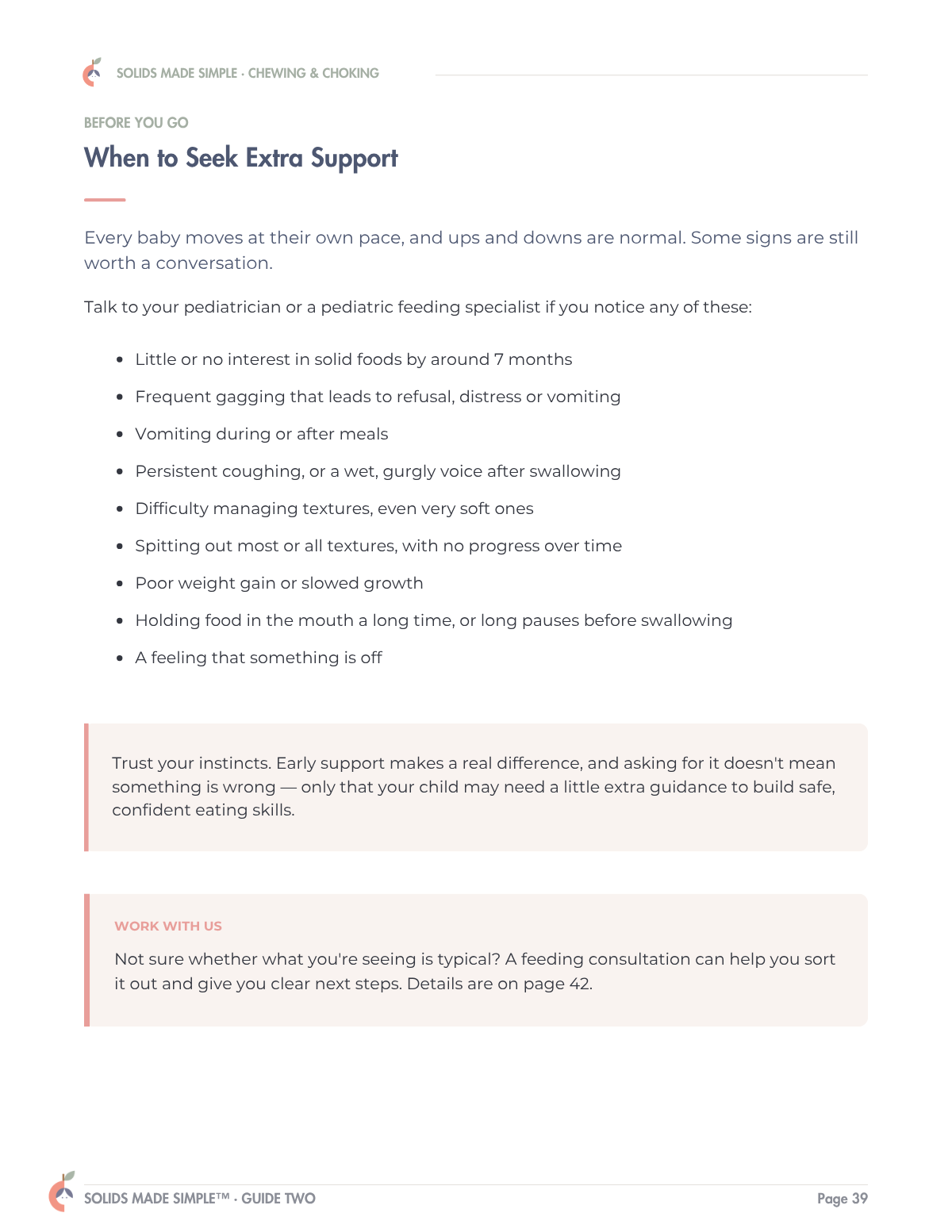
Real photos, simple visuals and plain language, with all 37 research sources cited at the back for anyone who wants to dig deeper.
What's inside
From first reflexes to confident chewing
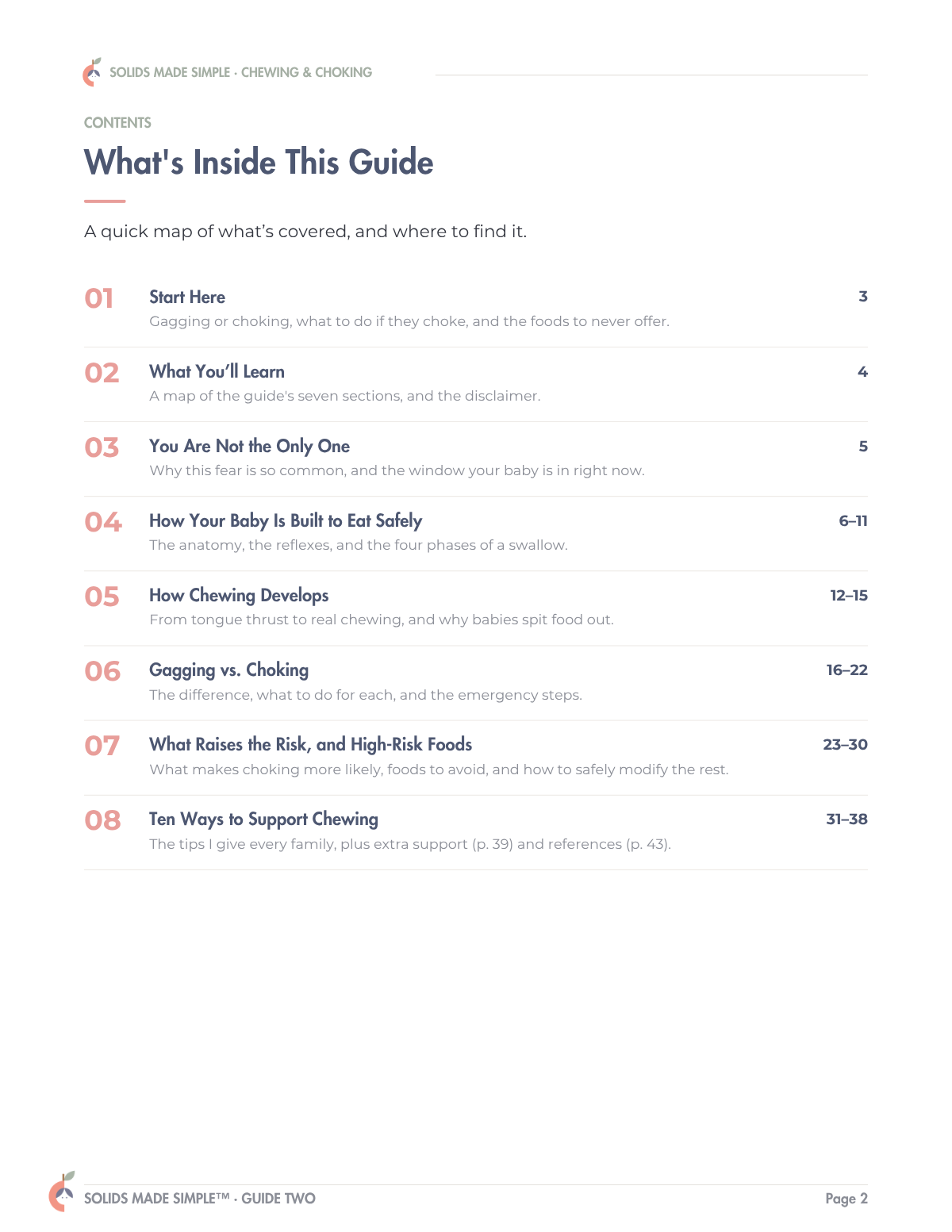
- 01Start HereGagging or choking, what to do if they choke, foods to never offerp. 3
- 02What You'll LearnA map of the guide, from fear to confidencep. 4
- 03You Are Not the Only OneWhy this fear is so common, and the window your baby is inp. 5
- 04How Your Baby Is Built to Eat SafelyThe anatomy, the reflexes and the four phases of a swallowpp. 6–11
- 05How Chewing DevelopsFrom tongue thrust to real chewing, and why babies spit food outpp. 12–15
- 06Gagging vs. ChokingThe difference, what to do for each, and the emergency stepspp. 16–22
- 07What Raises the RiskHigh-risk foods, foods to avoid, and how to modify the restpp. 23–30
- 08Ten Ways to Support ChewingThe tips I give every family, from food teethers to the high chairpp. 31–38
- 09When to Seek Extra SupportThe signs worth a conversation with a professionalp. 39
- 10ReferencesEvery claim in the guide, with its sourcepp. 43–45
What you get
How to Support Your Baby's Chewing Skills & Prevent Choking
- 46-page digital guide (PDF), yours to keep
- How chewing develops, from munching to rotary chewing
- Gagging vs choking, and what to do for each
- Step-by-step choking and infant CPR photo pages
- 12 foods to avoid, plus unsafe vs safe forms for the rest
- 10 ways to support safe, confident chewing
- One-page Start Here sheet PRINTABLE
Instant download · Works on phone, tablet or computer
This guide is for you if…
- Your baby is starting solids, or about to
- Gagging, or the fear of choking, makes mealtimes tense
- You feel stuck on purées or pouches
- You're not sure which foods are safe, or how to cut them
- You want to understand how babies actually learn to chew
Best time to read it: around 6 months as solids begin, or anytime you feel stuck moving past purées. Helpful for grandparents and caregivers too.
Hi, I'm Argie
MS, CCC-SLP, TSSLD, CLC · Founder, Kids Feeding Wellness
I'm a speech-language pathologist and certified lactation counselor specializing in infant feeding, practicing since 2018. Fear of choking is the worry I hear most, and too often it means textures get held back. I wrote this guide so you can give your baby the practice they need, knowing how their body protects them and what to do if something goes wrong.
"Every bite is practice, even the ones that come back out."
Questions
Frequently asked questions
When should I get this guide?
Around 6 months as solids begin, or anytime you feel stuck moving past purées. Reading it before the first meal means you'll already know what normal gagging looks like.
Do I need Guide 1 first?
No. Each guide stands on its own. Guide 1 covers when and how to start solids, and this guide picks up with chewing, textures and safety.
Does this replace an infant CPR course?
No. The guide includes step-by-step pages for choking and infant CPR, but it doesn't replace hands-on training. Please take a certified course through the American Red Cross or American Heart Association.
Is this for baby-led weaning or purées?
Both. Whichever approach you choose, your baby needs to handle real textures to build chewing skills, and the safety guidance applies either way.
Is this a printed book?
No. It's a digital PDF you can read on any device or print at home, including a one-page Start Here sheet to keep somewhere you can see it.
Does this replace medical advice?
No. This guide is general information for typically developing infants under 12 months. Always talk with your pediatrician or a feeding specialist about your baby's specific needs.
The Solids Made Simple™ series
Keep going with the series
Each guide picks up where the last one leaves off, from the first taste to confident chewing.
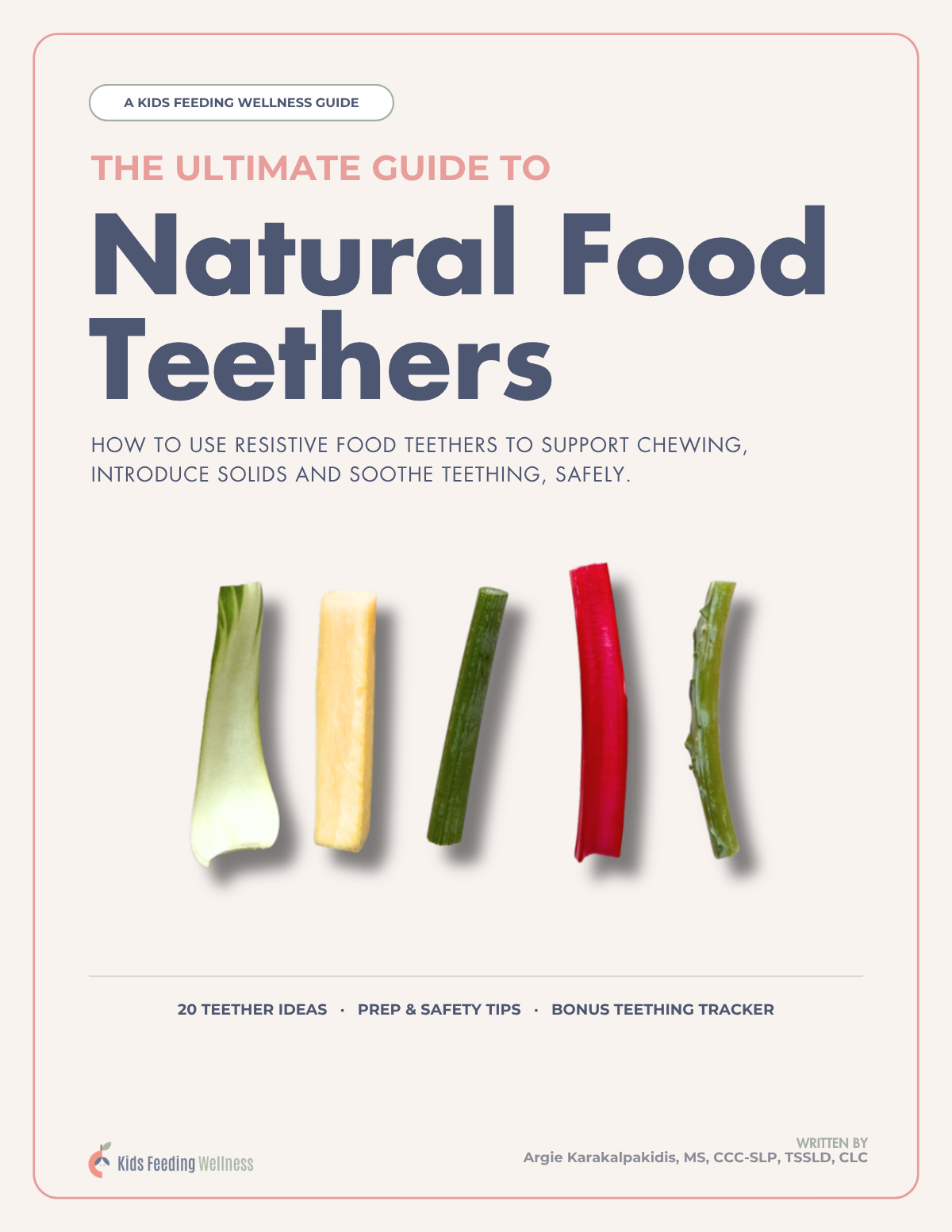
The Ultimate Guide to Natural Food Teethers
Twenty safe teether ideas to build flavor and chewing skills before solids.
See what's inside →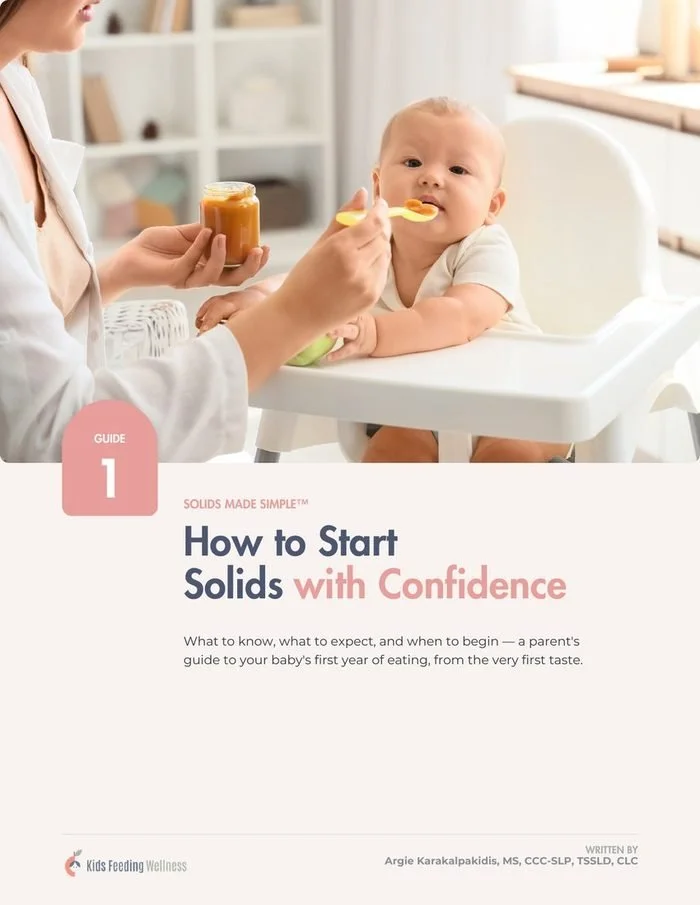
How to Start Solids with Confidence
Readiness signs, purées or finger foods, iron, allergens and first foods.
See what's inside →Confidently Introducing the Top Food Allergens
All nine allergens, what to try first, and what to watch for.
Coming soonGive your baby the practice they need, safely
A calm, clear guide to chewing and choking prevention, from a pediatric feeding specialist.
Get the Guide for $19 →