Why Toddlers Suddenly Become Picky Eaters (And What It Really Means)

The short answer
Many toddlers who once ate everything become pickier between about 12 months and 3 years. Growth slows, independence grows, and a protective wariness of new foods kicks in. For most children this is a normal stage of development, not a sign that something has gone wrong.
One of the most common things I hear as a feeding therapist is:
My child used to eat everything… and now all of a sudden they won’t eat anything.
Almost every toddler parent, at some pointIf this sounds familiar, you’re not alone. Many parents reach out during this stage, worried something has gone wrong, especially when their child starts refusing foods they once loved, eating less, or becoming more selective seemingly overnight.
For many children, this shift isn’t a problem. It’s development.
What Is Developmental Picky Eating?
Developmental picky eating is a normal phase of toddler feeding development.
Typically appears 12 months – 3 yearsDuring this time, your child isn’t just eating. They’re also:
Learning independenceWanting to choose, do it themselves, and say “no.”
Building regulationStill learning to manage focus, feelings, and sitting still.
Noticing everythingMore aware of their surroundings, and more easily distracted.
Learning what feels safeFiguring out which foods feel familiar and comfortable in their body.
Common Signs of Developmental Picky Eating
If your child is in this phase, you may notice:
- Refusing foods they used to eat
- Saying “no” often at mealtimes
- Eating less than they used to
- Strong preferences for certain foods
- Being more cautious with new foods
- Wanting more control over what and how they eat
- Getting distracted or leaving the table quickly
- Eating well one day and very little the next
These changes can feel sudden, but they’re often tied to predictable developmental shifts.
Is your toddler asking for the same food every day? That’s often a food jag, and it’s very common at this age.
Why This Happens (The Part Most Parents Aren’t Told)
Around the second year of life, several big changes happen at once:
- Growth slowsAppetite naturally decreases
- Independence growsToddlers want more control at the table
- Attention is still developingShorter meals and more distraction
- Food neophobia beginsA protective wariness of new foods [1]
When all of these overlap, eating can look very different than it did in infancy. Picky eating is common in early childhood, and most children move through it: in one large study, nearly half of children were picky at some point, while only about 4% stayed persistently picky [2,3].
It’s Important Not to Pathologize What Is Normal
Without this context, it’s easy to assume something is wrong. Here’s how the same toddler can look through two different lenses:
Without context, parents often wonder
- “Are they eating enough?”
- “Are they becoming too picky?”
- “Do we need feeding therapy?”
With understanding, you can
- Respond with more clarity
- Reduce pressure at mealtimes
- Support independence in a healthy way
- Create a more positive feeding environment
Not all picky eating requires intervention. Some of it requires understanding.
Feeding therapy can be incredibly helpful when it’s needed, but not every feeding challenge is a disorder. When we treat a normal stage as a problem, we often respond with urgency or pressure, which can make feeding harder over time. Understanding is what lets you handle these behaviors with confidence.
The most helpful response is usually calm structure without pressure. Rebuilding Trust at the Table walks through what that looks like.
When Should You Seek Support from a Feeding Therapist?
Consider reaching out if
- Your child accepts a very limited number of foods
- Mealtimes feel consistently stressful or overwhelming
- There are concerns with chewing, swallowing, or safety
- Growth or weight gain is a concern
- Feeding difficulties are affecting daily life
A feeding therapist can help you figure out whether what you’re seeing is within the range of typical development, or whether more targeted support would help.
Wondering where the line is? When Is It More Than Just Picky Eating? explains the difference between picky eating, Pediatric Feeding Disorder, and ARFID.
Want a Deeper Understanding of What’s Really Happening?
If you’re thinking, “This sounds like my child, but I still feel unsure what to do next,” this is exactly why we created our toddler guide.
“How do I make my child eat?”
What is my child learning right now?
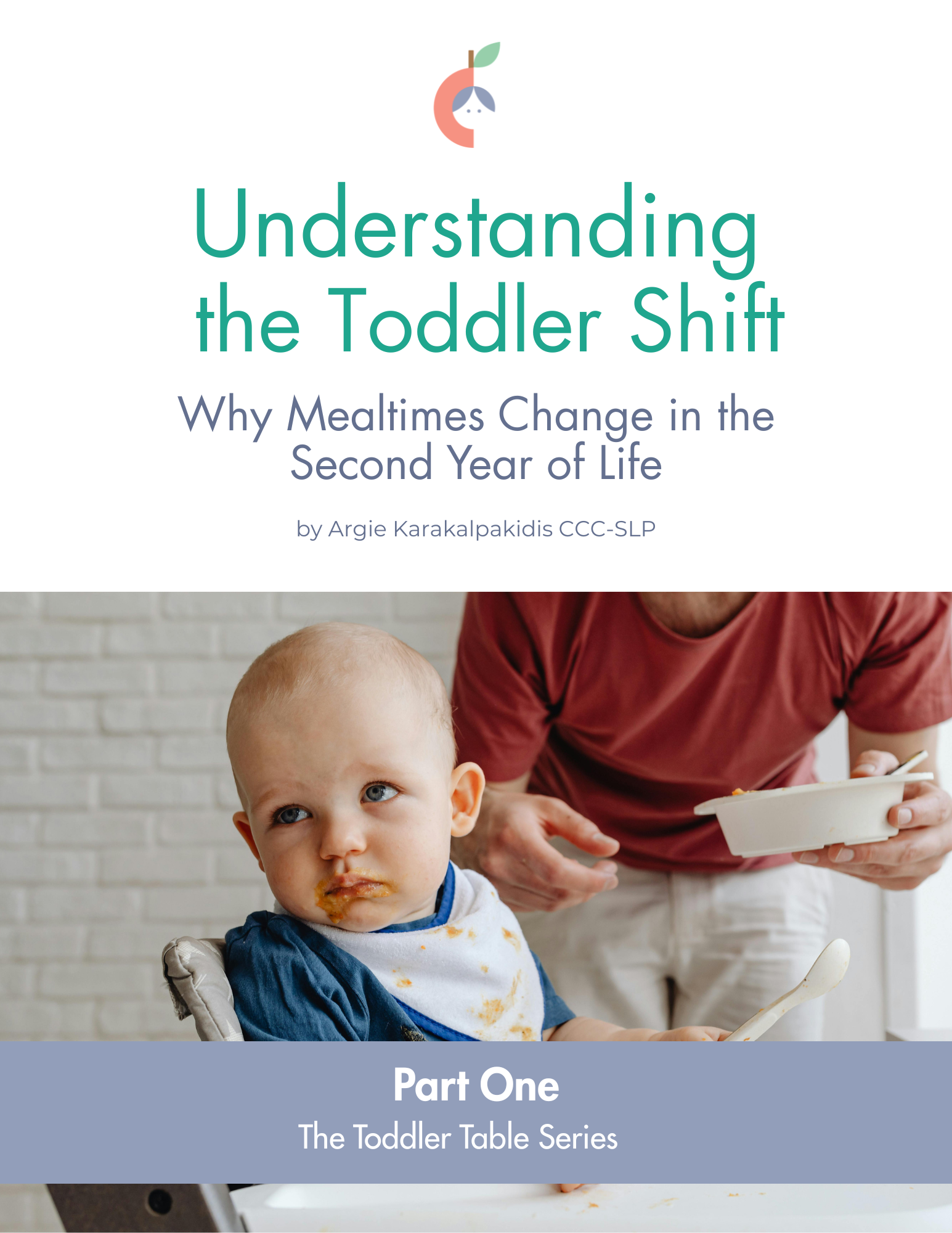
KFW Feeding Guide · For parents & clinicians
Understanding the Toddler Shift: Why Mealtimes Change in the Second Year of Life
- The real developmental reasons behind picky eating and food refusal
- How independence, appetite, attention, and food neophobia shape the table
- What’s typical vs. when more support may be needed
- Clear explanations and visuals to help you connect the dots
Frequently Asked Questions
Why did my toddler suddenly stop eating foods they used to like?
It’s very common in the second year. Growth slows, so appetite drops, and toddlers become more independent and more cautious with food. Refusing a once-loved food is often part of this normal stage.
How long does toddler picky eating last?
It varies. For many children it eases over the preschool years, especially when foods keep being offered without pressure. Most children move through it rather than staying persistently picky.
Should I make my toddler take a bite?
Pressure, bribes, and “just one bite” rules tend to backfire. Keep offering a mix of familiar and new foods, eat together, and let your child decide how much to eat from what you serve.
When is picky eating more than a phase?
Reach out if your child eats a very small number of foods, mealtimes are consistently stressful, there are chewing, swallowing, or safety concerns, or there are worries about growth or weight.
Not Sure If It’s a Phase?
Book a free 15-minute call. We’ll talk through what you’re seeing at the table and figure out the right next step together.

Selected References
- Dovey TM, Staples PA, Gibson EL, Halford JCG. Food neophobia and ‘picky/fussy’ eating in children: a review. Appetite. 2008;50(2–3):181–193.
- Cardona Cano S, Tiemeier H, Van Hoeken D, et al. Trajectories of Picky Eating During Childhood: A General Population Study. Int J Eat Disord. 2015;48(6):570–579.
- Taylor CM, Emmett PM. Picky eating in children: causes and consequences. Proc Nutr Soc. 2019;78(2):161–169.