
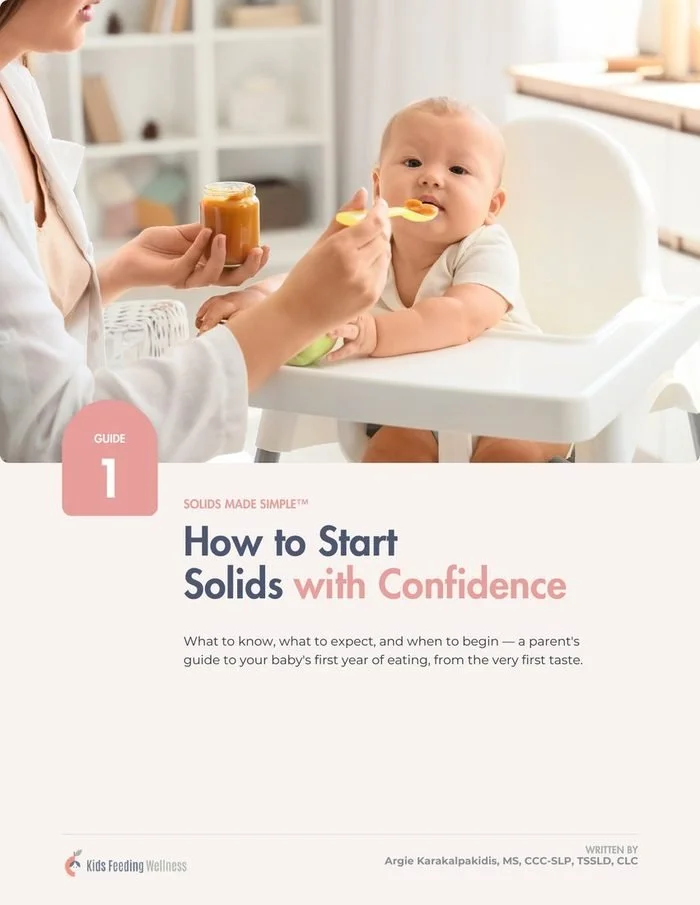

How to Start Solids with Confidence
Purées or finger foods? Milk or solids first? Is your baby really ready? Clear, evidence-based answers from a pediatric feeding specialist, so those first weeks feel calm instead of confusing.
Instant PDF download · Read on any device or print at home
Get the Guide →- ✓When to start: why around six months, and the four signs your baby is ready
- ✓How to start: purées, finger foods or both, how often, and what a day looks like
- ✓What to offer: iron and first foods, allergens, and what to avoid before one

Written by Argie Karakalpakidis, MS, CCC-SLP, TSSLD, CLC
Pediatric feeding specialist · Founder of Kids Feeding Wellness
- 49pages
- 11sections
- 4readiness signs
- 2sample days
- 36research sources cited
Sound familiar?
The questions every parent asks, answered in one place
Advice about starting solids is everywhere, and most of it disagrees. This guide answers the questions I hear from families every day, with the research behind each answer.
"Is my baby actually ready?"
Four signs to look for, and why readiness is about your baby, not the calendar.
"Purées or baby-led weaning?"
What each one builds, the watch-outs, and why you don't have to pick a side.
"Do I give milk or solids first?"
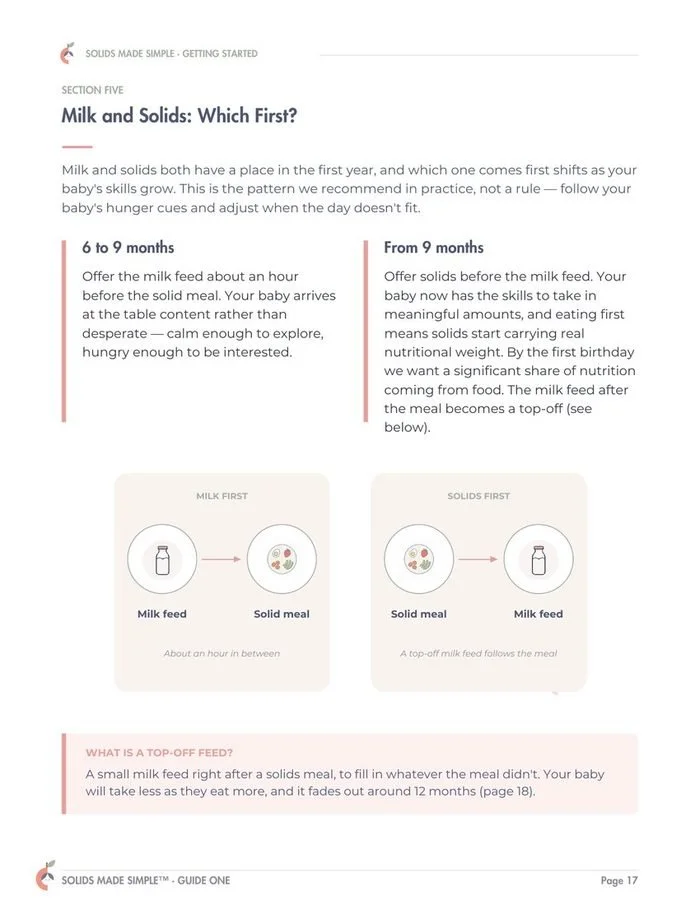
How the order flips at around nine months, with a sample day on each side.
"What if my baby barely eats?"
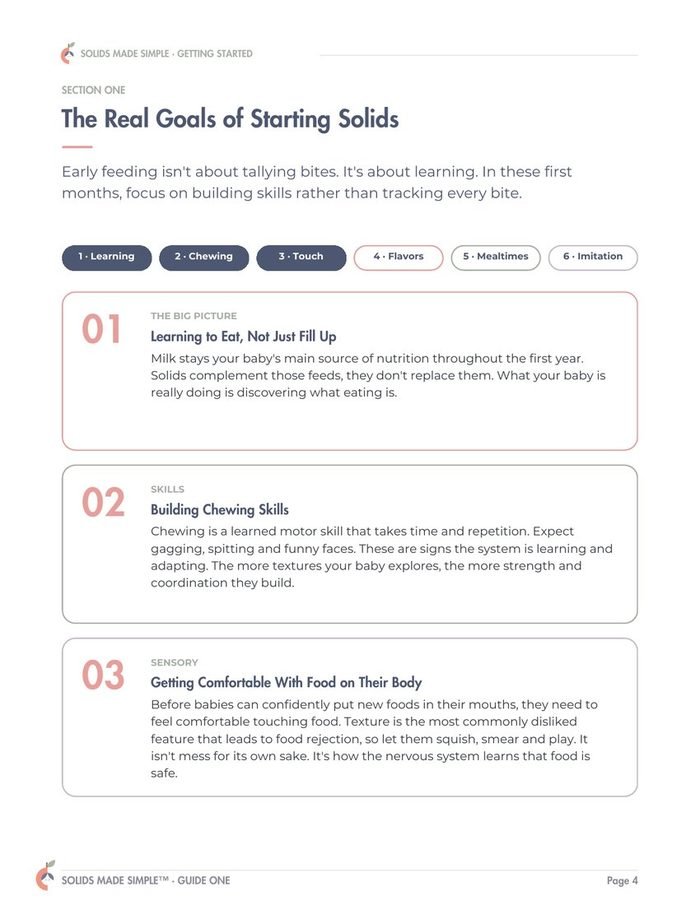
Why early solids are about learning, not volume, and what a full meal really looks like.
"Is this gagging normal?"
How to tell gagging from choking, and what to do in the moment for each.
"Which foods come first?"
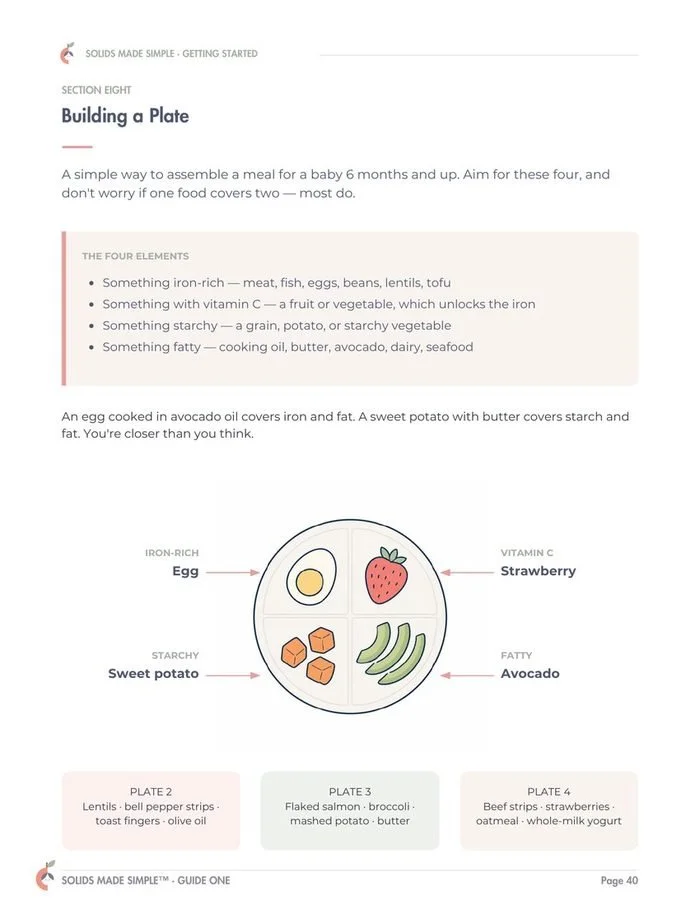
Iron-rich first foods, how to build a plate, and introducing allergens early.
No conflicting advice. Just a clear plan you can trust.
When to start
Around six months is the guideline. Your baby decides the day.
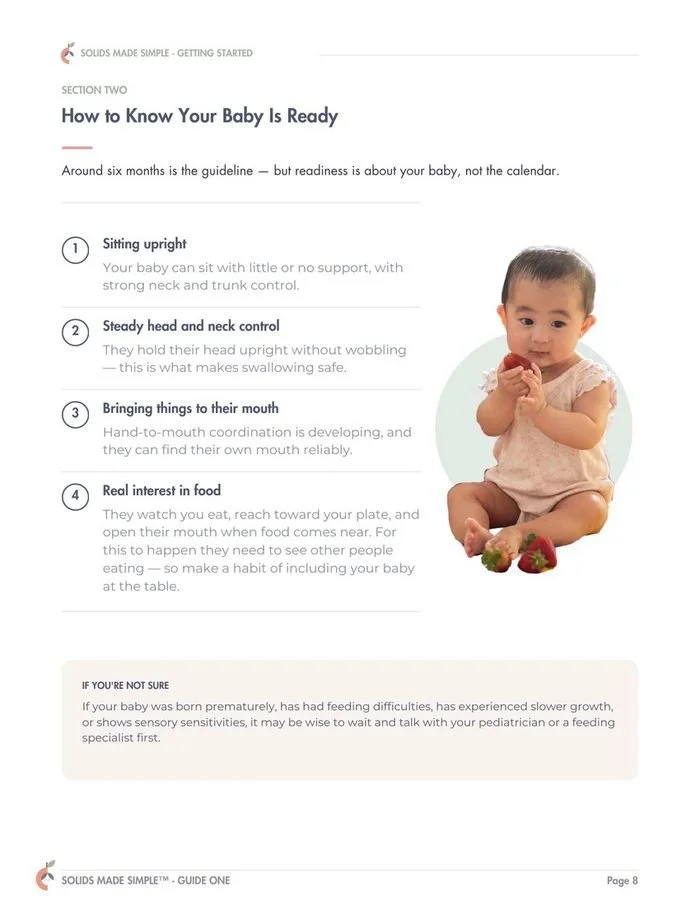
Based on current World Health Organization and American Academy of Pediatrics guidance, most babies are ready at around six months. These are the signs that tell you it's time.
- 1Sitting upright
With little or no support, and steady trunk control.
- 2Steady head control
No wobbling. This is what makes swallowing safe.
- 3Hand to mouth
They can bring toys and hands to their own mouth reliably.
- 4Real interest in food
Watching you eat, reaching for your plate, opening wide.
Born early, slower growth, or feeding difficulties so far? The guide explains when it's wise to check in with your pediatrician or a feeding specialist first.
How to start
Purées or finger foods? You don't have to choose.
Both routes can work. What matters is that the texture keeps moving forward, your baby does the deciding, and the food is safe for their stage.
Spoon-fed purées
A gentle on-ramp to new flavors. The key is moving on to thicker, lumpier textures in time, so chewing skills keep developing.
Baby-led finger foods
Builds hand skills and self-feeding early. You'll learn the shapes and sizes that make it safe, and what to watch for.
Both, from the very first meal
A preloaded spoon and a soft strip of food on the same tray. Your baby practices both skills, and you always have a backup when one isn't working that day.
Plus: the preloaded spoon, teaching self-feeding step by step, and the grasps that tell you how to cut food.
Worried about choking?
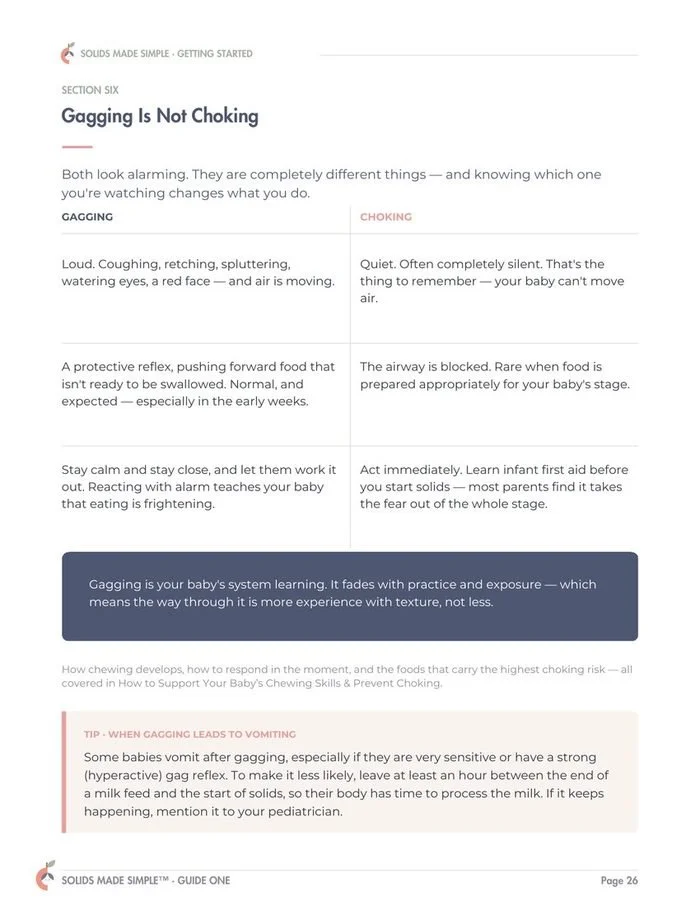
Gagging is not choking, and knowing the difference changes everything.
It's the fear I hear most from parents. Both can look alarming at first. The guide shows you exactly how to tell them apart, so you can stay calm when it's normal and act fast when it isn't.
Gagging
LOUD · NORMAL · PROTECTIVE
- Coughing, retching, a red face, watery eyes
- Air is still moving
- Pushes food forward before it can be swallowed
- What to do: stay close, stay calm, let them work it out
Choking
QUIET · RARE · EMERGENCY
- Often completely silent
- The airway is blocked
- Rare when food is prepared for your baby's stage
- What to do: act immediately. Learn infant first aid before you start.
Take a look inside
Clear pages you'll actually come back to
Simple visuals, real photos and plain language, with the research cited at the back for anyone who wants to dig deeper.
What's inside
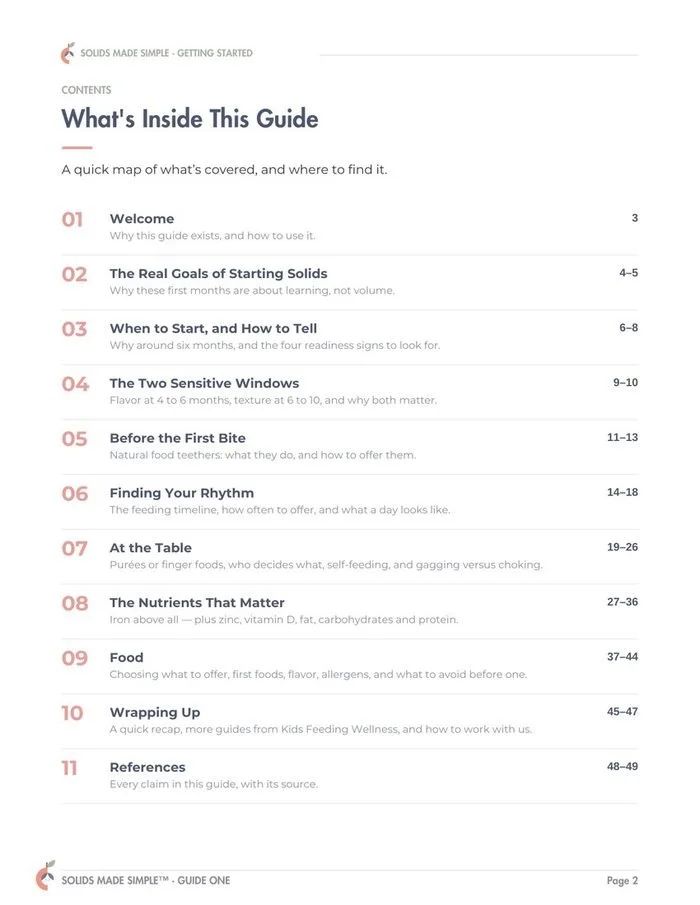
11 sections, from the first sign to the first year
- 01WelcomeWhy this guide exists, and how to use itp. 3
- 02The Real Goals of Starting SolidsWhy these months are about learning, not volumepp. 4–5
- 03When to Start, and How to TellWhy around six months, and the four readiness signspp. 6–8
- 04The Two Sensitive WindowsFlavor at 4 to 6 months, texture at 6 to 10pp. 9–10
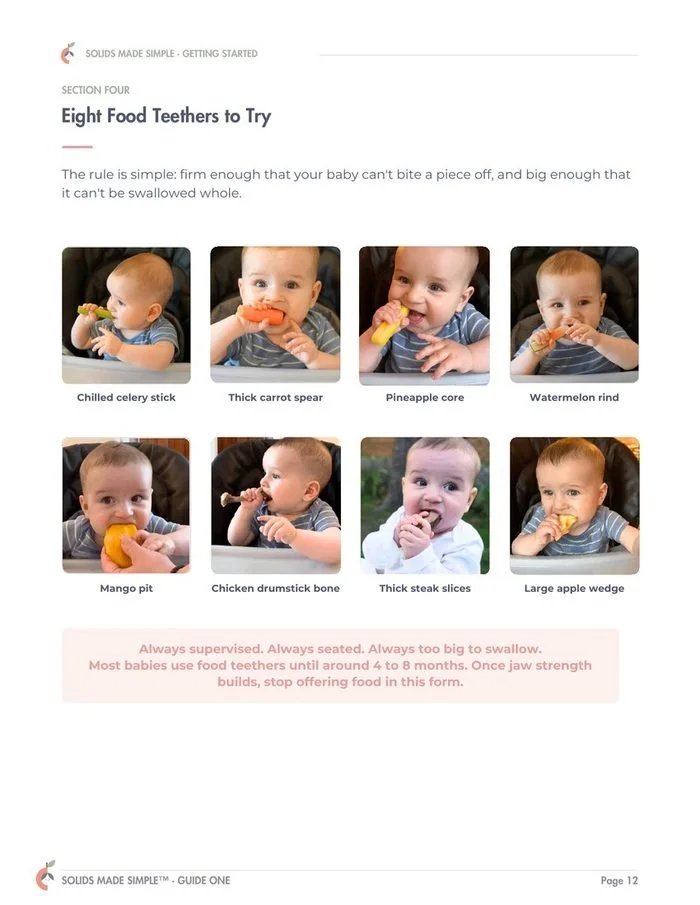
- 05Before the First BiteNatural food teethers, and how to offer thempp. 11–13
- 06Finding Your RhythmThe feeding timeline, how often, and sample dayspp. 14–18
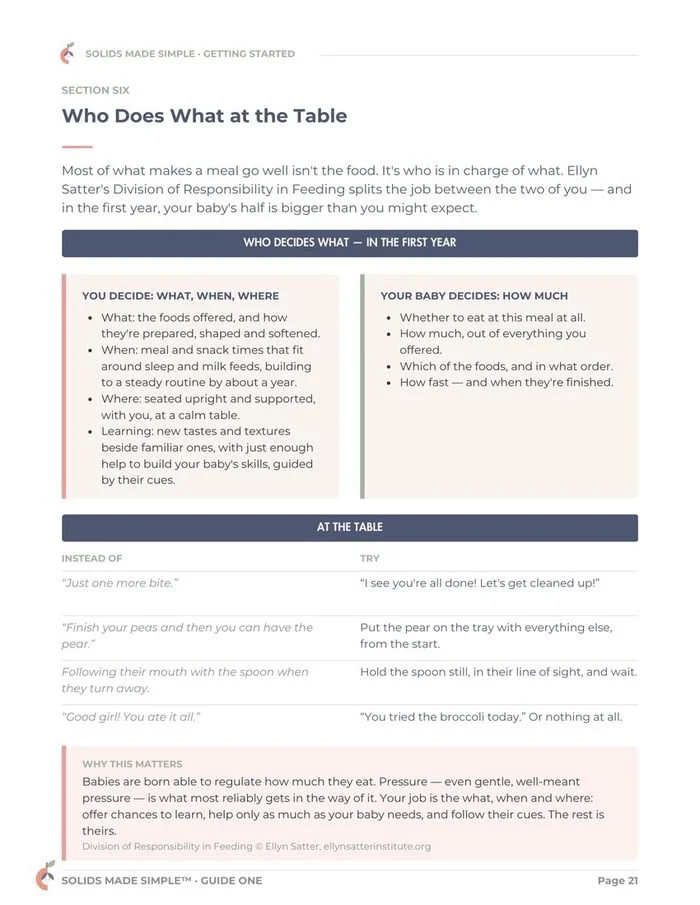
- 07At the TablePurées or finger foods, self-feeding, gagging vs chokingpp. 19–26
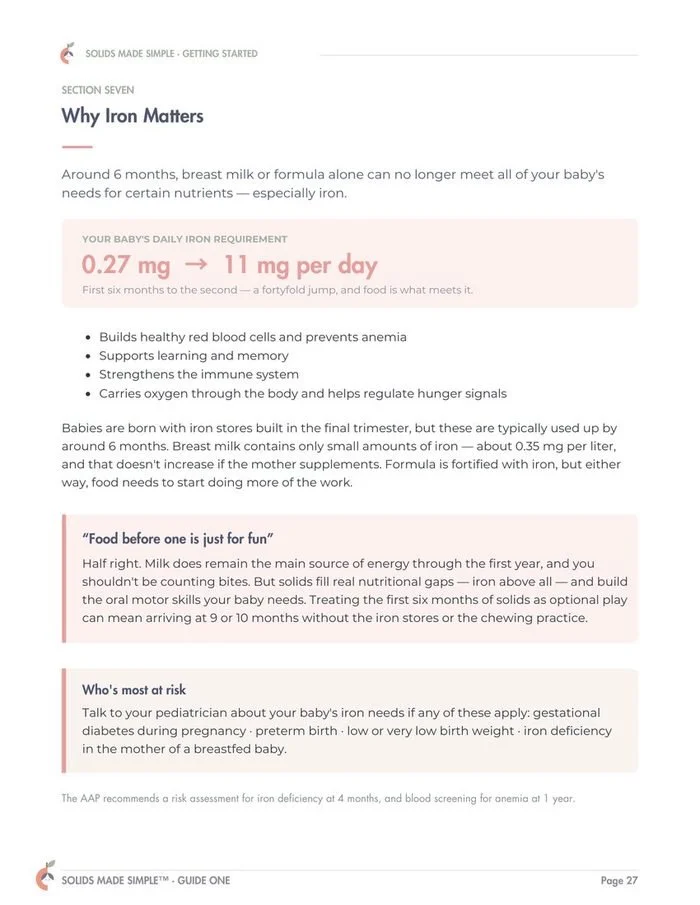
- 08The Nutrients That MatterIron above all, plus zinc, vitamin D, fat, carbs and proteinpp. 27–36
- 09FoodFirst foods, flavor, allergens, and what to avoid before onepp. 37–44
- 10Wrapping UpA one-page recap for the fridge, and where to go nextpp. 45–47
- 11ReferencesEvery claim in the guide, with its sourcepp. 48–49
What you get
How to Start Solids with Confidence
- 49-page digital guide (PDF), yours to keep
- Readiness signs, the sensitive windows and the feeding timeline
- Purées, finger foods or both, with self-feeding step by step
- Two sample days, before and after the nine-month switch
- Iron, first foods, allergens and building a plate
- One-page recap for the fridge PRINTABLE
Instant download · Works on phone, tablet or computer
This guide is for you if…
- You want to plan ahead before solids begin
- You're not sure your baby is ready
- You're torn between purées and finger foods
- Gagging makes you nervous
- You want mealtimes to feel calm, not stressful
Best time to read it: from around 4 months, so you have a plan before the first bite. Already started? It's just as useful in the first few months of solids.
Hi, I'm Argie
MS, CCC-SLP, TSSLD, CLC · Founder, Kids Feeding Wellness
I'm a speech-language pathologist and certified lactation counselor specializing in infant feeding, practicing since 2018. I wrote this guide because the families I work with were getting so much conflicting advice that starting solids felt like a test.
"You know your baby best. My job is to give you guidance you can trust, so you can focus on enjoying this stage together."
Questions
Frequently asked questions
When should I get this guide?
Anytime from around 4 months, so you're ready before solids begin. If your baby has already started, the guide still covers everything from textures and self-feeding to iron and allergens.
Is this a baby-led weaning guide or a purée guide?
Both. You'll learn what each approach builds and how to combine them, so you can choose what fits your baby and your family.
How is this different from the teethers guide?
The teethers guide is a companion for around 4 months and up, all about natural food teethers. This guide is the full plan for starting solids: readiness, methods, timing, nutrients and first foods.
Is this a printed book?
No. It's a digital PDF you can read on any device or print at home, including a one-page recap for the fridge.
Does this replace medical advice?
No. This guide is for general information. Always talk with your pediatrician or a feeding specialist about your baby's specific needs.
The Solids Made Simple™ series
Start here, then keep going
Each guide picks up where the last one leaves off, from the first taste to confident chewing.
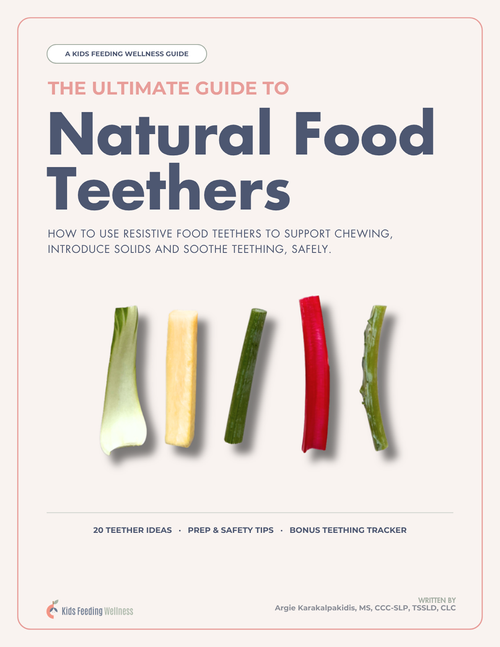
The Ultimate Guide to Natural Food Teethers
Twenty safe teether ideas to build flavor and chewing skills before solids.
See what's inside →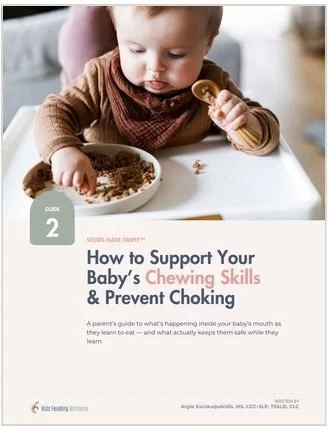
How to Support Your Baby's Chewing Skills & Prevent Choking
How chewing develops, and the foods with the highest choking risk.
Get the guide →Confidently Introducing the Top Food Allergens
All nine allergens, what to try first, and what to watch for.
Coming soonStart solids feeling ready, not rushed
A clear, calm plan for your baby's first year of eating, from a pediatric feeding specialist.
Get the Guide for $19 →