

steps
From Picky to Curious
A step-by-step learning plate guide to help your child explore new foods at their own pace. No pressure, no bribes, no “just one bite.”
Instant PDF download · Read on any device or print at home
Get the Guide →- The 6 steps to learning a new food, from Look all the way to Eat
- A simple plan: how to pick foods, set up the plate and what to say at the table
- Printables: a progress tracker, a caregiver handout and a Food Explorer certificate
 Written by Argie Karakalpakidis, MS, CCC-SLP, TSSLD, CLC
Pediatric feeding specialist · Founder of Kids Feeding Wellness
Same few foods.
Every single meal.
Pushing for one bite, offering a reward or quietly giving up on new foods might keep the peace tonight. But it often leaves children stuck with the same short list, and mealtimes stay stressful.
There’s a gentler way: the learning plate.For many children, what looks like defiance is actually fear. They learn new foods one small step at a time.
Clear, picture-led pages you can use at the table
A safe place to explore, no pressure to eat.
A small, separate plate for foods your child isn’t ready to eat yet. It takes the pressure off, so curiosity can do the work.
- Explain what it’s forA safe space, with no pressure to eat
- Offer the choice“Main plate or learning plate?”
- Keep portions smallA few pieces is plenty
- Invite explorationLook, poke, sniff, squish
- Respect their paceNotice every small step
Eating is the last step, not the first.
Children climb toward a new food one step at a time. The guide gives you a page for each step, with prompts, tips and ideas to try.
Look
Be near the food and see it calmly
Explore
Investigate it with tools
Smell
Get used to how it smells
Touch
Feel it with fingers, then lips
Taste
A kiss, a lick or a tiny bite
Eat
Chew and swallow with confidence
Every look, sniff and touch counts. Your child moves at their own pace.
What to say (and what to skip)
Pressure makes new foods feel scarier. The guide gives you simple words that keep curiosity going.
“You don’t have to eat it. You can just explore.”
“I wonder what it feels like inside?”
“Your body is still learning about this food, and that’s okay.”
- Bribes and rewards
- “Just one bite”
- Hiding foods
Keep it low-key and let curiosity lead.
8–15 tries: how many times a new food may need to be offered before it feels familiar. Every one counts.
Watch them climb.
A simple chart for each food shows every small step, even on the days it doesn’t feel like progress.
- Pick 3–5 target foodsOffer each one 3–5 times a week
- Fill in one dot per tryMark the highest step your child reached
- Check in after 15 triesAbout 3–4 weeks. Then choose your next step.
See how one child went from Look to Eat with carrots, steps back and all.
per food
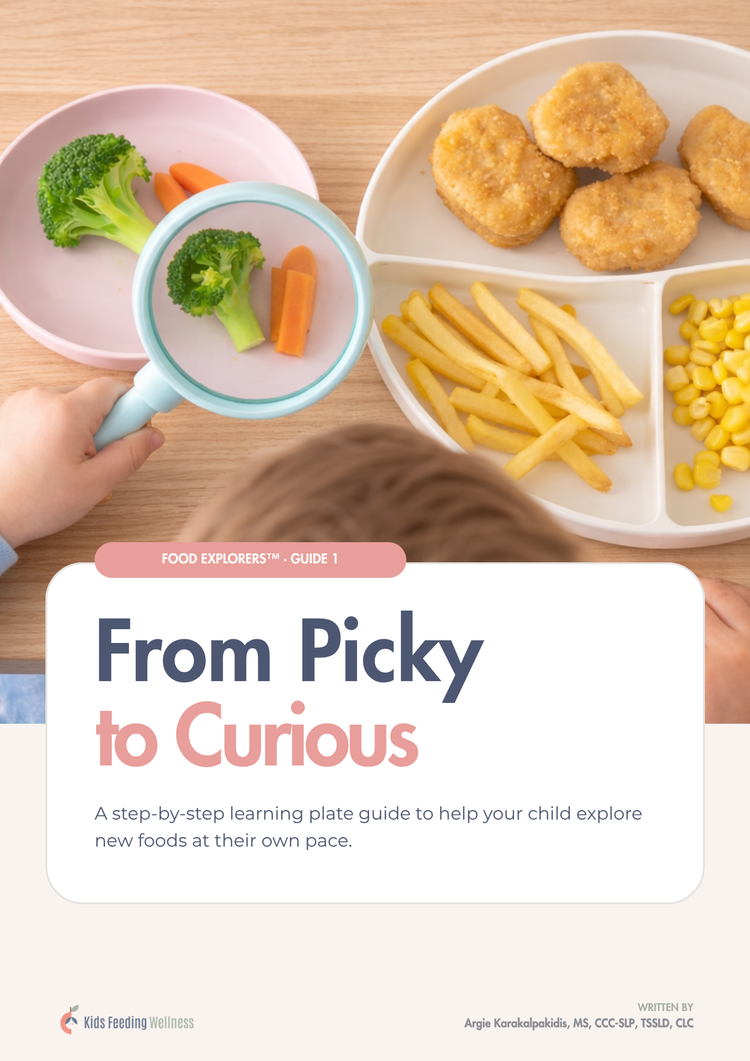
From Picky to Curious: A Learning Plate Guide
- What a learning plate is, and who it’s for
- The 6 steps to learning a new food
- How to set up the plate, step by step
- One page per step with prompts and tips
- 6 ways to taste, easiest to hardest
- Progress tracker Printable
- Caregiver handout Printable
- Food Explorer certificate Bonus
Works on phone, tablet or computer, or print at home
This guide is for you if…
- Your child is 3 or older and eats the same few foods, meal after meal
- New foods get pushed away before they’re even tasted
- Mealtimes have turned into a negotiation
- You’ve tried rewards or “just one bite,” and it hasn’t helped
- You want a calm, step-by-step plan you can start this week
Hi, I’m Argie
MS, CCC-SLP, TSSLD, CLC · Founder, Kids Feeding Wellness
I’m a speech-language pathologist specializing in pediatric feeding, practicing since 2018. I help families turn stressful mealtimes into calmer, more curious ones, one small step at a time.
“You don’t have to get every meal right. You just have to keep showing up.”



Frequently asked questions
What age is this guide for?
Ages 3 and up. That’s typically when learning plates start, because children can explore, talk about food and make simple choices at the table.
How do I know if it’s picky eating or something more?
The guide includes a quick checklist to help you tell typical picky eating from signs it’s time for extra support. If you’re worried, book a free 15-minute discovery call and we’ll talk it through.
How long until I see progress?
Many children need 8–15 tries before a new food feels familiar. The tracker has you check in after 15 tries, about 3–4 weeks, and every small step along the way counts.
Do I need any special equipment?
Just a small, separate plate. Everything else is food you’re already serving.
Can other caregivers use it too?
Yes. A one-page caregiver handout is included, so grandparents, sitters and teachers can follow the same calm approach.
Is this a printed book?
No, it’s a 32-page PDF you can download right away. Read it on any device, or print the pages you want to keep handy.
The first guide in the Food Explorers™ series
Food Explorers™ is our series for older kids and picky eating. Pair this guide with these resources for calmer mealtimes all around.
Mealtimes Without the Battle
Simple ways to set up calm, pressure-free mealtimes so your child can learn to love new foods.
Get the Free Guide → FreeIs it picky eating?NOT Picky Eating!
3 normal feeding stages often mistaken for picky eating, plus a bonus checklist of signs to watch for.
Get the Free Guide → $9Routines & grazingThe Mealtime Rhythm Kit
Visual schedules, scripts and a step-by-step plan to end grazing and help your child come to the table hungry.
Get the Kit →Turn “Ew!” into “What’s that?”
Start this week with one small plate and six simple steps.
Get the Guide for $7 →