
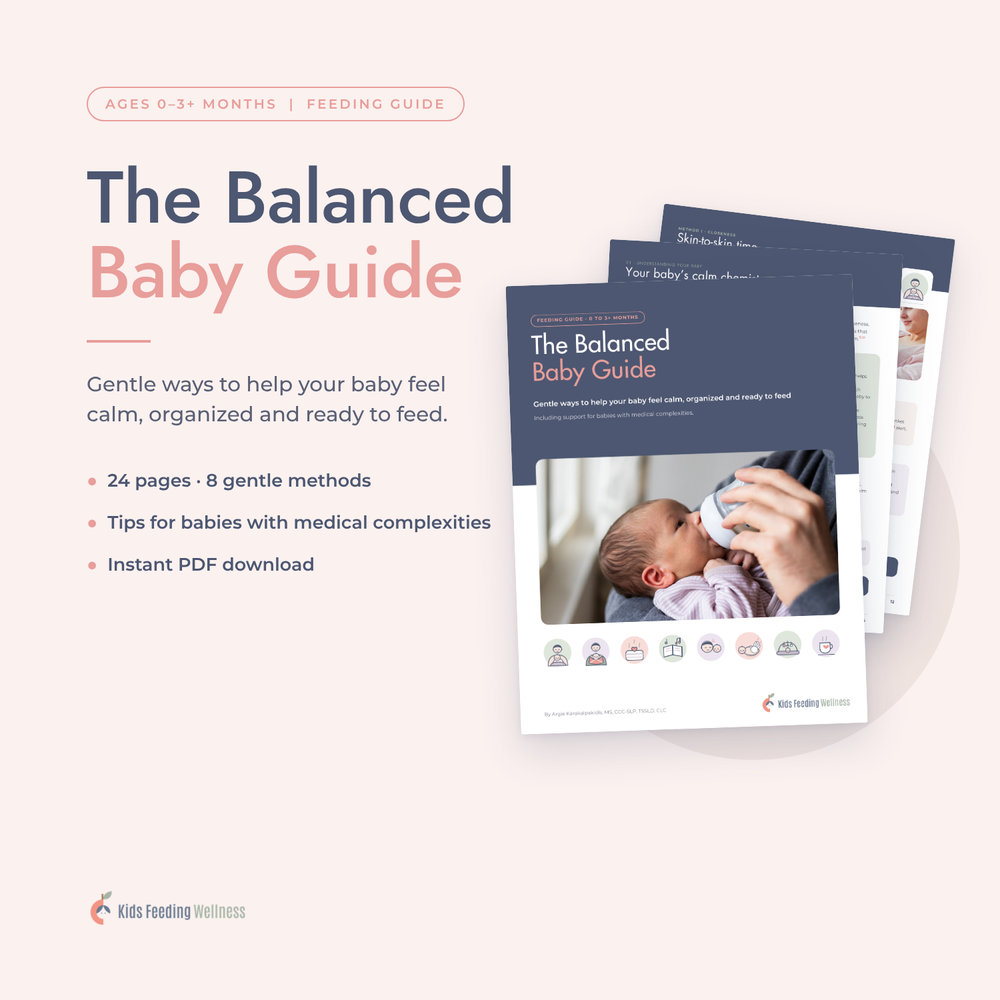
The Balanced
Baby Guide
Fussy, short or stressful feeds? Learn how to help your baby feel calm, organized and ready to feed, with 8 gentle methods from a pediatric feeding specialist.
- Why feeds go off track: homeostasis, your baby’s calm chemistry and the four building blocks of a calm feed
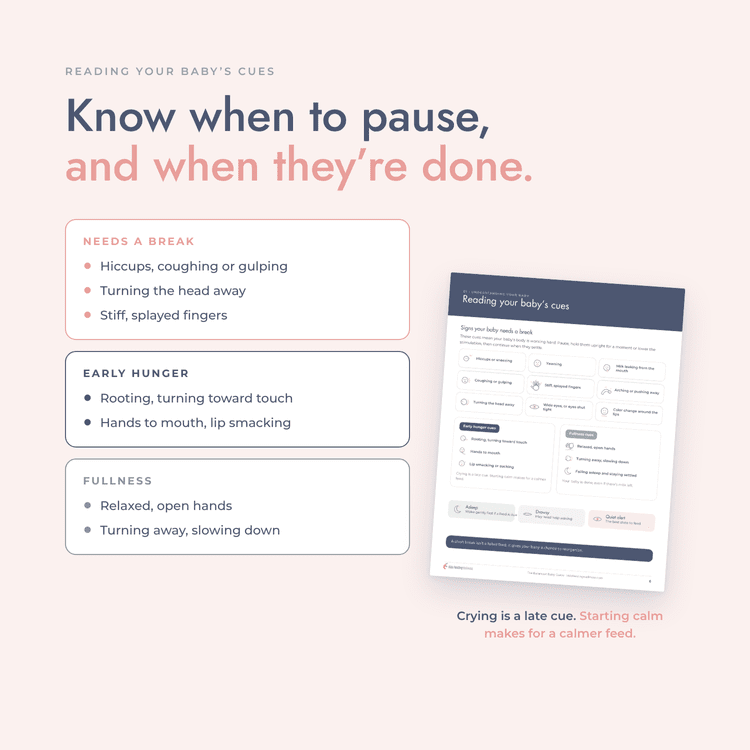
- What your baby is telling you: hunger, fullness and “I need a break” cues
- What to do about it: 8 gentle methods for before, during and after every feed
- Extra support: tips for babies with medical complexities, at home or in the hospital
When feeding feels harder than it should
Many feeding struggles in the first months come down to one thing: a baby whose body is working hard to stay balanced. This guide explains what’s going on, and what you can do about it.
“Why does my baby fuss and pull away?”
What can tip a young baby off balance, and how to spot what’s behind a fussy or short feed.
Page 7“Is my baby hungry, or done?”
Early hunger cues, fullness cues and the signs your baby needs a short break.
Page 6“Why does my baby gulp and cough?”
How a fast flow affects sucking, swallowing and breathing, and how paced bottle feeding helps.
Page 8“How do I help my baby settle?”
Skin-to-skin, babywearing, touch and gentle movement, with what to do around each feed.
Pages 11–21“My baby has medical needs. Will this help?”
Why balance matters even more, plus a teddy bear tip on every method page.
Pages 9–10“When should I ask for help?”
The signs that mean it’s time to call your pediatrician or a feeding specialist.
Page 23Balance comes first. Calm feeds follow.
Homeostasis is the body’s ability to stay steady as things change. Learning it is one of a newborn’s biggest jobs in the first three months. Your baby is balancing what they feel inside their body with everything they take in from the world around them.
A calm, balanced baby feeds more easily: sucking, swallowing and breathing work together, and feeds are less tiring.
- Hunger
- Breathing
- Heart rate
- Temperature
- Digestion & gas
- Touch
- Lights
- Sounds
- Movement
- New people & places
More oxytocin, less cortisol
Closeness, gentle touch and warm connection release calming hormones, while stress makes balance harder. Most of the 8 methods work by tipping that balance toward calm.
Oxytocin
The bonding and calming hormone. Gentle touch, warmth and closeness release it in you and your baby, helping sucking, swallowing and breathing work together.
Dopamine
The reward hormone. When you see your baby smile, that good feeling keeps drawing you back, building the loving back-and-forth that calm feeds grow from.
Cortisol
The stress hormone. Hunger, overstimulation and time apart can raise it. Closeness and calm routines help bring it back down.
More oxytocin, less cortisol: that’s the chemistry of a calm feed.
Crying is a late cue. Starting calm makes for a calmer feed.
Your baby tells you what they need long before they cry. The guide shows you what to watch for before, during and at the end of a feed, and what to do in the moment.
Early hunger
- Rooting, turning toward touch
- Hands to mouth
- Lip smacking or sucking
Fullness
- Relaxed, open hands
- Turning away, slowing down
- Falling asleep and staying settled
You don’t need all eight. Start with one or two.
Each method has its own page with simple steps, what to do around each feed, and a tip for babies with medical complexities.
Skin-to-skin
Steadies temperature, heart rate and breathing, and releases oxytocin in you both.
Babywearing
Closeness with your hands free, plus the TICKS rule for safe carrying.
Your scent
The smell that makes your baby feel safest, and a comfort you can leave behind.
Voice & song
The sound your baby has known since before birth.
Faces & eye contact
Your calm face tells your baby that feeding is safe.
Touch & movement
Gentle strokes, infant massage and slow rocking.
Floor play
Short, happy sessions that build the muscles used for feeding.
Calm for you
Your baby picks up on how you feel. Caring for your calm is part of caring for them.

Gentle support, at home or in the hospital
Prematurity and heart, breathing, GI, neuromuscular or craniofacial conditions can make balance harder to reach. Your medical team handles specific treatments. You create the calm, connected setting that helps your baby grow and heal.
- Look for the teddy bearEvery method page ends with a tip for babies with medical complexities.
- Stay close, even when you’re apartRecord your voice, leave something with your scent, and ask your team how you can join in care.
- You are not aloneWhere to find parent-to-parent support from families who’ve been there.
5 parts, from understanding your baby to a calm-feed plan
- 01Understanding Your BabyHomeostasis, calm chemistry, the four building blocks and your baby’s cuespp. 3–6
- 048 Gentle MethodsCloseness, connection, touch and movement, and calm for youpp. 11–21
- 02Calm FeedsWhat throws balance off, and six calm-feed basicspp. 7–8
- 05Putting It TogetherA printable calm-feed checklist and when to reach outpp. 22–23
- 03Babies With Medical ComplexitiesWhy balance matters even more, and where to find supportpp. 9–10
- +ReferencesEvery claim in the guide, with its sourcep. 24


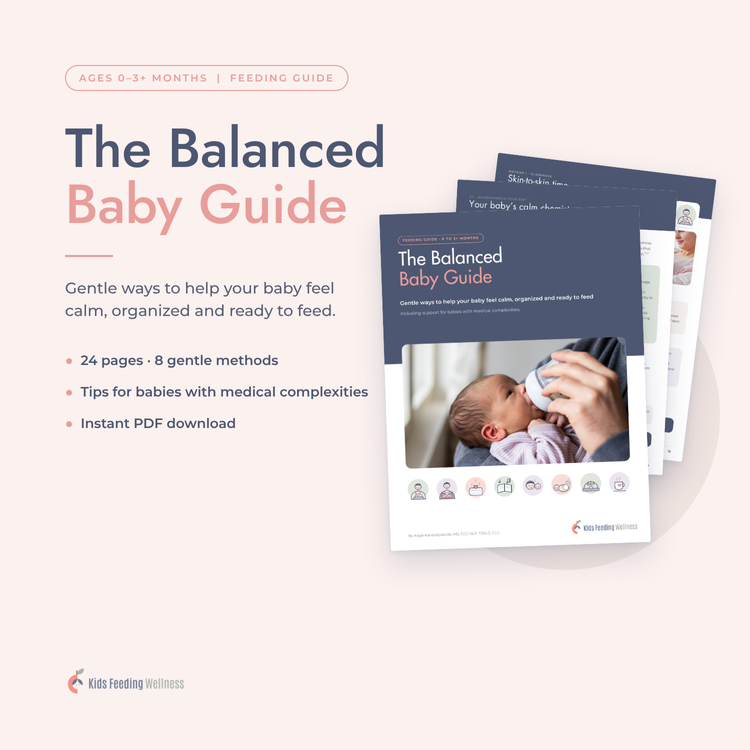
The Balanced Baby Guide
- 24-page digital guide (PDF), yours to keep
- Homeostasis, calm chemistry and the four building blocks, explained simply
- A visual guide to your baby’s hunger, fullness and break cues
- Six calm-feed basics, including paced bottle feeding
- 8 gentle methods, each with before, during and after steps
- Tips for babies with medical complexities
- Calm-feed checklistPRINTABLE
This guide is for you if…
- Your baby fusses, pulls away or falls asleep during feeds
- Feeds feel long, stressful or rushed
- You’re not sure whether your baby is hungry, full or overwhelmed
- Your baby was born early or has medical needs
- You want simple ways to help your baby feel calm and close
Best time to read it: during pregnancy or the first weeks home, so you have a plan from the start. Already a few months in? The cues and methods help at any point in the first months.

Hi, I’m Argie
I’m a speech-language pathologist and certified lactation counselor specializing in infant feeding, practicing since 2018. I wrote this guide to give families simple, research-backed ways to make feeds calmer from the very first weeks.
“Every calm moment you create, a pause, a soft voice, a few minutes skin-to-skin, helps your baby’s body learn balance.”
Frequently asked questions
Who is this guide for?
Parents and caregivers of babies from birth to around 3 months and beyond, especially if feeds feel fussy, short or stressful. It also includes tips for babies with medical complexities.
Does it work for breastfeeding and bottle feeding?
Yes. The cues, calm-feed basics and 8 methods work whether you breastfeed, bottle feed or both. There’s also a section on paced bottle feeding.
My baby is in the NICU or has a medical condition. Is this for us?
Yes. Look for the teddy bear on every method page for tips made for babies with medical complexities, at home or in the hospital. Always check with your baby’s medical team before trying something new.
Is this a replacement for feeding therapy?
No. The guide shares general information to support your baby’s feeding. It isn’t a substitute for individual care, and page 23 lists the signs that mean it’s time to reach out to your pediatrician or a feeding specialist.
How do I get the guide?
It’s an instant PDF download. After checkout you’ll receive a link to download it, and you can read it on any device or print it at home.
When your baby is ready for the next stage
The Solids Made Simple™ series picks up where this guide leaves off, from the first teethers to confident chewing.
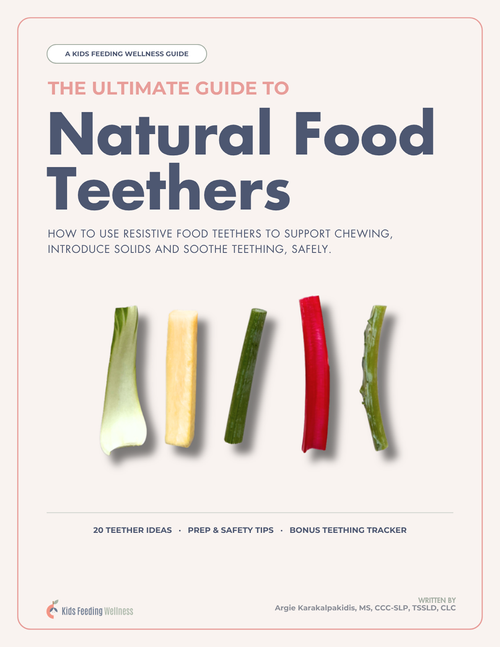
The Ultimate Guide to Natural Food Teethers
Twenty safe teether ideas to build flavor and chewing skills before solids.
See what’s inside →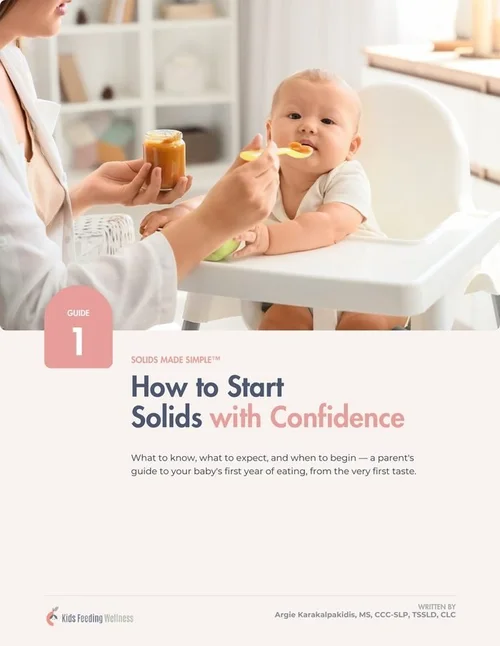
How to Start Solids with Confidence
Readiness signs, purées or finger foods, and a calm plan for the first year of eating.
See what’s inside →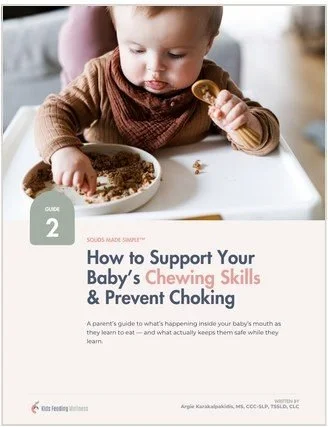
How to Support Your Baby’s Chewing Skills & Prevent Choking
How chewing develops, and the foods with the highest choking risk.
See what’s inside →Calmer feeds start with a calmer body
Gentle, research-backed ways to help your baby feel safe, settled and ready to feed, from a pediatric feeding specialist.
Get the Guide for $14 →