Minimalist Baby-Led Weaning Essentials: Simple Tools for Starting Solids
The short answer
You need far less than the baby aisle suggests. To start baby-led weaning you need a baby who is ready, a supportive highchair with a footrest, a couple of short-handled spoons, one or two suction plates, a small open cup, a straw cup, and a simple plan for mess. That's it.
Starting solids is an exciting milestone, but it can feel overwhelming when every product claims to be a must-have. After years of supporting families through this stage, I've seen again and again that simpler tools often lead to the most success.
This post contains affiliate links. As an Amazon Associate, Kids Feeding Wellness earns from qualifying purchases, at no extra cost to you. I only recommend products I'd suggest to the families I work with.
Minimalism here means choosing items that are durable, last a long time, and fit your family's preferences and values. Where it makes sense, I've included a couple of options in different materials.
As your baby develops new skills, swap early feeding items for more age-appropriate ones, and let go of what you no longer use. Keeping one organized cupboard or drawer just for your baby's feeding things saves space, stress and time. Some temporary tools, like silicone spoons or starter cups, are worth having early on until your baby builds confidence.
The minimalist starting-solids kit
- A baby who's ready to explore
- A supportive, long-lasting highchair
- A few short, wide-handled spoons
- One or two suction plates or bowls
- A small first open cup
- A first straw cup
- A simple plan for mess
Essential 1
A Baby Ready to Explore
Before you start, check in with your pediatrician to confirm your baby is developmentally ready for solids. For most babies this is around 6 months, though some are ready a little earlier or later. Every baby develops at their own pace.
Look for these signs that your baby is ready to explore self-feeding:
- Sitting upright with minimal supportA stable seated position helps protect your baby's airway and makes swallowing safer.
- Good head and neck controlYour baby can hold their head steady without tiring quickly.
- Hand-to-mouth coordinationThey can grasp toys or teethers and bring them to their mouth with confidence, an essential skill for baby-led weaning.
- Real interest in foodYour baby watches you eat, reaches for your plate, or opens their mouth when food comes near.
Teeth are optional
Despite what many people assume, babies don't need teeth to start. Their gums are strong enough to mash and manage soft finger foods safely.
Read nextWhen to Start Solids: Signs of Developmental Readiness & Why 6 Months Is the Sweet Spot
Essential 2
A Supportive, Long-Lasting Highchair
If there's one item worth investing in, it's a highchair that grows with your baby. A well-designed chair makes meals safer, simpler and more enjoyable, and it means you won't need to buy a new seat every time your child moves up a stage.
What to look for
Support & safety
An upright seat, a secure 5-point harness and a built-in footrest. Stable feet support the trunk, head and neck, which makes chewing and swallowing safer.
Grows with your baby
An adjustable seat and footrest, a high weight capacity, and a design that converts into a toddler chair.
Easy to clean
Wipeable surfaces, a dishwasher-safe tray liner and materials that are quick to sanitize.
Ready for family meals
A height that lines up with your dining table, so your baby can join you and feel part of the family.
KFW's top pick
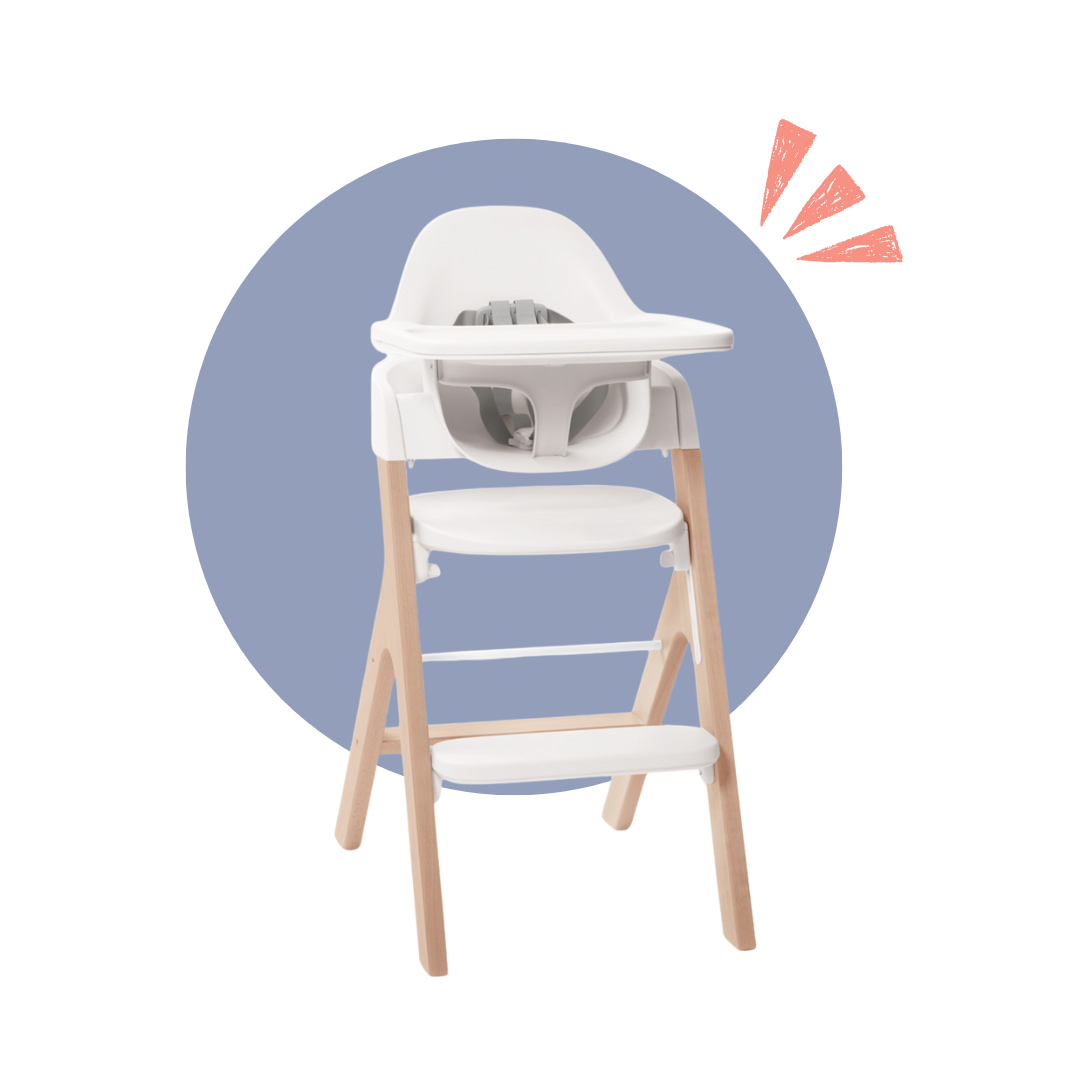
Mockingbird Highchair
- Adjustable footrest and seat height, so your baby stays well supported as they grow
- Removable tray with a dishwasher-safe liner for quick cleanups
- Silicone-coated straps that wipe clean in seconds
- Converts into a sturdy child chair (up to 150 lbs), so you'll use it for years
- Fits most standard-height dining tables
Measure before you order
The Mockingbird is about 30 inches tall. Check your table height first. A good fit means your baby's elbows can rest near the tray or table edge, which makes self-feeding safer and easier.
Essential 3
A Few Short, Wide-Handled Spoons
When your baby is ready to self-feed softer textures like yogurt, oatmeal or mashed fruit, the right spoon makes a real difference. It helps your baby feel capable and keeps frustration low.
Look for
- Short, wide handles that small hands can grip and control
- Shallow, narrow bowls that fit little mouths and are easy to clear with the lips
- Textured or ridged heads that help thick purées stay put
- Firm materials that don't flop when scooping
Skip
- Long or bendy spoons, which make scooping and guiding food harder
- Wide or deep bowls, which are frustrating while your baby learns to clear the spoon
Silicone spoons are gentle on gums and perfect for beginners. Over time, moving to sturdier options like stainless steel helps your baby practice more precise movements. Once they're confident, a small metal fork and spoon set helps them learn to spear and scoop different textures.
KFW's top picks

NumNum GOOtensils Pre-Spoon Set
Perfect for early self-feeding. The textured head holds thick purées in place.
View on Amazon →
OXO Tot Fork and Spoon Set
Sturdy stainless steel heads with chunky handles that are easy to hold.
View on Amazon →Essential 4
One or Two Suction Plates or Bowls
Choose plates and bowls that are durable, safe and designed to stay put. Silicone is popular, but it can absorb odors over time and may need replacing sooner than you'd like. Bamboo or stainless steel with a suction base won't hold smells, won't transfer heat to your baby's hands, and stands up to daily use for years.
Why a divided suction plate helps:
- You can offer a few textures and flavors without overwhelming your baby
- Food stays in place, so your baby can focus on feeding themselves
- It encourages independence at mealtimes
You can skip the plate at first
When you're just starting, it's perfectly fine to put food straight on the highchair tray. It often makes self-feeding simpler in the early days.
KFW's top picks


We've also been loving Avanchy here at KFW. Their stainless steel and bamboo options are thoughtfully designed to last and look lovely on the table.
Essential 5
A Small First Open Cup
Many parents are surprised to learn that babies can start practicing with an open cup at around 6 months, as soon as they start solids. Drinking from an open cup builds the oral motor skills that support safe chewing, swallowing and early speech.
Starting early also makes moving away from bottles easier later. The American Academy of Pediatrics recommends weaning from the bottle between 12 and 18 months, so a little practice now sets your baby up well.
“Small sips at mealtimes now make the move away from bottles much easier later.
How to choose and use one
- Start with a small, soft silicone cup that's gentle on gums and easy for little hands to grip
- Look for a cup that's lightweight and stable and holds about 2 to 3 oz, so it's easy to lift without too much tipping
- Offer small sips of water, breast milk or formula during meals
- As your baby gains confidence, move to a more durable cup, such as stainless steel, that lasts into toddlerhood
Try a thicker drink
Fill the cup close to the top with breast milk, formula or a smoothie. Thicker liquids move more slowly, so they're often easier for babies to control while they practice.
KFW's top picks

ezpz Tiny Cup
A perfect first training cup. The small rim fits comfortably on your baby's mouth, the petite size is easy to hold, and the soft silicone is gentle on gums.
View on Amazon →
Stainless Steel Shot Cups
Small and durable, and great once your baby has mastered the Tiny Cup. The compact size is just right for practicing with sturdier materials.
View on Amazon →Essential 6
A First Straw Cup
A straw cup helps your baby learn to drink efficiently without relying on a bottle, and it strengthens the muscles used for speech and safe swallowing. Offering a straw cup alongside an open cup gives your baby flexible options for water, milk or smoothies as they grow.
Why skip the sippy cup?
Hard-spouted sippy cups encourage a front-to-back tongue motion, much like a bottle, instead of the more mature tongue and jaw movements used for speech and efficient swallowing. Open and straw cups give your baby better practice.
KFW's top picks

The First Years Squeeze & Sip
A gentle squeeze brings liquid up the straw, which makes it easier for your baby to learn.
View on Amazon →
Elk and Friends Stainless Steel Cups
Durable, easy to clean and versatile as straw cups or snack containers. They may leak a little if tipped, which teaches cause and effect and steady hands.
View on Amazon →Essential 7
A Simple Plan for Mess
Baby-led weaning gets messy, and that's perfectly okay. So many parents tell me the cleanup feels overwhelming, but the mess is doing important work. It helps your baby's nervous system get used to different textures and builds fine motor skills. So take a step back and let your baby explore.
You don't need a long list of accessories. Floor mats and splash guards look appealing, but they're often just more things to clean and store. Most families find a simple cloth or towel is enough to wipe down the tray, the floor and your baby's hands.
Bibs to skip
- Silicone bibs can trap odors and feel stiff against your baby's neck
- Catch-pocket bibs can get in the way of your baby's arms as they reach for food
- Smock-style bibs have extra fabric that can make it harder to see and grab food on the tray
Look for
- Full front coverage that doesn't restrict movement
- A secure tie at the back that's hard for little hands to pull off
- Fully machine washable
KFW's top pick
BapronBaby
One of the best bibs for baby-led weaning. It grows with your baby, covers the full front without restricting movement, ties securely at the back, is tough for little hands to pull off, and is fully machine washable.
View on Amazon →Solids Made Simple guides
Ready for the next step?
Two step-by-step guides to help you start solids with confidence and support safe chewing from the very first bites.
 Guide 1 · Getting started
How to Start Solids with Confidence
Readiness signs, purées or finger foods, milk and solids, first foods and allergens.
Get Guide 1 →
Guide 1 · Getting started
How to Start Solids with Confidence
Readiness signs, purées or finger foods, milk and solids, first foods and allergens.
Get Guide 1 →
 Guide 2 · Chewing & choking
How to Support Your Baby's Chewing Skills & Prevent Choking
How chewing develops, gagging vs choking, and how to prepare higher-risk foods safely.
Get Guide 2 →
Guide 2 · Chewing & choking
How to Support Your Baby's Chewing Skills & Prevent Choking
How chewing develops, gagging vs choking, and how to prepare higher-risk foods safely.
Get Guide 2 →
You've Got This
These are recommendations to help you get started, not a shopping list you have to complete. Every family is different, and what works beautifully for one may not feel right for another. Trust your instincts, follow your baby's cues, and choose the tools that fit your values and daily life.
The most important thing is a safe, supportive space where your baby feels free to explore.
Frequently Asked Questions
Do I need all of these before I start?
No. A supportive highchair and a ready baby are the true essentials. You can put food straight on the tray, and add spoons, cups and plates as your baby's skills grow.
Does my baby need teeth for baby-led weaning?
No. Babies' gums are strong enough to mash soft finger foods. What matters is that foods are prepared in a safe size, shape and texture for your baby's stage.
When can my baby start using an open cup?
At around 6 months, when they start solids. Offer small sips with your help during meals. It's a skill that takes practice, so spills are part of learning.
Why is a footrest so important on a highchair?
Feet that are supported give your baby a stable base. That stability helps with trunk, head and neck control, which makes chewing and swallowing safer and self-feeding easier.
Want Support Starting Solids?
Book a free 15-minute call. We'll talk through your baby's readiness, your questions, and how to set up mealtimes for a confident start.

References
- American Academy of Pediatrics. Starting Solid Foods. HealthyChildren.org. healthychildren.org
- American Academy of Pediatrics. Discontinuing the Bottle. HealthyChildren.org. healthychildren.org
- Centers for Disease Control and Prevention. Fingers, Spoons, Forks, and Cups. cdc.gov
This post is for general information only and is not a substitute for individualized medical or feeding advice. Talk with your pediatrician or a feeding specialist about your baby's specific needs.