How to Get Your Child to Try New Foods: 7 Mistakes to Avoid
Picky Eating · Trying New Foods
Most children need to see, touch and taste a new food many times, often 8 to 15, before they accept it.
That's normal, and it means patience is part of the plan. Below are the 7 most common mistakes we see when families introduce new foods, why each one can backfire, and what to try instead so mealtimes feel calmer and your child's food list can grow.
If introducing new foods feels stressful, you're not alone. It's one of the most common concerns families bring to us, whether their child is a cautious toddler or a school-age kid with a short list of favorites. The good news is that small shifts in how foods are offered often make a bigger difference than which foods are offered.
The 7 Mistakes at a Glance
- 1Skipping the warm-up
- 2Giving up too soon
- 3Expecting a bite right away
- 4Using rewards
- 5Focusing on how much they eat
- 6Not eating it yourself
- 7Calling your child "picky"
Mistake 1
Skipping the warm-up
Imagine being handed a food you've never seen, with no idea how it tastes or feels. For many children, a brand-new food on the plate feels the same way, and the quickest response is "no."
Try this instead
- Talk about the food: where it grows, its color, whether it's crunchy or soft
- Let your child pick it out at the store, weigh it or scan it at checkout
- Wash, stir or tear it together while you cook
- Read a book or play pretend with the food before it shows up at dinner
Mistake 2
Giving up too soon
Research shows many parents stop offering a food after just 3 to 5 tries, but children often need 8 to 15 exposures before they accept something new. A food that's refused today isn't a food your child will refuse forever.
Try this instead
Keep offering a small portion next to a familiar "safe" food, without asking your child to eat it. Every time they see, smell or touch it counts as an exposure. Our 5 Levels of Food Exposure™ shows what progress can look like before the first bite.
Mistake 3
Expecting a bite right away
Every child has their own pace. Some dive into new flavors; others need to look for a while first. When the only "win" is eating the food, everyone ends up frustrated.
Try this instead
Notice the small steps: tolerating the food on the table, passing the bowl, touching it, smelling it, licking it. Each one builds comfort and confidence. Describe what you see, like "You picked up the pepper," instead of pushing for more.
Mistake 4
Using rewards to get a bite
"Two more bites and you can have dessert" works in the moment, but research shows it can backfire. When a food is something to get through to earn a reward, children tend to like that food less and the reward food more.
Try this instead
Keep food neutral. Skip stickers, screens and dessert as prizes, and acknowledge effort without making it a big deal: "You were curious about the mango today." Confidence grows when trying a new food feels safe, not transactional.
Mistake 5
Focusing on how much they eat
It's natural to want your child to eat well. But counting bites, praising clean plates or pushing "just one more" adds pressure, and studies show pressure tends to lead children to eat less and enjoy meals less.
Try this instead
Share the work: you decide what, when and where food is offered, and your child decides whether and how much to eat from what's there. Focus on connection at the table. Learn more in When "Just One Bite" Backfires.
Mistake 6
Not eating it yourself
Children learn by watching the people they love. If a food only ever appears on your child's plate, it sends the message that it's a "kid challenge," not a normal part of family meals.
Try this instead
Eat the foods you hope your child will try, often and with enjoyment, without asking them to join in. Serving meals family-style lets your child see the food, serve themselves and decide how close they want to get.
Mistake 7
Calling your child "picky"
Phrases like "He just doesn't like vegetables" or "She's always been picky" seem harmless, but children hear them. Over time, labels can become part of how a child sees themselves, which makes trying new foods even harder.
Try this instead
Use growth language that leaves the door open: "You're still learning about that food." Food preferences can and do change when children feel supported.
Quick Swaps for Mealtime Phrases
| Instead of | Try |
|---|---|
| "Just take one bite." | "You can look at it, touch it or smell it. Your body gets to decide." |
| "Two more bites and you can have dessert." | "You can eat as much or as little as your body needs." |
| "Good job eating all your peas!" | "You tried something new today." |
| "She doesn't like vegetables." | "She's still learning about vegetables." |
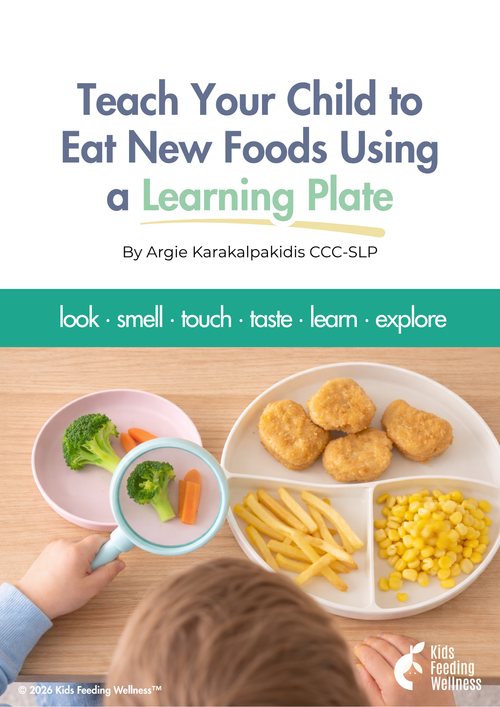
Feeding Guide · Ages 3+
Teach Your Child to Eat New Foods Using a Learning Plate
A step-by-step way to put these ideas into practice, so new foods can show up at meals without pressure or power struggles.
Get the GuideWhen to reach out for support
Most picky eating improves with time and a supportive approach. Talk with your pediatrician or a pediatric feeding specialist if you notice:
- Your child eats a very small number of foods (many specialists use about 20 as a guide)
- Foods keep dropping off the list and aren't replaced
- Gagging, coughing or vomiting with new foods or textures
- Whole food groups or textures are refused
- Weight loss, slowed growth or concerns from your pediatrician
- Meals cause intense distress for your child or your family
Learn more in When Is It More Than Just Picky Eating?
Frequently Asked Questions
How many times should I offer a new food?
Plan on many times. Studies suggest children often need 8 to 15 exposures, and cautious eaters may need more. Seeing, touching and smelling a food all count, even if it isn't eaten.
Should I make my child take "just one bite"?
We don't recommend it. Required bites tend to add pressure and can make a child more wary of the food. Offering it calmly and letting them explore at their own pace works better over time.
Is it okay to hide vegetables in other foods?
Hiding vegetables can add nutrition, but it doesn't help your child learn to accept them. If you blend vegetables into sauces or baked goods, also offer them where your child can see them.
What if my child gets upset when a new food is on the table?
Start smaller. Put the new food on a separate plate or in a serving bowl instead of on your child's plate, and offer an easy job like passing it. Comfort around the food comes before tasting it.
For a gentle, step-by-step approach to new foods, read A Better Way to Help Your Child Try New Foods (Without Pressure).
Feeling Stuck With New Foods?
You don't have to figure it out alone. Book a free 15-minute call to talk through what mealtimes look like right now, and we'll find the next best step for your family.
Want a full plan right away? Book a Comprehensive Feeding Consultation.

Selected References
- Birch LL, Marlin DW. I don't like it; I never tried it: effects of exposure on two-year-old children's food preferences. Appetite. 1982;3(4):353–360.
- Carruth BR, Ziegler PJ, Gordon A, Barr SI. Prevalence of picky eaters among infants and toddlers and their caregivers' decisions about offering a new food. J Am Diet Assoc. 2004;104(1 Suppl 1):s57–64.
- Wardle J, Herrera ML, Cooke L, Gibson EL. Modifying children's food preferences: the effects of exposure and reward on acceptance of an unfamiliar vegetable. Eur J Clin Nutr. 2003;57(3):341–348.
- Birch LL, Marlin DW, Rotter J. Eating as the "means" activity in a contingency: effects on young children's food preference. Child Dev. 1984;55(2):431–439.
- Galloway AT, Fiorito LM, Francis LA, Birch LL. "Finish your soup": counterproductive effects of pressuring children to eat on intake and affect. Appetite. 2006;46(3):318–323.